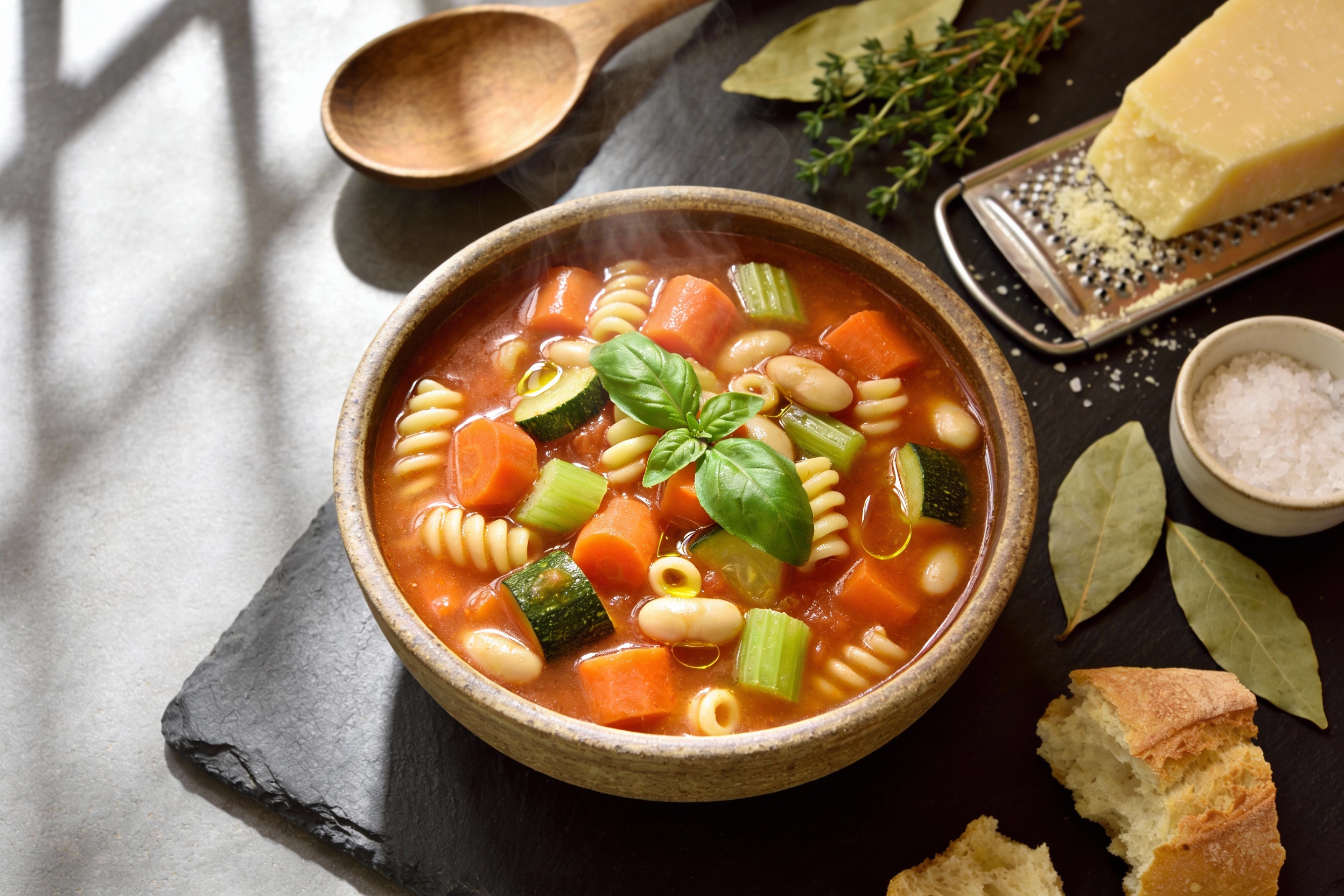
Classic Minestrone Soup That Hugs Your Soul
Minestrone doesn’t whisper; it sings. It’s the big, happy soup you make when your fridge looks chaotic and your soul wants a hug. You get tender beans, chunky veg, pasta, and a herby tomato broth that smells like a Sunday afternoon. No fancy training needed—just a knife, a pot, and the confidence to chop boldly.
Never wonder what's for dinner again.
Get 7 healthy, family-friendly dinners complete with recipes, grocery lists, and simple meal plans delivered straight to your inbox.
What Makes Minestrone, Well… Minestrone?
Minestrone is Italy’s love letter to seasonal vegetables. It’s not one recipe; it’s a style—use what you have, keep it hearty, and aim for a balance of texture and flavor. That means veggies, beans, tomatoes, and sometimes pasta or rice.
You can go all-veg or toss in pancetta if that’s your vibe. It’s flexible by design. Think of minestrone as the friend who shows up in jeans and still steals the spotlight.
The Non-Negotiables
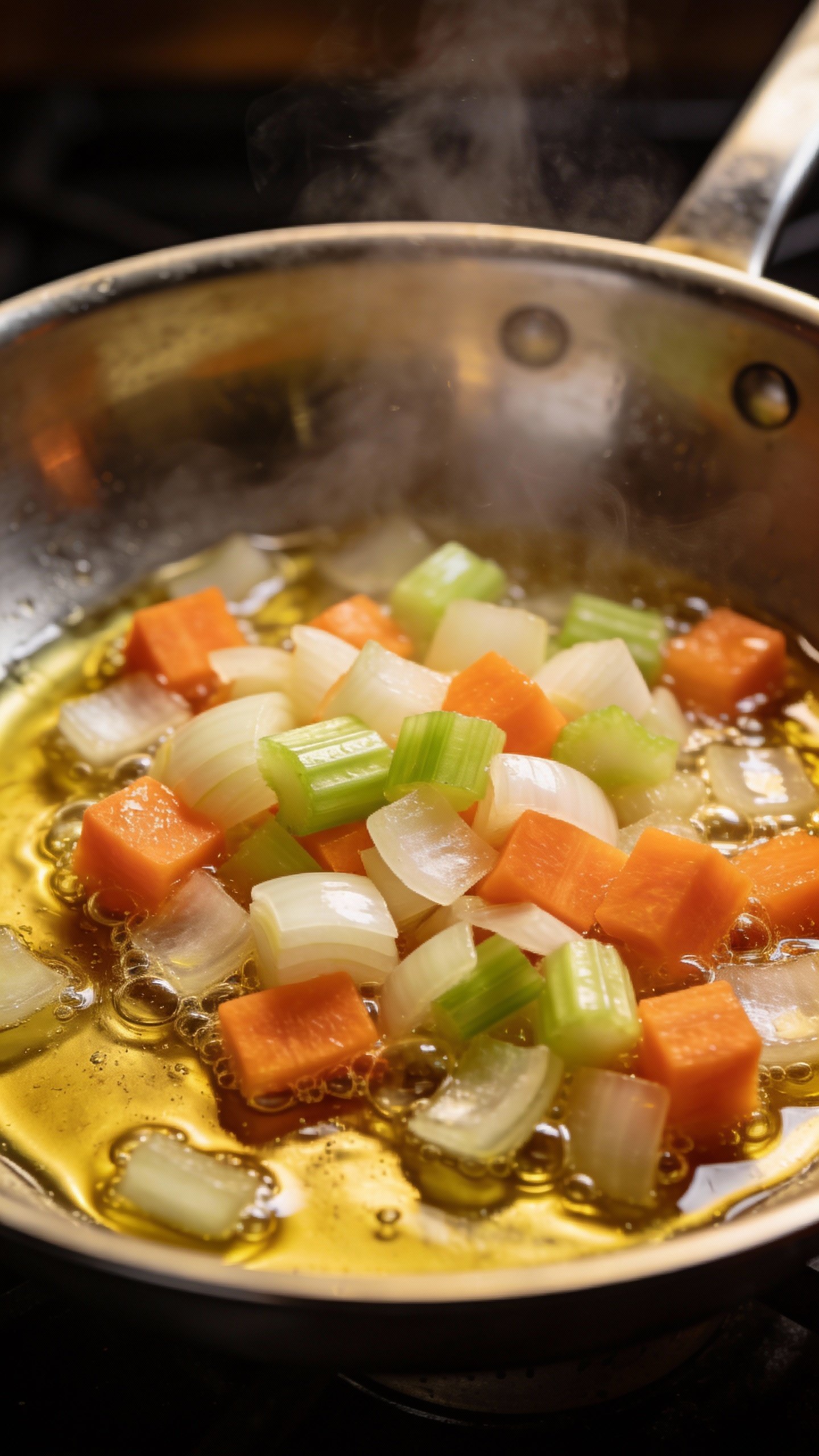
- Soffritto: Onion, carrot, celery sautéed in olive oil. This is your flavor base.
- Legumes: Cannellini or borlotti beans bring creaminess and protein.
- Tomato element: Crushed tomatoes or passata for body and acidity.
- Herbs: Bay, thyme, or rosemary; finish with basil or parsley.
- Starchy friend: Ditalini or small pasta; rice works too.
Ingredients That Actually Matter
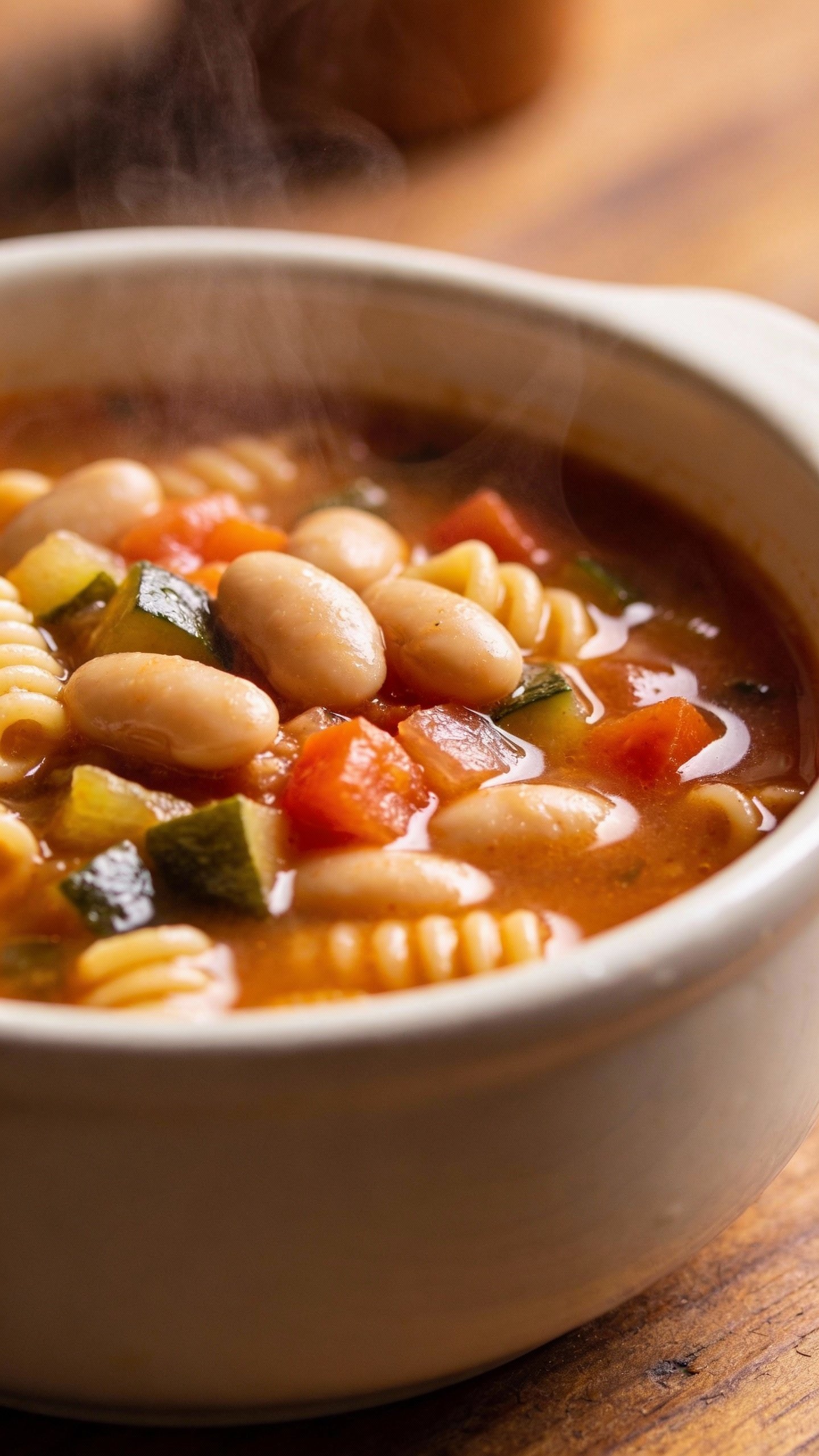
You can swap and improvise, but some choices elevate the soup from “fine” to “wow, seconds please.”
- Olive oil: Use good extra-virgin for sautéing and drizzling at the end.
- Aromatics: Yellow onion, celery, carrots—don’t skip.
- Garlic + tomato paste: For depth and umami. Tomato paste pulls weight here.
- Veggies: Zucchini, green beans, potatoes, cabbage, kale, or chard. Just pick 3-4.
- Beans: One or two cans, drained and rinsed. Or cooked-from-dry if you’re extra.
- Broth: Vegetable or chicken. Use low-sodium so you control the seasoning.
- Pasta: Ditalini or small shells. Keep it tiny to avoid soup-stew chaos.
- Parmesan rind: FYI, this is the secret weapon. It melts in flavor, not texture.
- Herbs + acid: Bay leaf, thyme, and a splash of red wine vinegar or lemon at the end.
Step-by-Step: Your Pot of Gold
You’ll need about an hour. Most of it is chill time while the soup works its magic.
- Sweat the soffritto: In a large pot, warm olive oil. Add diced onion, carrot, and celery. Cook 8–10 minutes until soft and lightly golden.
- Build flavor: Add minced garlic, tomato paste, and a pinch of red pepper flakes. Stir for 1–2 minutes until the paste darkens.
- Liquids + herbs: Add crushed tomatoes, broth, bay leaf, thyme, and the Parmesan rind if using. Bring to a simmer.
- Veggie party: Add potatoes or tougher veg first (like cabbage). Simmer 10 minutes. Then add zucchini/green beans. Simmer 10 more.
- Beans + pasta: Add beans and pasta. Cook just until the pasta is al dente. Salt to taste.
- Finish: Stir in chopped basil or parsley, a splash of vinegar or lemon, and more olive oil. Fish out the bay leaf and rind. Taste and adjust.
Timing Tips So Nothing Turns Mushy
- Add sturdy vegetables early (potatoes, carrots, cabbage).
- Add delicate ones late (zucchini, spinach, chard).
- Cook pasta separately if you plan leftovers. IMO, nobody likes bloated noodles.
Flavor Boosts You’ll Brag About
Want that restaurant vibe without the price tag? Easy.
- Roast your veggies: Toss zucchini or tomatoes in olive oil and roast first for concentrated flavor.
- Use a parmesan rind: Yes, saying it again. It’s liquid gold.
- Anchovy paste: Tiny squeeze into the soffritto. No fishy taste, just deep umami.
- Herb bundle: Tie thyme and rosemary together for easy removal. Feels fancy; takes 10 seconds.
- Acid at the end: A dash of red wine vinegar or lemon brightens everything. Don’t skip.
Texture Control
- For a creamier body, smash a few beans against the pot wall and stir.
- For a lighter soup, add extra broth and skip the pasta.
- For hearty vibes, use small pasta and a handful of shredded greens at the end.
Make It Yours
Minestrone bends to your cravings and your pantry. Feeling fall-ish? Go with squash and kale. Summer? Zucchini, green beans, basil. Winter? Cabbage, potatoes, and canned tomatoes carry you through.
Variations Worth Trying
- Classic Tuscan-ish: Cannellini beans, cavolo nero (or kale), rosemary, no pasta. Thick and rustic.
- Liguria nod: Add a spoonful of pesto right before serving. Basil explosion.
- Hearty & smoky: Pancetta in the soffritto and a pinch of smoked paprika.
- Grain swap: Farro or barley instead of pasta. Chewy and satisfying.
- Gluten-free: Skip pasta or use GF ditalini. Easy win.
Serving, Storing, and Leftover Wizardry
Need More Easy Dinner Ideas?
Get my FREE 7-Day Easy Dinner Reset and enjoy a full week of healthy dinners without the meal-planning stress.
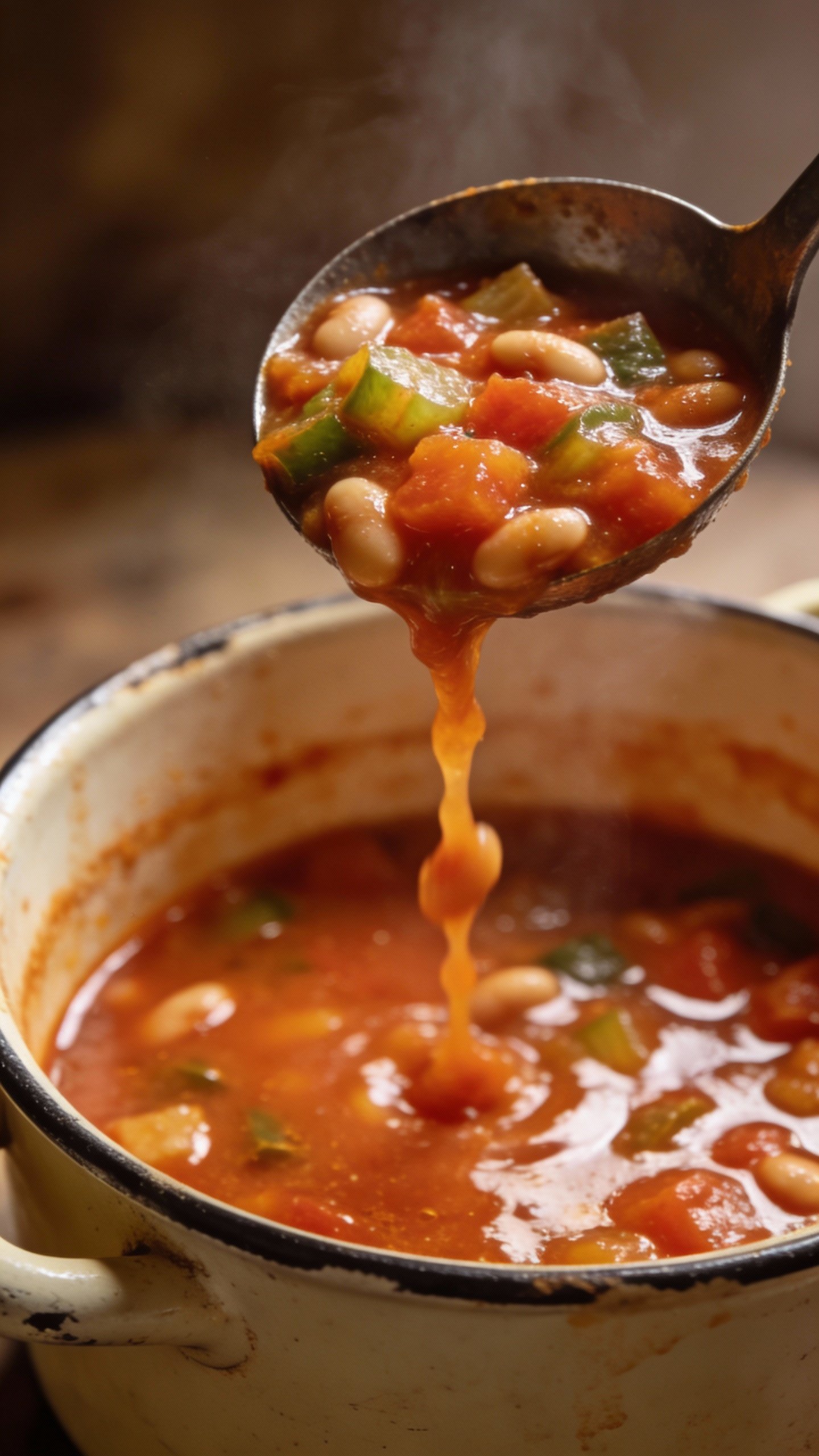
Serve it hot with crusty bread and a drizzle of extra-virgin olive oil. Finish bowls with grated Parm and black pepper. Hungry now?
Storage tips:
- Fridge: 4–5 days in a sealed container.
- Pasta strategy: Store noodles separately so the soup stays brothy, not gummy.
- Freezer: Freeze without pasta or delicate greens. Add them when reheating.
Leftover glow-up:
- Blend a cup of soup and stir it back in for a creamier texture.
- Add cooked sausage or rotisserie chicken for a protein bump.
- Top with a runny fried egg. Yes, seriously. Brunch soup.
Common Pitfalls (And How to Dodge Them)
You can’t really ruin minestrone, but you can make it meh. Let’s avoid that.
- Under-seasoning: Salt in layers—after soffritto, after broth, after pasta.
- One-note acidity: Tomatoes need balance. Finish with olive oil and acid.
- Mushy veggies: Stagger your add-ins. Tough first, tender last.
- Too thick: Add water or broth. Minestrone should scoop and slurp.
- Forgotten herbs: Fresh herbs at the end wake it up. Don’t deny your soup caffeine.
FAQ
Can I make minestrone in a slow cooker?
Absolutely. Sauté the soffritto and tomato paste on the stove first for flavor. Then add everything except pasta and delicate greens to the slow cooker and cook on low for 6–7 hours. Stir in cooked pasta and greens in the last 15–20 minutes. Finish with herbs and acid.
What beans work best?
Cannellini beans give a creamy, mild texture. Borlotti (cranberry) beans add nuttiness and color. You can mix them for the best of both worlds. FYI, chickpeas work too, but they hold their shape more and change the vibe slightly.
Do I need stock, or will water do?
Good stock tastes better, but water works in a pinch if your soffritto is well-caramelized and you use a Parmesan rind and herbs. Taste as you go and adjust salt. IMO, low-sodium broth gives you the easiest win.
How do I keep the pasta from soaking up all the liquid?
Cook pasta separately and store it apart from the soup. Add it to bowls right before serving. If you cooked pasta in the pot and things got thick, just add more broth or water and re-season.
Is minestrone vegetarian or vegan?
It can be either. Use vegetable broth and skip the Parmesan rind to make it vegan. For garnish, swap Parm with a dairy-free “parm” or a sprinkle of toasted breadcrumbs mixed with lemon zest and olive oil for crunch.
Can I make it ahead?
Yes, and it tastes even better the next day. Just hold the pasta and delicate greens until reheating. The flavors marry overnight like a sitcom couple that finally figures it out in season three.
Wrap-Up: The Bowl That Loves You Back
Minestrone hands you comfort with zero pretension. You chop, you simmer, you finish with herbs and a little acid, and boom—cozy-town. Keep it flexible, trust your taste, and don’t skimp on the olive oil drizzle at the end. With a loaf of bread and a generous sprinkle of Parm, you just made the week better, one spoonful at a time.
Loved This Recipe?
If you're looking for more simple, healthy dinners your family will actually eat, grab my FREE 7-Day Easy Dinner Reset. You'll get 7 easy dinner recipes, simple grocery lists, and a done-for-you plan that takes the stress out of mealtime.