Salted Caramel Protein Cheesecake – Creamy, Light, and Satisfying
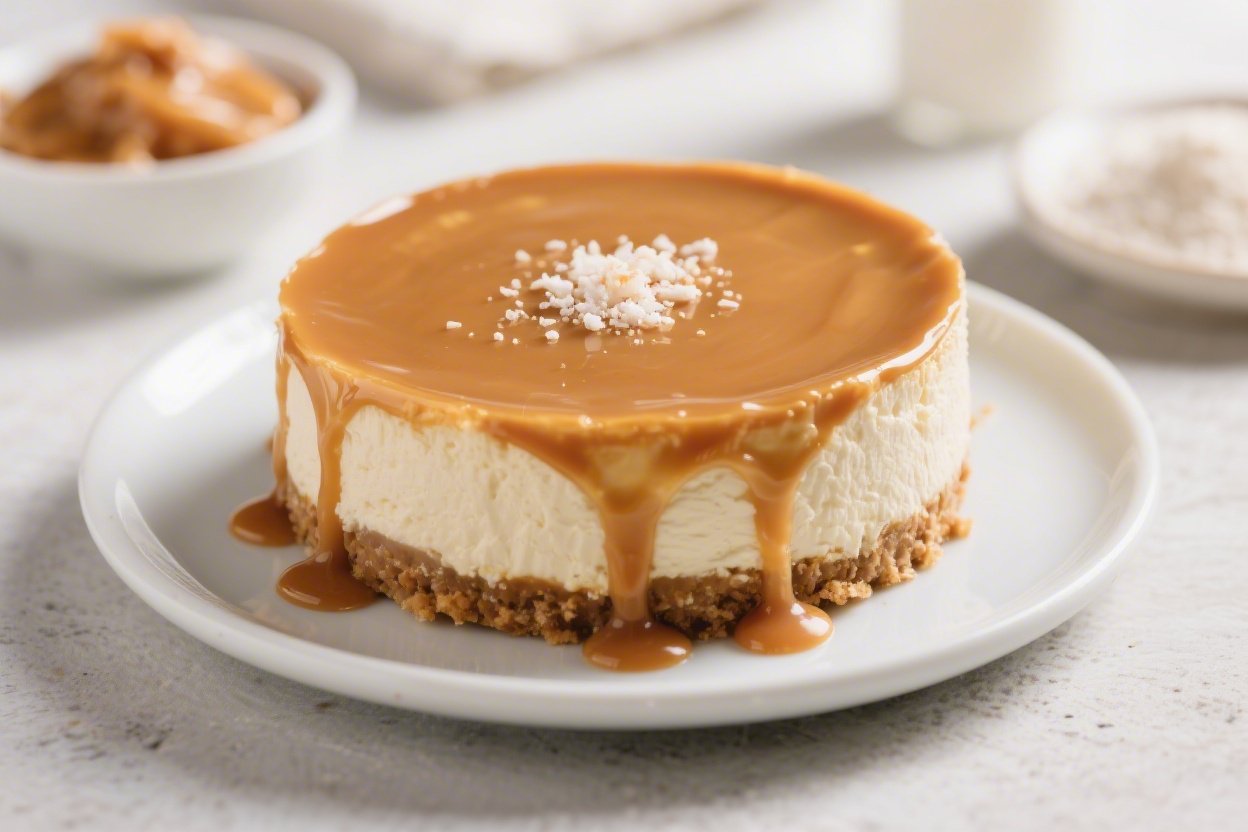
If you love cheesecake but want something lighter that still tastes indulgent, this is your sweet spot. This salted caramel protein cheesecake is creamy, smooth, and topped with a glossy caramel swirl that tastes like a bakery treat. The twist?
Never wonder what's for dinner again.
Get 7 healthy, family-friendly dinners complete with recipes, grocery lists, and simple meal plans delivered straight to your inbox.
It packs extra protein and uses smarter ingredients, so you can enjoy a slice without the sugar crash. It’s great for a make-ahead dessert, a high-protein snack, or a special-occasion treat that won’t weigh you down. You’ll get all the flavor and texture you crave, with a fresher, cleaner finish.
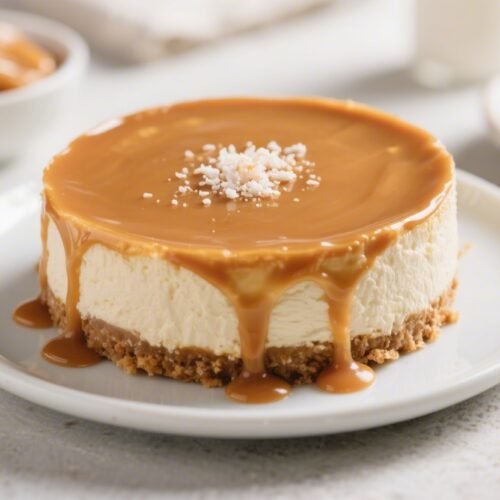
Salted Caramel Protein Cheesecake - Creamy, Light, and Satisfying
Ingredients
- For the crust: Rolled oats (or oat flour)
- Almond flour
- Coconut oil or melted unsalted butter
- Brown sugar or coconut sugar
- Pinch of salt
- Vanilla extract
- For the filling: Light cream cheese (room temperature)
- Plain 2% Greek yogurt
- Vanilla whey or casein protein powder
- Eggs
- Egg white (optional, for extra protein)
- Granulated sweetener (sugar, monk fruit blend, or erythritol)
- Pure vanilla extract
- Fresh lemon juice
- Pinch of salt
- For the salted caramel: Granulated sugar (or coconut sugar for a deeper flavor)
- Water
- Unsalted butter
- Heavy cream or canned coconut cream
- Flaky sea salt
- Vanilla extract
- Optional garnish: Extra flaky sea salt, a few crushed almonds, or dark chocolate shavings
Instructions
- Prep the pan: Line the bottom of a 9-inch springform pan with parchment and lightly grease the sides. Heat your oven to 325°F (165°C).
- Make the crust: In a bowl, mix 1 cup oat flour (or finely ground oats), 1/2 cup almond flour, 3 tablespoons brown sugar, a pinch of salt, 1/4 cup melted coconut oil or butter, and 1/2 teaspoon vanilla. Press firmly into the pan. Bake for 8–10 minutes until set. Cool slightly.
- Blend the filling: Using a hand mixer on low, beat 16 ounces light cream cheese until smooth. Add 1 cup Greek yogurt, 1/2 cup vanilla protein powder, 1/2 cup granulated sweetener, 2 eggs plus 1 egg white, 1 teaspoon vanilla, 1 teaspoon lemon juice, and a pinch of salt. Mix on low until just combined and silky. Avoid overmixing.
- Set up for a gentle bake: Wrap the outside of the springform pan with foil if you plan to water-bath it. Place the pan in a larger roasting pan and pour in hot water to reach halfway up the sides. Or, place a separate pan of hot water on the lower oven rack for added moisture.
- Bake: Pour the filling over the crust. Bake at 325°F for 45–55 minutes, until the edges are set and the center has a slight wobble. Turn off the oven, crack the door, and let it sit inside for 30 minutes.
- Cool completely: Remove from the oven, run a knife around the edge, and cool to room temperature. Then chill for at least 4 hours, preferably overnight, for the best texture.
- Make the salted caramel: In a small saucepan, combine 1/2 cup sugar and 2 tablespoons water. Heat over medium without stirring until it turns deep amber. Off heat, whisk in 2 tablespoons butter and 1/4 cup warm cream. Return to low heat to smooth it out. Stir in 1/2 teaspoon vanilla and 1/2 to 3/4 teaspoon flaky salt, to taste. Cool until pourable but not hot.
- Finish and serve: Release the cheesecake from the pan. Spoon or drizzle the salted caramel over the top, letting some cascade down the sides. Sprinkle a little extra flaky salt. Slice with a warm knife for clean edges.
Why This Recipe Works
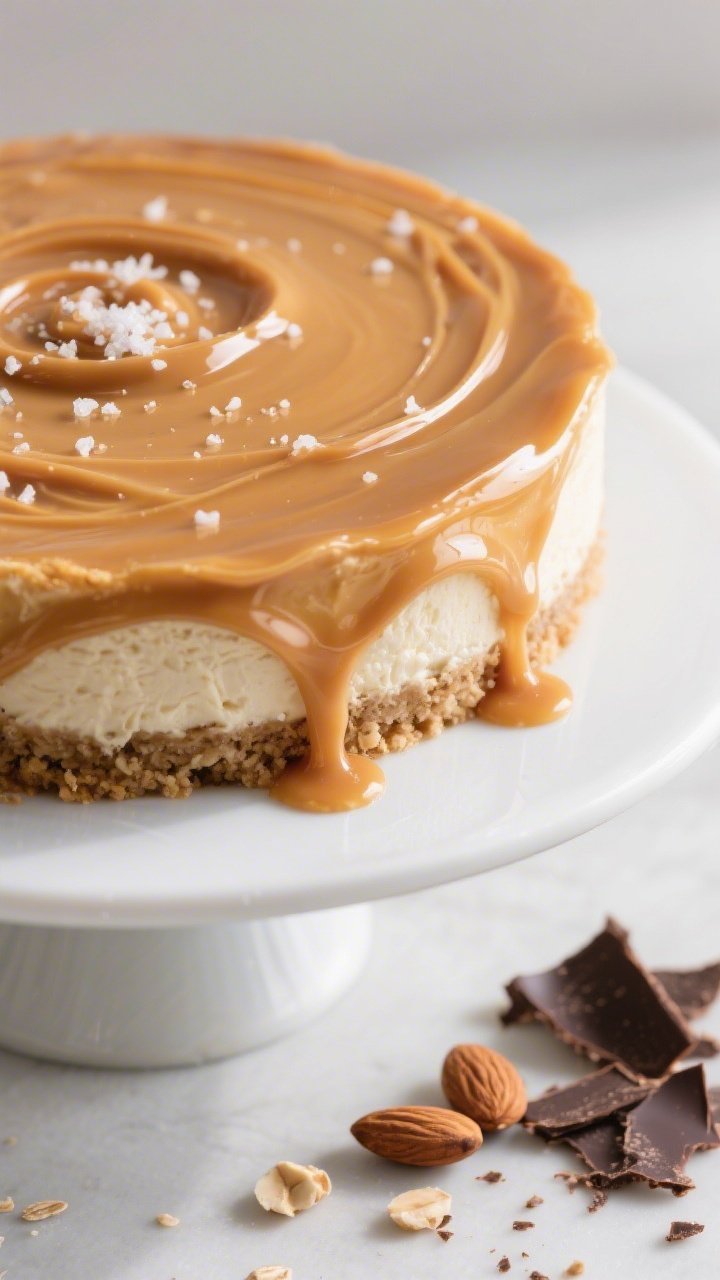
- High protein, lower sugar: Using Greek yogurt, light cream cheese, and whey or casein powder gives structure and creaminess without heavy cream or lots of sugar.
- Silky texture without cracks: A lower-and-slow bake plus a water bath effect (or a pan of water in the oven) keeps the cheesecake moist and smooth.
- Balanced sweetness: A mix of brown sugar or coconut sugar with a little granulated sweetener keeps it sweet but not cloying.
- Easy caramel shortcut: A quick stovetop caramel with a pinch of flaky salt gives you that signature salted caramel finish without fuss.
- Foolproof crust: A simple oat-and-almond crust holds together well and adds a subtle nutty note that pairs with caramel.
Shopping List
- For the crust:
- Rolled oats (or oat flour)
- Almond flour
- Coconut oil or melted unsalted butter
- Brown sugar or coconut sugar
- Pinch of salt
- Vanilla extract
- For the filling:
- Light cream cheese (room temperature)
- Plain 2% Greek yogurt
- Vanilla whey or casein protein powder
- Eggs
- Egg white (optional, for extra protein)
- Granulated sweetener (sugar, monk fruit blend, or erythritol)
- Pure vanilla extract
- Fresh lemon juice
- Pinch of salt
- For the salted caramel:
- Granulated sugar (or coconut sugar for a deeper flavor)
- Water
- Unsalted butter
- Heavy cream or canned coconut cream
- Flaky sea salt
- Vanilla extract
- Optional garnish: Extra flaky sea salt, a few crushed almonds, or dark chocolate shavings
How to Make It
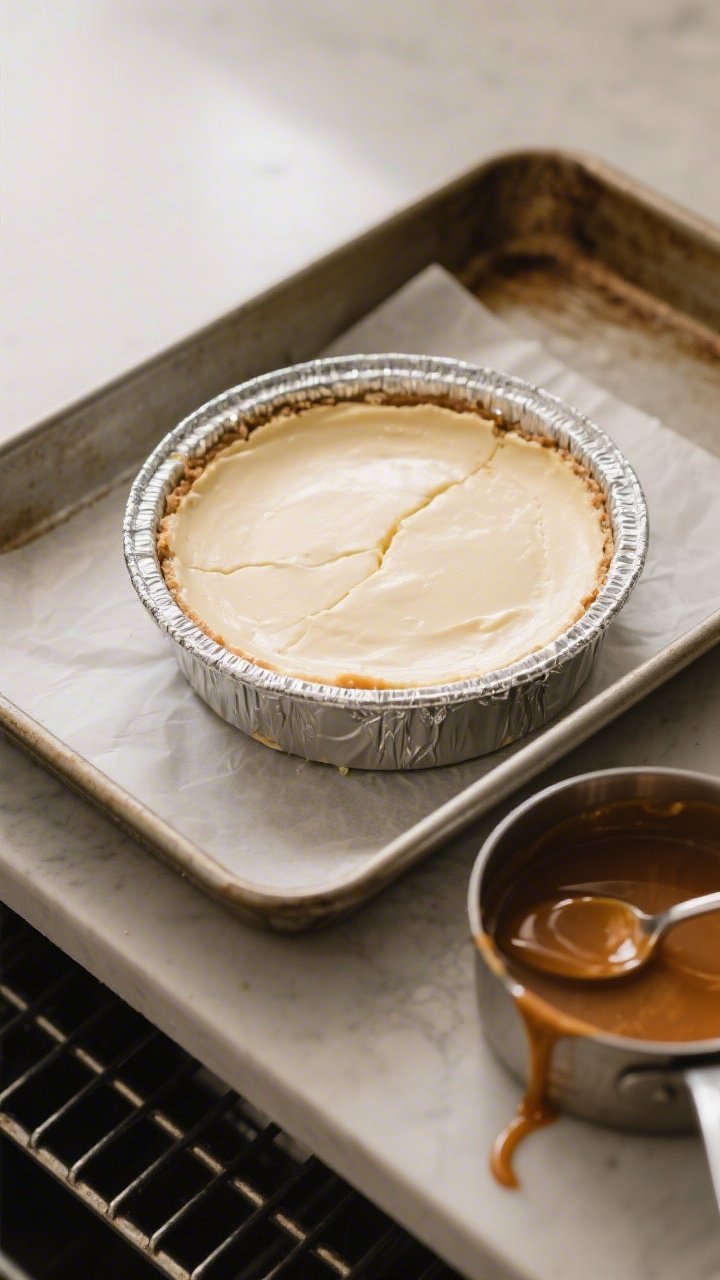
- Prep the pan: Line the bottom of a 9-inch springform pan with parchment and lightly grease the sides.
Heat your oven to 325°F (165°C).
- Make the crust: In a bowl, mix 1 cup oat flour (or finely ground oats), 1/2 cup almond flour, 3 tablespoons brown sugar, a pinch of salt, 1/4 cup melted coconut oil or butter, and 1/2 teaspoon vanilla. Press firmly into the pan. Bake for 8–10 minutes until set.
Cool slightly.
- Blend the filling: Using a hand mixer on low, beat 16 ounces light cream cheese until smooth. Add 1 cup Greek yogurt, 1/2 cup vanilla protein powder, 1/2 cup granulated sweetener, 2 eggs plus 1 egg white, 1 teaspoon vanilla, 1 teaspoon lemon juice, and a pinch of salt. Mix on low until just combined and silky.
Avoid overmixing.
- Set up for a gentle bake: Wrap the outside of the springform pan with foil if you plan to water-bath it. Place the pan in a larger roasting pan and pour in hot water to reach halfway up the sides. Or, place a separate pan of hot water on the lower oven rack for added moisture.
- Bake: Pour the filling over the crust.
Bake at 325°F for 45–55 minutes, until the edges are set and the center has a slight wobble. Turn off the oven, crack the door, and let it sit inside for 30 minutes.
- Cool completely: Remove from the oven, run a knife around the edge, and cool to room temperature. Then chill for at least 4 hours, preferably overnight, for the best texture.
- Make the salted caramel: In a small saucepan, combine 1/2 cup sugar and 2 tablespoons water.
Heat over medium without stirring until it turns deep amber. Off heat, whisk in 2 tablespoons butter and 1/4 cup warm cream. Return to low heat to smooth it out.
Stir in 1/2 teaspoon vanilla and 1/2 to 3/4 teaspoon flaky salt, to taste. Cool until pourable but not hot.
- Finish and serve: Release the cheesecake from the pan. Spoon or drizzle the salted caramel over the top, letting some cascade down the sides.
Sprinkle a little extra flaky salt. Slice with a warm knife for clean edges.
Keeping It Fresh
- Chill time matters: The cheesecake sets fully in the fridge. Keep it covered to prevent absorbing fridge odors.
- Storage: Refrigerate for up to 5 days.
For longer storage, freeze slices individually, well wrapped, for up to 2 months.
- Caramel strategy: Add caramel just before serving if you plan to store it for more than a day. This keeps the top from getting tacky.
- Reheating: No reheating needed. If frozen, thaw in the fridge overnight for the best texture.
Benefits of This Recipe
- Protein-forward dessert: The blend of Greek yogurt, eggs, and protein powder makes each slice more satisfying.
- Lighter than classic cheesecake: Less sugar and lighter dairy keep it creamy without being heavy.
- Meal-prep friendly: It holds up well for several days, making it a smart make-ahead option.
- Flexible sweetness: Works with traditional sugar or reduced-sugar alternatives, depending on your goals.
- Big flavor payoff: Salted caramel adds a bakery-level finish without complicated techniques.
Pitfalls to Watch Out For
- Overbaking: If the center is fully firm in the oven, it’s overdone.
Pull it when there’s a gentle jiggle.
- Overmixing: Too much air leads to cracks. Mix on low and stop when it’s smooth.
- Cold ingredients: Cold cream cheese clumps. Bring dairy to room temperature first for a silky batter.
- Rushing the cool-down: Sudden temperature changes can cause splitting.
Let it rest in the turned-off oven, then cool gradually.
- Grainy caramel: Stirring sugar early can crystallize it. Swirl the pan gently and only whisk once the butter and cream go in.
Need More Easy Dinner Ideas?
Get my FREE 7-Day Easy Dinner Reset and enjoy a full week of healthy dinners without the meal-planning stress.
Recipe Variations
- No-bake version: Skip the eggs. Use 1 tablespoon powdered gelatin bloomed in 2 tablespoons cold water, melted, and whisked into the filling.
Chill until set. Use a cookie crumb crust instead of baking.
- Gluten-free crust: Use certified gluten-free oats or all almond flour. Check labels on protein powder and other ingredients.
- Lower fat: Swap light cream cheese for Neufchâtel and use nonfat Greek yogurt.
Expect a slightly tangier profile.
- Dairy-free: Use vegan cream cheese and coconut yogurt, and a plant-based protein powder. Make the caramel with coconut cream and vegan butter.
- Chocolate caramel: Stir 2 ounces of chopped dark chocolate into the warm caramel for a mocha-like twist.
- Apple pie riff: Add 1 teaspoon cinnamon to the crust and top slices with sautéed apples and a caramel drizzle.
FAQ
Can I use a different protein powder?
Yes. Whey blends and casein produce the creamiest texture.
Plant-based protein works but can be slightly grainy. Start with 1/3 cup and adjust to taste and thickness.
How do I prevent cracks without a water bath?
Bake at a lower temperature, avoid overmixing, and let it cool gradually in the oven with the door cracked. Run a thin knife around the edge right after baking to release tension.
Is the caramel necessary?
No, but it elevates the dessert.
If you want to skip it, add 2 tablespoons of caramel sauce to the filling or finish with a light honey drizzle and flaky salt.
What sweetener works best for the filling?
Granulated sugar gives the smoothest texture. Erythritol or monk fruit blends also work but can crystallize slightly when very cold. Let the cheesecake sit at room temp for 10 minutes before serving.
Can I make this in muffin tins?
Absolutely.
Line a muffin tray, add crust, and bake 6–7 minutes. Fill and bake 15–18 minutes, then cool and chill. Perfect for portion control and freezing.
How do I know when it’s done?
The edges should be set, and the center should wobble like Jell-O when you nudge the pan.
It will firm up as it cools and chills.
Final Thoughts
This salted caramel protein cheesecake proves you can have a dessert that feels special and still supports your goals. The texture is lush, the flavor is balanced, and the caramel gives it that bakery finish. Make it once for a weekend treat, then stash a few slices in the fridge for the week.
When you want something sweet, a chilled, glossy slice will be waiting—satisfying, not heavy, and completely worth it.
Printable Recipe Card
Want just the essential recipe details without scrolling through the article? Get our printable recipe card with just the ingredients and instructions.
Loved This Recipe?
If you're looking for more simple, healthy dinners your family will actually eat, grab my FREE 7-Day Easy Dinner Reset. You'll get 7 easy dinner recipes, simple grocery lists, and a done-for-you plan that takes the stress out of mealtime.