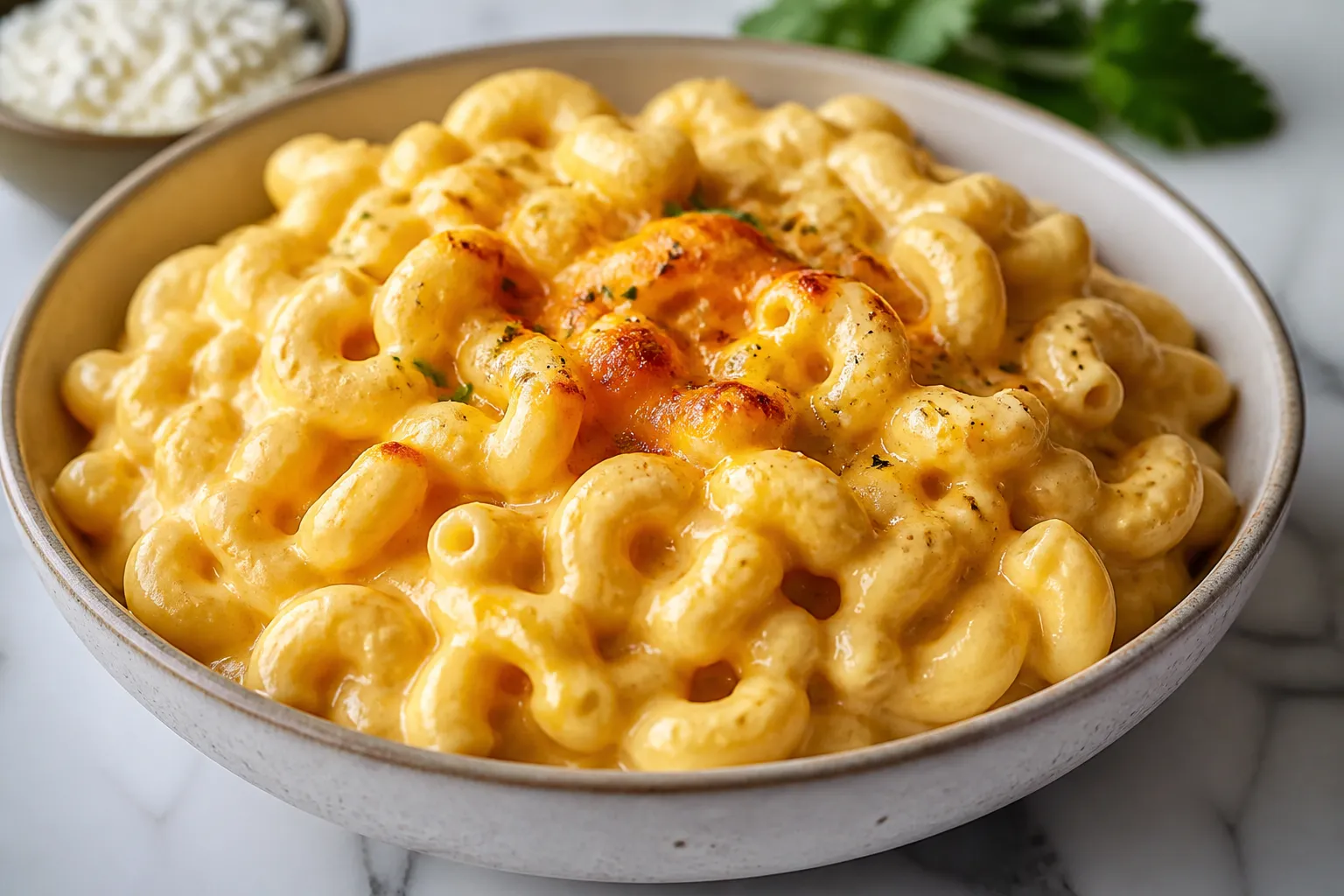
High-Protein Cottage Cheese Mac and Cheese – Comforting, Creamy, and Satisfying
A bowl of mac and cheese that’s rich, creamy, and actually packs a solid protein punch? That’s the idea behind this cottage cheese version. It blends familiar comfort with better nutrition, so you can enjoy a weeknight favorite without feeling weighed down.
Never wonder what's for dinner again.
Get 7 healthy, family-friendly dinners complete with recipes, grocery lists, and simple meal plans delivered straight to your inbox.
The sauce comes together in minutes, and the texture is luxuriously smooth once the cottage cheese is blended. You’ll still get that cheesy pull, but with extra staying power.
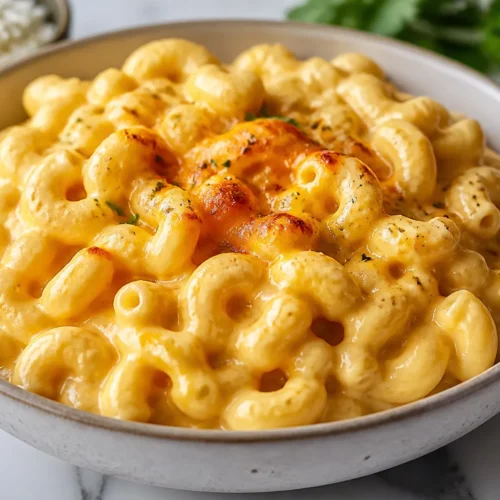
High-Protein Cottage Cheese Mac and Cheese – Comforting, Creamy, and Satisfying
Ingredients
- 8 ounces elbow macaroni (or shells, cavatappi, or whole-wheat pasta)
- 1 cup low-fat cottage cheese (2% works best for creaminess)
- 1/2 cup plain Greek yogurt (2% or 5%)
- 1 cup shredded sharp cheddar cheese
- 1/4 cup grated Parmesan cheese
- 2 tablespoons unsalted butter
- 3/4 cup milk (2% or whole)
- 2 teaspoons cornstarch
- 1/2 teaspoon Dijon mustard
- 1/4 teaspoon garlic powder
- 1/4 teaspoon onion powder
- 1/4 teaspoon smoked paprika (optional)
- Salt and black pepper to taste
- Optional toppings: chopped chives, hot sauce, or toasted breadcrumbs
Instructions
- Cook the pasta. Bring a large pot of salted water to a boil. Add pasta and cook until just shy of al dente, about 1–2 minutes less than the package suggests. Reserve 1/2 cup pasta water, then drain.
- Blend the base. In a blender, combine cottage cheese, Greek yogurt, milk, Dijon, garlic powder, onion powder, and paprika. Blend until completely smooth and silky.
- Stabilize the sauce. In a small bowl, whisk cornstarch with 1 tablespoon water to make a slurry. This helps prevent a grainy or watery sauce.
- Build the cheese sauce. Melt butter in a large skillet over medium heat. Pour in the blended mixture and the cornstarch slurry. Cook, whisking gently, until it starts to steam and thicken, 2–3 minutes. Do not let it boil hard.
- Add the cheeses. Reduce heat to low. Stir in cheddar and Parmesan by the handful, letting each addition melt before adding more. Season with salt and pepper. If it seems too thick, loosen with a splash of milk or reserved pasta water.
- Combine with pasta. Add drained pasta to the skillet and toss to coat. Let it simmer on low for 1–2 minutes so the noodles absorb the sauce. Adjust seasoning as needed.
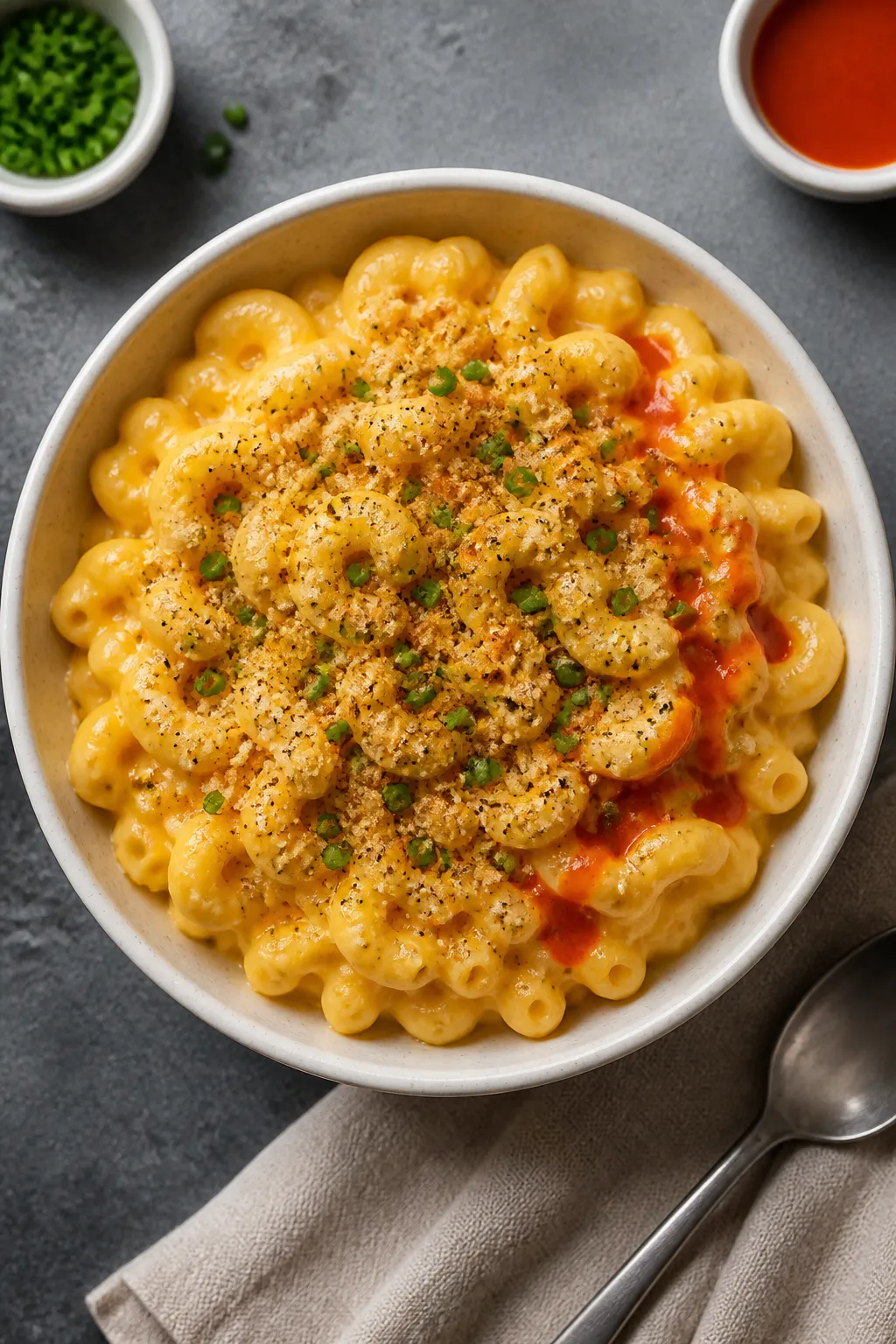
- Finish and serve. Top with chives, a dash of hot sauce, or toasted breadcrumbs if you like. Serve hot and enjoy that creamy, cheesy pull.
Why This Recipe Works
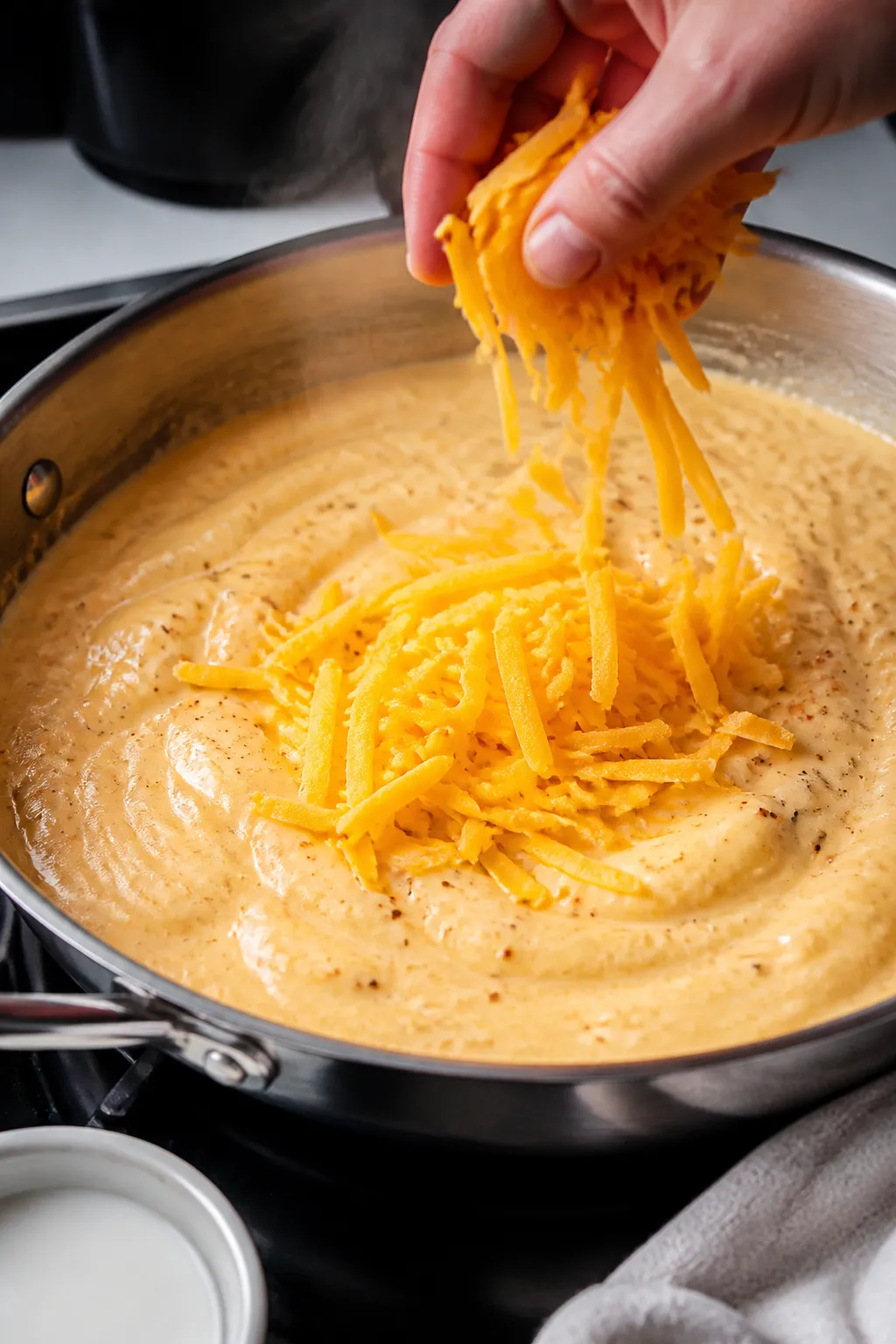
This mac and cheese leans on cottage cheese for a silky, high-protein base. When blended, cottage cheese turns velvety and mild, ready to carry bold cheddar flavor without heavy cream.
Greek yogurt adds body and tang, while just a touch of butter keeps the sauce classic and comforting.
Cooking the pasta slightly under al dente lets it finish in the sauce, soaking up flavor and staying firm. A quick cornstarch slurry helps the sauce cling to the noodles and prevents separation. The result is a balanced bowl that’s creamy, cheesy, and surprisingly light.
What You’ll Need
- 8 ounces elbow macaroni (or shells, cavatappi, or whole-wheat pasta)
- 1 cup low-fat cottage cheese (2% works best for creaminess)
- 1/2 cup plain Greek yogurt (2% or 5%)
- 1 cup shredded sharp cheddar cheese
- 1/4 cup grated Parmesan cheese
- 2 tablespoons unsalted butter
- 3/4 cup milk (2% or whole)
- 2 teaspoons cornstarch
- 1/2 teaspoon Dijon mustard
- 1/4 teaspoon garlic powder
- 1/4 teaspoon onion powder
- 1/4 teaspoon smoked paprika (optional)
- Salt and black pepper to taste
- Optional toppings: chopped chives, hot sauce, or toasted breadcrumbs
Instructions
- Cook the pasta. Bring a large pot of salted water to a boil.
Add pasta and cook until just shy of al dente, about 1–2 minutes less than the package suggests. Reserve 1/2 cup pasta water, then drain.
- Blend the base. In a blender, combine cottage cheese, Greek yogurt, milk, Dijon, garlic powder, onion powder, and paprika. Blend until completely smooth and silky.
- Stabilize the sauce. In a small bowl, whisk cornstarch with 1 tablespoon water to make a slurry.
This helps prevent a grainy or watery sauce.
- Build the cheese sauce. Melt butter in a large skillet over medium heat. Pour in the blended mixture and the cornstarch slurry. Cook, whisking gently, until it starts to steam and thicken, 2–3 minutes.
Do not let it boil hard.
- Add the cheeses. Reduce heat to low. Stir in cheddar and Parmesan by the handful, letting each addition melt before adding more. Season with salt and pepper.
If it seems too thick, loosen with a splash of milk or reserved pasta water.
- Combine with pasta. Add drained pasta to the skillet and toss to coat. Let it simmer on low for 1–2 minutes so the noodles absorb the sauce. Adjust seasoning as needed.
- Finish and serve. Top with chives, a dash of hot sauce, or toasted breadcrumbs if you like.
Serve hot and enjoy that creamy, cheesy pull.
Keeping It Fresh
Store leftovers in an airtight container in the fridge for up to 3 days. The sauce will thicken as it chills, so plan to add a splash of milk or water when reheating. Gentle heat is your friend here.
Reheat on the stovetop over low heat, stirring often.
If using a microwave, warm in short bursts and stir between each to keep it smooth. Avoid high heat, which can cause the dairy to separate.
Freezing isn’t ideal for this one. The blended dairy can become grainy once thawed.
For best texture, make it fresh or refrigerate and enjoy within a few days.
Benefits of This Recipe
- High in protein: Cottage cheese and Greek yogurt add a meaningful protein boost without heavy cream.
- Lighter but still indulgent: You get a thick, creamy sauce with fewer calories than classic versions.
- Quick and weeknight-friendly: The sauce blends in minutes, and the meal is on the table in about 25 minutes.
- Customizable: Swap cheeses, change up the pasta, or fold in veggies or lean protein.
- Kid- and adult-approved: Familiar flavors with a stealthy nutrition upgrade.
What Not to Do
- Don’t boil the sauce hard. High heat can curdle dairy and make the sauce gritty.
- Don’t skip blending. Unblended cottage cheese will stay lumpy and won’t create a smooth base.
- Don’t overcook the pasta. Mushy noodles won’t hold up in a creamy sauce.
- Don’t add all the cheese at once. Gradual melting avoids clumps and keeps the sauce glossy.
- Don’t forget seasoning. A pinch of salt, a crack of pepper, and a touch of mustard wake up the flavors.
Recipe Variations
- Green boost: Stir in steamed broccoli florets or peas during the final toss for extra color and fiber.
- Spicy kick: Add a pinch of cayenne or chopped pickled jalapeños and finish with hot sauce.
- Protein-packed: Fold in shredded rotisserie chicken, turkey, or sautéed shrimp for a full meal.
- Smoky blend: Swap half the cheddar for smoked Gouda for a deeper, campfire-style flavor.
- Whole-grain swap: Use whole-wheat pasta for more fiber and a slightly nuttier bite.
- Baked finish: Transfer to a baking dish, top with toasted breadcrumbs and a sprinkle of cheese, and bake at 375°F (190°C) for 10–12 minutes until bubbly.
- Gluten-free: Choose gluten-free pasta and thicken with arrowroot or a gluten-free cornstarch.
Need More Easy Dinner Ideas?
Get my FREE 7-Day Easy Dinner Reset and enjoy a full week of healthy dinners without the meal-planning stress.
FAQ
Can I use fat-free cottage cheese?
You can, but the sauce will be thinner and less silky. For the best balance of creaminess and protein, use 2% cottage cheese and 2% yogurt. If you only have fat-free, add an extra tablespoon of butter or a bit more cheddar to round out the texture.
How can I make the sauce smoother?
Blend the dairy base until completely uniform, at least 45–60 seconds.
If your blender struggles, add a splash more milk. Straining the mixture through a fine-mesh sieve before heating guarantees a super-smooth finish.
What if I don’t have Greek yogurt?
Sour cream works well and adds a richer tang. You can also use plain regular yogurt, but drain it with a paper towel–lined sieve for 15 minutes to thicken it slightly.
Which cheese melts best?
Freshly shredded cheddar melts more smoothly than pre-shredded, which often has anti-caking agents.
Monterey Jack, Colby, or a blend of cheddar and mozzarella also work nicely. Keep Parmesan as a supporting player for savory depth.
How do I avoid a grainy sauce?
Keep the heat moderate, whisk gently, and don’t let the sauce boil. Add the cheese off the heat or on low, in small handfuls.
The cornstarch slurry also keeps things stable and glossy.
Can I make it ahead?
Yes, but it’s best enjoyed fresh. If making ahead, undercook the pasta by 2 minutes, mix with sauce, and cool quickly. Reheat gently with milk until creamy again, and adjust seasoning before serving.
What pasta shape works best?
Elbows, shells, and cavatappi are classic because they capture sauce in their curves.
Short ridged shapes like rotini also cling well. Avoid long noodles, which don’t hold the sauce as effectively.
Is this good for meal prep?
It can be. Portion into containers and refrigerate up to 3 days.
Reheat with a splash of milk and stir well. Adding a handful of steamed veggies or a cooked protein turns it into a balanced lunch box.
In Conclusion
This High-Protein Cottage Cheese Mac and Cheese brings together creamy comfort and smart nutrition in one simple skillet. With a silky blended base and classic cheddar flavor, it satisfies without feeling heavy.
Keep the heat gentle, season confidently, and finish with your favorite add-ins to make it your own. It’s a new weeknight staple that tastes like the old favorite—just a little stronger and smarter.
Printable Recipe Card
Want just the essential recipe details without scrolling through the article? Get our printable recipe card with just the ingredients and instructions.
Loved This Recipe?
If you're looking for more simple, healthy dinners your family will actually eat, grab my FREE 7-Day Easy Dinner Reset. You'll get 7 easy dinner recipes, simple grocery lists, and a done-for-you plan that takes the stress out of mealtime.