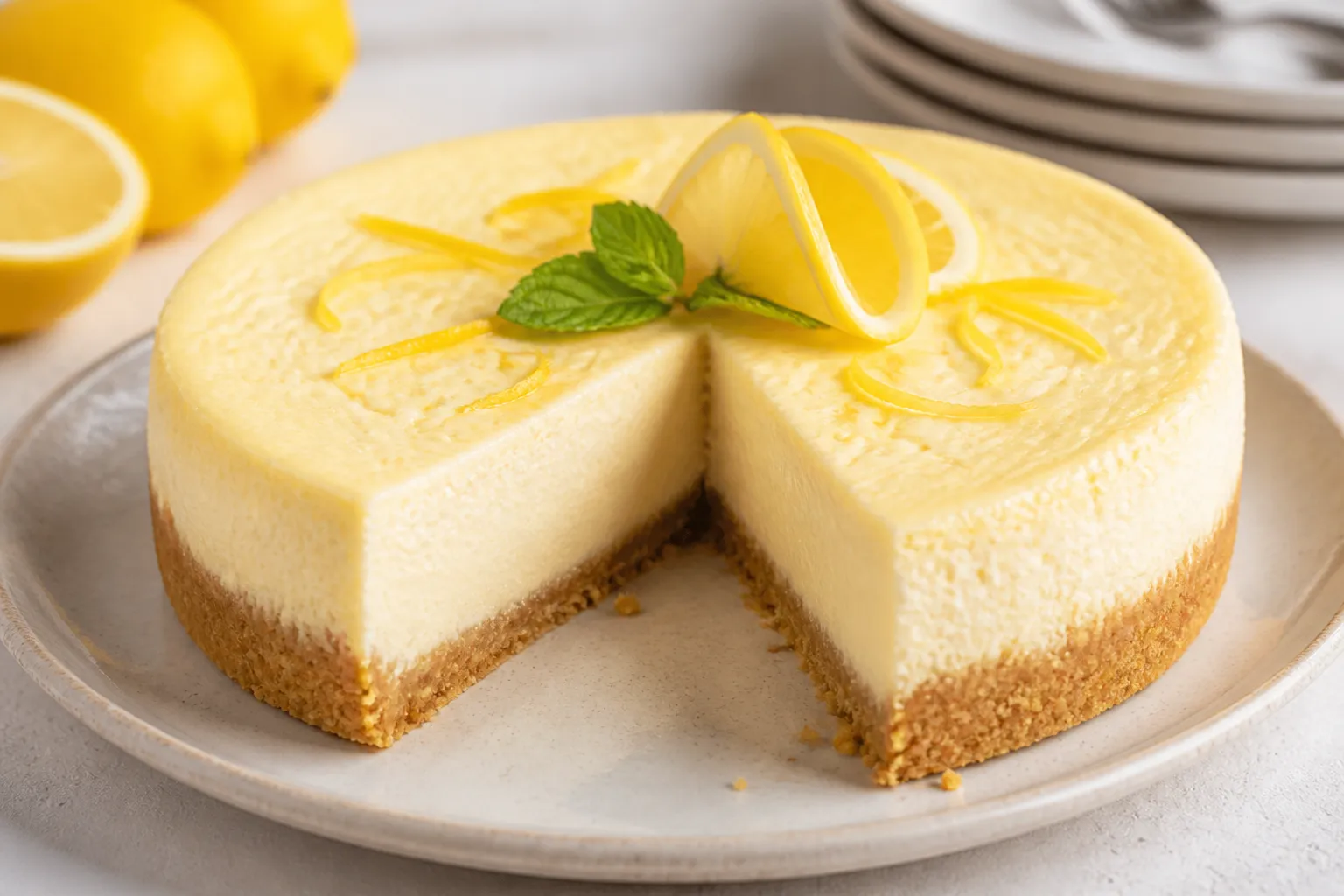
Cottage Cheese Lemon Cheesecake – Light, Bright, and Creamy
This cheesecake brings all the tangy, sunny flavor of lemon with a lighter, cottage cheese-based filling that still tastes rich and satisfying. It’s creamy, gently sweet, and feels special without being heavy. If you’ve ever wanted a cheesecake that’s both elegant and weeknight-friendly, this is it.
Never wonder what's for dinner again.
Get 7 healthy, family-friendly dinners complete with recipes, grocery lists, and simple meal plans delivered straight to your inbox.
The texture is silky, the lemon is fresh and clean, and the crust has that perfect buttery crunch. You won’t miss the traditional cream cheese bomb at all—promise.
Cottage Cheese Lemon Cheesecake - Light, Bright, and Creamy
Ingredients
- For the crust: 1 1/2 cups (150 g) graham cracker crumbs
- 2 tablespoons granulated sugar
- 1/4 teaspoon fine sea salt
- 5 tablespoons unsalted butter, melted
- For the filling: 24 ounces (680 g) full-fat cottage cheese
- 8 ounces (225 g) cream cheese, softened to room temperature
- 3/4 cup (150 g) granulated sugar
- 1/4 cup (50 g) light brown sugar, packed
- 3 large eggs, at room temperature
- 1 large egg yolk
- 2 teaspoons pure vanilla extract
- 2 tablespoons fresh lemon zest (from about 2 large lemons)
- 1/3 cup fresh lemon juice
- 1/4 teaspoon fine sea salt
- 2 tablespoons cornstarch
- 1/3 cup sour cream or plain Greek yogurt, room temperature
- For serving (optional): Lemon curd
- Fresh berries
- Lightly sweetened whipped cream
- Extra lemon zest
Instructions
- Prep the pan: Line the bottom of a 9-inch springform pan with parchment and lightly grease the sides. Set your oven to 325°F (163°C).
- Make the crust: In a bowl, mix graham crumbs, sugar, salt, and melted butter until the crumbs feel like wet sand. Press firmly into the bottom and about 1 inch up the sides of the pan. Use the bottom of a measuring cup for an even layer.
- Par-bake the crust: Bake for 8 to 10 minutes, until lightly fragrant. Cool on a rack while you prepare the filling.
- Blend the cottage cheese: Add cottage cheese to a high-speed blender or food processor. Blend for 1 to 2 minutes, scraping down as needed, until completely smooth and glossy. No lumps should remain.
- Cream the base: In a large bowl, beat the softened cream cheese with granulated and brown sugars until silky and no streaks remain, about 2 minutes.
- Combine: Beat in the blended cottage cheese until fully incorporated and smooth.
- Flavor and thicken: Add vanilla, lemon zest, lemon juice, and salt. Whisk the cornstarch with the sour cream (or yogurt) until no clumps remain, then beat into the batter. The mixture should be thick but pourable.
- Add the eggs: Beat in the eggs and egg yolk one at a time on low speed, mixing just until combined. Do not overmix; too much air can cause cracks.
- Fill the pan: Pour the batter over the cooled crust. Tap the pan gently on the counter a few times to release surface bubbles. Run a toothpick through any visible bubbles.
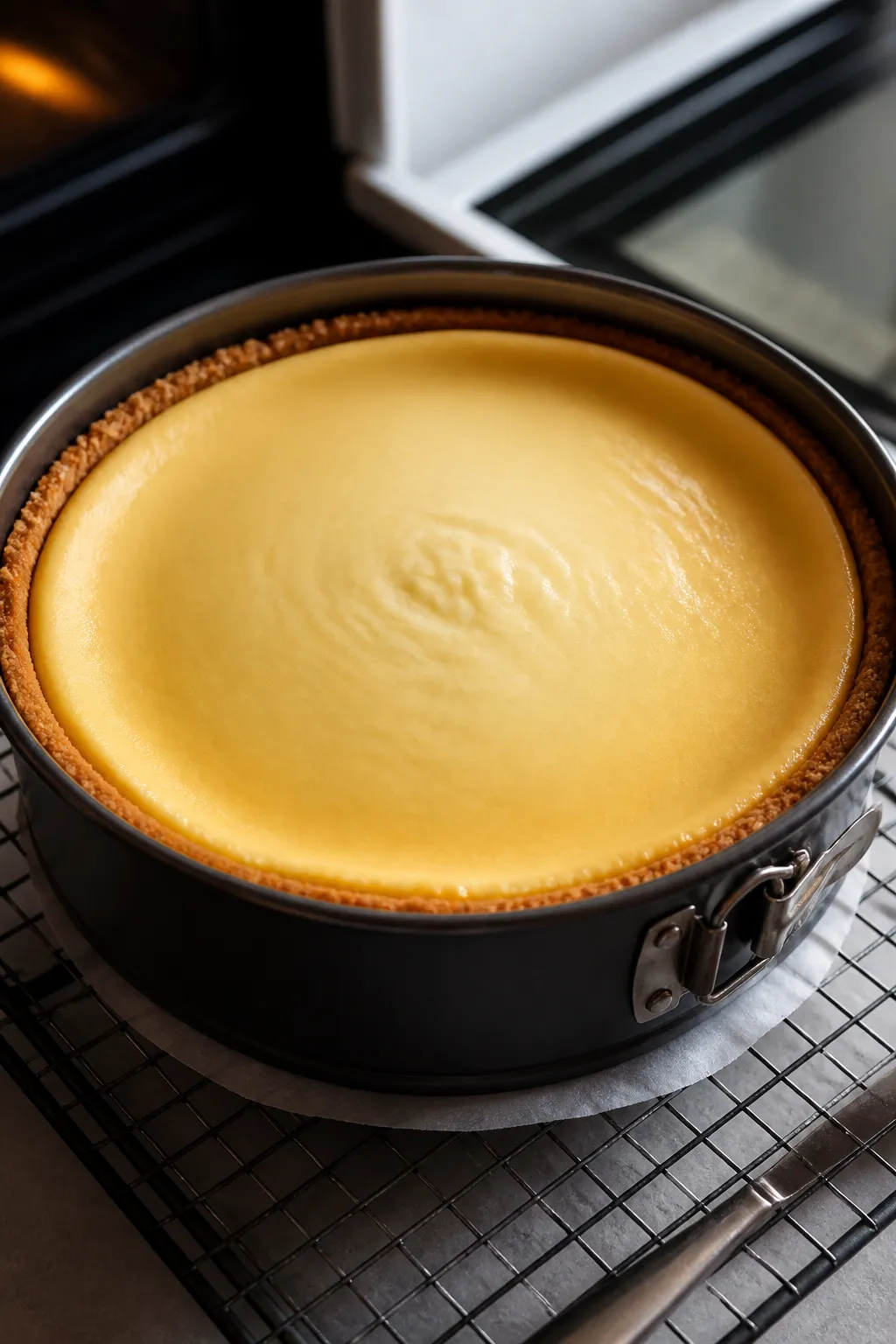
- Bake low and slow: Bake at 325°F (163°C) for 45 to 55 minutes. The edges should be set, and the center should still wobble slightly like Jell-O when you nudge the pan.
- Cool gradually: Turn off the oven, crack the door, and let the cheesecake rest inside for 30 minutes. Move to a rack and cool to room temperature, about 1 to 2 hours.
- Chill to set: Run a thin knife around the edge to loosen. Cover and chill for at least 6 hours, preferably overnight, before unmolding.
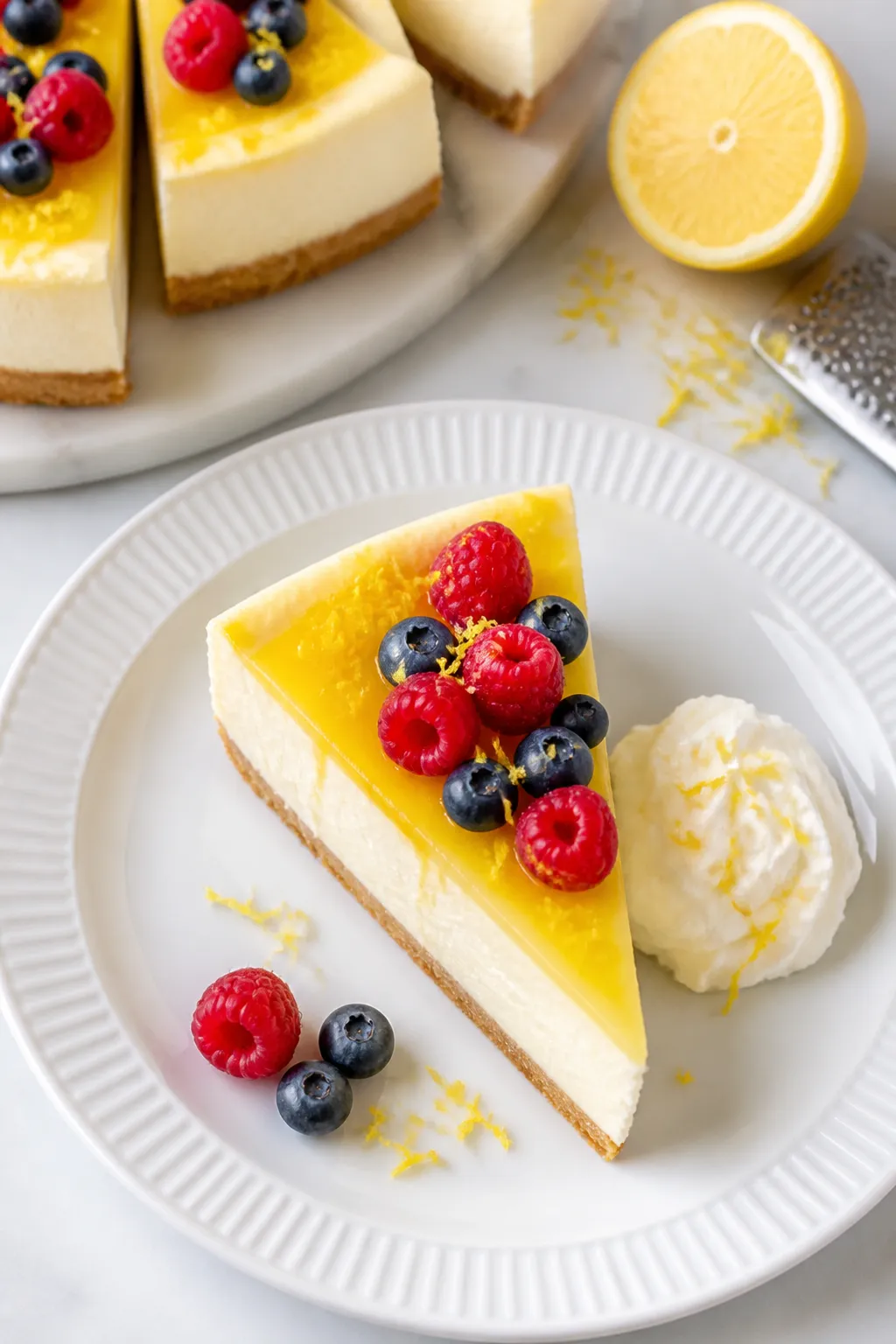
- Serve: Unlatch the springform, remove the ring, and slide the cheesecake onto a platter. Top with lemon curd, berries, or whipped cream if you like. Slice with a hot, clean knife for neat wedges.
What Makes This Recipe So Good
- Lighter but still luscious: Whipped cottage cheese gives you a velvety texture with a bit more protein and less heft than classic cheesecake.
- Bright lemon flavor: Zest and juice build layers of citrus, so each bite tastes fresh, not flat.
- No water bath fuss: This recipe bakes low and slow, so you skip the stress of a bain-marie and still get a smooth top.
- Make-ahead friendly: Cheesecake needs chilling, which makes it perfect for prepping the day before guests arrive.
- Customizable: Change the crust, add berries, or swirl in lemon curd—this base is easy to adapt.
Ingredients
- For the crust:
- 1 1/2 cups (150 g) graham cracker crumbs
- 2 tablespoons granulated sugar
- 1/4 teaspoon fine sea salt
- 5 tablespoons unsalted butter, melted
- For the filling:
- 24 ounces (680 g) full-fat cottage cheese
- 8 ounces (225 g) cream cheese, softened to room temperature
- 3/4 cup (150 g) granulated sugar
- 1/4 cup (50 g) light brown sugar, packed
- 3 large eggs, at room temperature
- 1 large egg yolk
- 2 teaspoons pure vanilla extract
- 2 tablespoons fresh lemon zest (from about 2 large lemons)
- 1/3 cup fresh lemon juice
- 1/4 teaspoon fine sea salt
- 2 tablespoons cornstarch
- 1/3 cup sour cream or plain Greek yogurt, room temperature
- For serving (optional):
- Lemon curd
- Fresh berries
- Lightly sweetened whipped cream
- Extra lemon zest
Step-by-Step Instructions
- Prep the pan: Line the bottom of a 9-inch springform pan with parchment and lightly grease the sides. Set your oven to 325°F (163°C).
- Make the crust: In a bowl, mix graham crumbs, sugar, salt, and melted butter until the crumbs feel like wet sand.
Press firmly into the bottom and about 1 inch up the sides of the pan. Use the bottom of a measuring cup for an even layer.
- Par-bake the crust: Bake for 8 to 10 minutes, until lightly fragrant. Cool on a rack while you prepare the filling.
- Blend the cottage cheese: Add cottage cheese to a high-speed blender or food processor.
Blend for 1 to 2 minutes, scraping down as needed, until completely smooth and glossy. No lumps should remain.
- Cream the base: In a large bowl, beat the softened cream cheese with granulated and brown sugars until silky and no streaks remain, about 2 minutes.
- Combine: Beat in the blended cottage cheese until fully incorporated and smooth.
- Flavor and thicken: Add vanilla, lemon zest, lemon juice, and salt. Whisk the cornstarch with the sour cream (or yogurt) until no clumps remain, then beat into the batter.
The mixture should be thick but pourable.
- Add the eggs: Beat in the eggs and egg yolk one at a time on low speed, mixing just until combined. Do not overmix; too much air can cause cracks.
- Fill the pan: Pour the batter over the cooled crust. Tap the pan gently on the counter a few times to release surface bubbles. Run a toothpick through any visible bubbles.
- Bake low and slow: Bake at 325°F (163°C) for 45 to 55 minutes.
The edges should be set, and the center should still wobble slightly like Jell-O when you nudge the pan.
- Cool gradually: Turn off the oven, crack the door, and let the cheesecake rest inside for 30 minutes. Move to a rack and cool to room temperature, about 1 to 2 hours.
- Chill to set: Run a thin knife around the edge to loosen. Cover and chill for at least 6 hours, preferably overnight, before unmolding.
- Serve: Unlatch the springform, remove the ring, and slide the cheesecake onto a platter.
Top with lemon curd, berries, or whipped cream if you like. Slice with a hot, clean knife for neat wedges.
How to Store
- Refrigerate: Keep covered in the fridge for up to 5 days. Store without toppings to prevent sogginess.
- Freeze: Chill fully, then wrap slices tightly in plastic and foil.
Freeze for up to 2 months. Thaw overnight in the fridge.
- Best texture: Let refrigerated slices sit at room temperature for 10 to 15 minutes before serving for the creamiest bite.
Why This is Good for You
- More protein, less heaviness: Cottage cheese adds protein and a lighter feel, so a small slice satisfies without weighing you down.
- Balanced sweetness: Lemon’s brightness lets you use a touch less sugar while still tasting vibrant.
- Portion-friendly: Because the flavor is clean and the texture is rich, a modest slice feels complete.
- Flexible fats: You can swap in Greek yogurt for sour cream if you want a tangy, slightly leaner finish.
What Not to Do
- Don’t skip blending the cottage cheese: Any curds left behind will affect the texture. It must be completely smooth.
- Don’t overbeat the eggs: Too much air leads to cracks and a soufflé-like rise that collapses.
- Don’t rush the cool-down: Rapid temperature changes cause fissures on top.
The gradual oven cool is key.
- Don’t use bottled lemon juice: It tastes dull and slightly bitter. Fresh juice and zest make all the difference.
- Don’t overbake: Pull it when the center still jiggles. It finishes setting as it cools.
Alternatives
- Crust swaps: Use digestive biscuits, vanilla wafers, gingersnaps, or almond flour and finely ground nuts for a gluten-free base.
Adjust butter slightly as needed.
- Dairy tweaks: Replace sour cream with full-fat Greek yogurt for a tangier bite. Use part Neufchâtel instead of cream cheese if you prefer a lighter feel.
- Citrus variations: Try Meyer lemons for a floral note, or go half lemon and half lime for a punchier citrus profile. Orange zest adds sweetness without extra sugar.
- Swirls and toppings: Gently swirl 1/3 cup lemon curd into the batter before baking, or finish cooled slices with a thin layer of curd and fresh raspberries.
- Mini cheesecakes: Bake in a lined muffin tin for 18 to 22 minutes.
Great for parties and easy portion control.
FAQ
Can I use low-fat cottage cheese?
Yes, but the texture may be slightly less creamy. If you use low-fat, keep the cream cheese full-fat and don’t reduce the sour cream or yogurt. This helps maintain a smooth, rich finish.
Need More Easy Dinner Ideas?
Get my FREE 7-Day Easy Dinner Reset and enjoy a full week of healthy dinners without the meal-planning stress.
My cheesecake cracked.
What happened?
Cracks usually come from overmixing, overbaking, or cooling too fast. Next time, mix on low after adding eggs, pull it when the center jiggles, and let it cool in the oven with the door cracked. A little lemon curd on top hides minor cracks nicely.
Do I need a water bath?
Not for this recipe.
The lower baking temperature and gradual cool help prevent cracking. If your oven runs hot or you want extra insurance, you can place a pan of hot water on the lower rack to add gentle humidity.
Can I make it without a springform pan?
You can use a deep 9-inch cake pan lined with an overhanging parchment sling for easy removal. Bake times may vary slightly.
Cool fully before lifting it out.
How do I know when it’s done?
Look for set edges and a soft wobble in the center. If it sloshes, give it more time. If it’s fully firm in the center, it’s likely overbaked.
What’s the best way to get clean slices?
Use a long, sharp knife dipped in hot water and wiped dry between cuts.
This melts through the filling and keeps the edges neat.
Can I make it ahead?
Absolutely. Cheesecake is best after a full overnight chill. You can bake it up to two days ahead and garnish just before serving.
Is the lemon flavor strong?
It’s bright and balanced.
For a bolder lemon punch, add an extra teaspoon of zest or finish slices with a spoonful of lemon curd.
Can I reduce the sugar?
You can cut the granulated sugar to 1/2 cup and skip the brown sugar, but the texture will be slightly less silky and the lemon may taste sharper. Taste the batter and adjust to your preference.
How do I make it gluten-free?
Use gluten-free graham crackers or a nut-based crust. Ensure all other ingredients, especially cornstarch and vanilla, are labeled gluten-free.
In Conclusion
This Cottage Cheese Lemon Cheesecake brings together creamy texture, clean citrus flavor, and a lighter profile that still feels indulgent.
It’s simple to make, easy to tweak, and perfect for make-ahead entertaining. With a few smart steps—smoothly blended cottage cheese, gentle baking, and a patient chill—you’ll get a cheesecake that slices beautifully and tastes bright and refined. Add berries or a ribbon of lemon curd, and you’ve got a dessert that earns repeat requests without breaking a sweat.
Printable Recipe Card
Want just the essential recipe details without scrolling through the article? Get our printable recipe card with just the ingredients and instructions.
Loved This Recipe?
If you're looking for more simple, healthy dinners your family will actually eat, grab my FREE 7-Day Easy Dinner Reset. You'll get 7 easy dinner recipes, simple grocery lists, and a done-for-you plan that takes the stress out of mealtime.