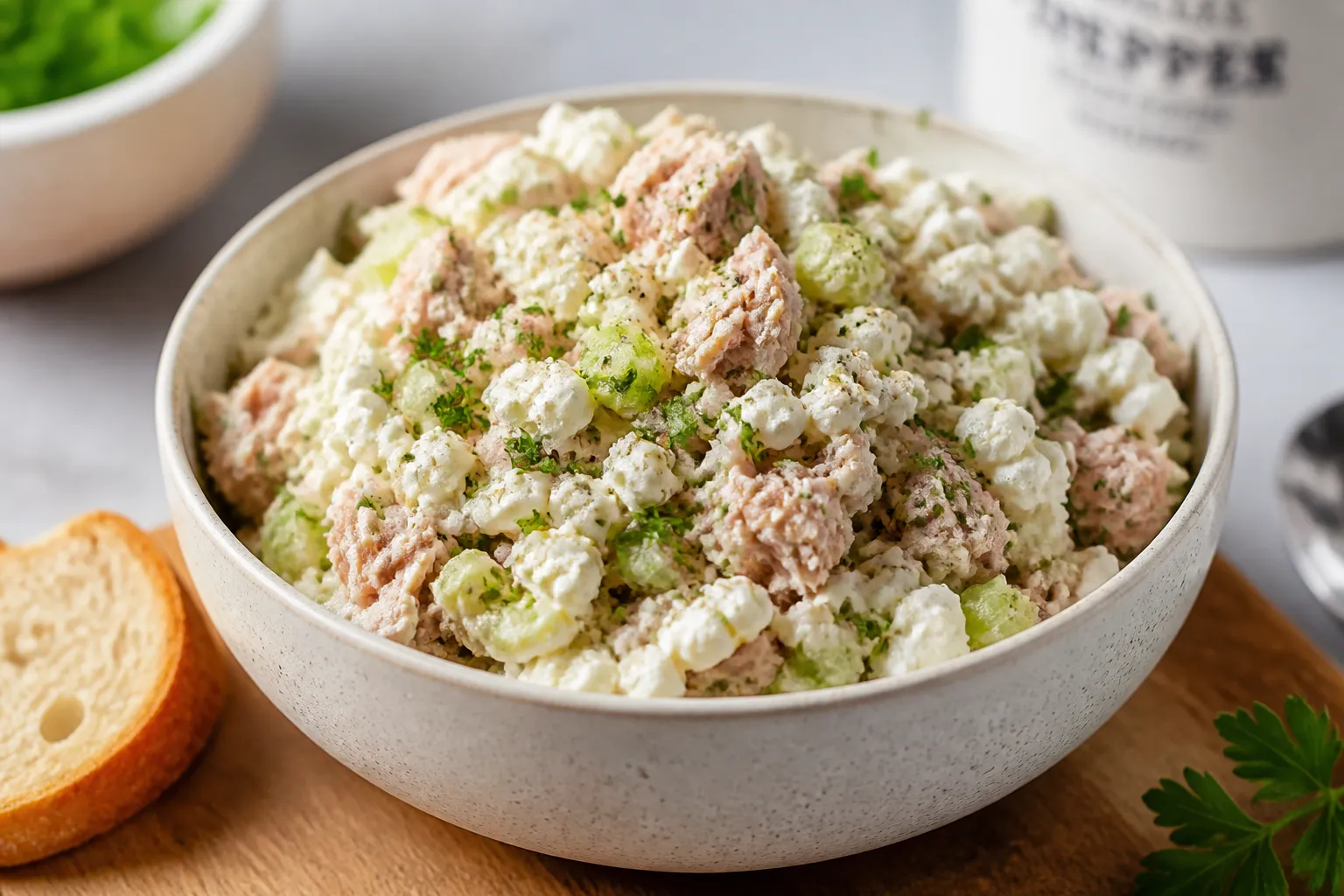
Cottage Cheese Tuna Salad – Creamy, Protein-Packed, and Easy
This cottage cheese tuna salad is a simple, satisfying twist on a classic. It’s creamy without being heavy, full of crunch, and comes together in minutes. If you’re looking for a quick lunch that actually keeps you full, this one delivers.
Never wonder what's for dinner again.
Get 7 healthy, family-friendly dinners complete with recipes, grocery lists, and simple meal plans delivered straight to your inbox.
It’s great on toast, tucked in a wrap, or spooned over crisp lettuce. You can meal prep it on Sunday and enjoy it all week.
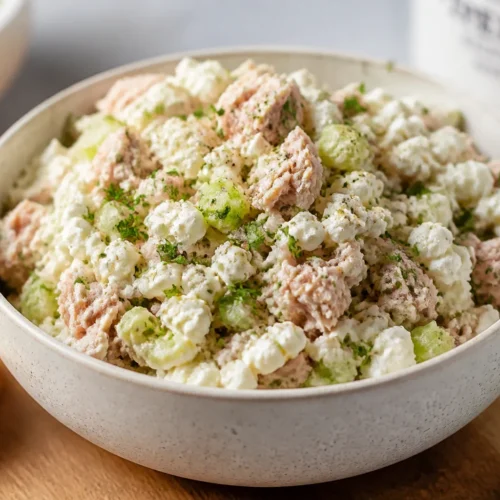
Cottage Cheese Tuna Salad - Creamy, Protein-Packed, and Easy
Ingredients
- Canned tuna: 2 cans (5 ounces each), drained. Choose water-packed for a lighter salad or oil-packed for extra richness.
- Cottage cheese: 1 cup. Small curd works best for a smooth mix; use 2% or 4% for more creaminess.
- Greek yogurt or mayonnaise (optional): 2–3 tablespoons for added creaminess and classic flavor balance.
- Celery: 2 ribs, finely diced, for crunch.
- Red onion or shallot: 2–3 tablespoons, finely minced, for bite and flavor.
- Dill pickles or relish: 2 tablespoons, chopped. Adds tang and brightness.
- Dijon mustard: 1–2 teaspoons, for a gentle kick.
- Lemon juice: 1 tablespoon, fresh if possible.
- Fresh herbs: 2 tablespoons chopped dill, parsley, or chives.
- Salt and black pepper: To taste.
- Optional add-ins: A pinch of garlic powder, 1 teaspoon capers, 1 tablespoon olive oil, or a dash of hot sauce.
Instructions
- Prep the tuna: Drain the cans thoroughly, then flake the tuna with a fork in a mixing bowl to break up large pieces.
- Mix the base: Add cottage cheese to the tuna. If using, fold in Greek yogurt or mayonnaise until the texture looks creamy but not soupy.
- Add crunch and flavor: Stir in celery, red onion, and pickles. Sprinkle in fresh herbs.
- Season it: Add Dijon mustard, lemon juice, salt, and pepper. Mix gently until everything is well combined.
- Taste and adjust: Add more lemon for brightness, more mustard for zip, or a pinch of salt if it needs it. If it’s too thick, a splash of pickle juice or olive oil loosens it up.
- Chill briefly: Let the salad rest in the fridge for 15–30 minutes to allow flavors to meld. Not required, but worth it.
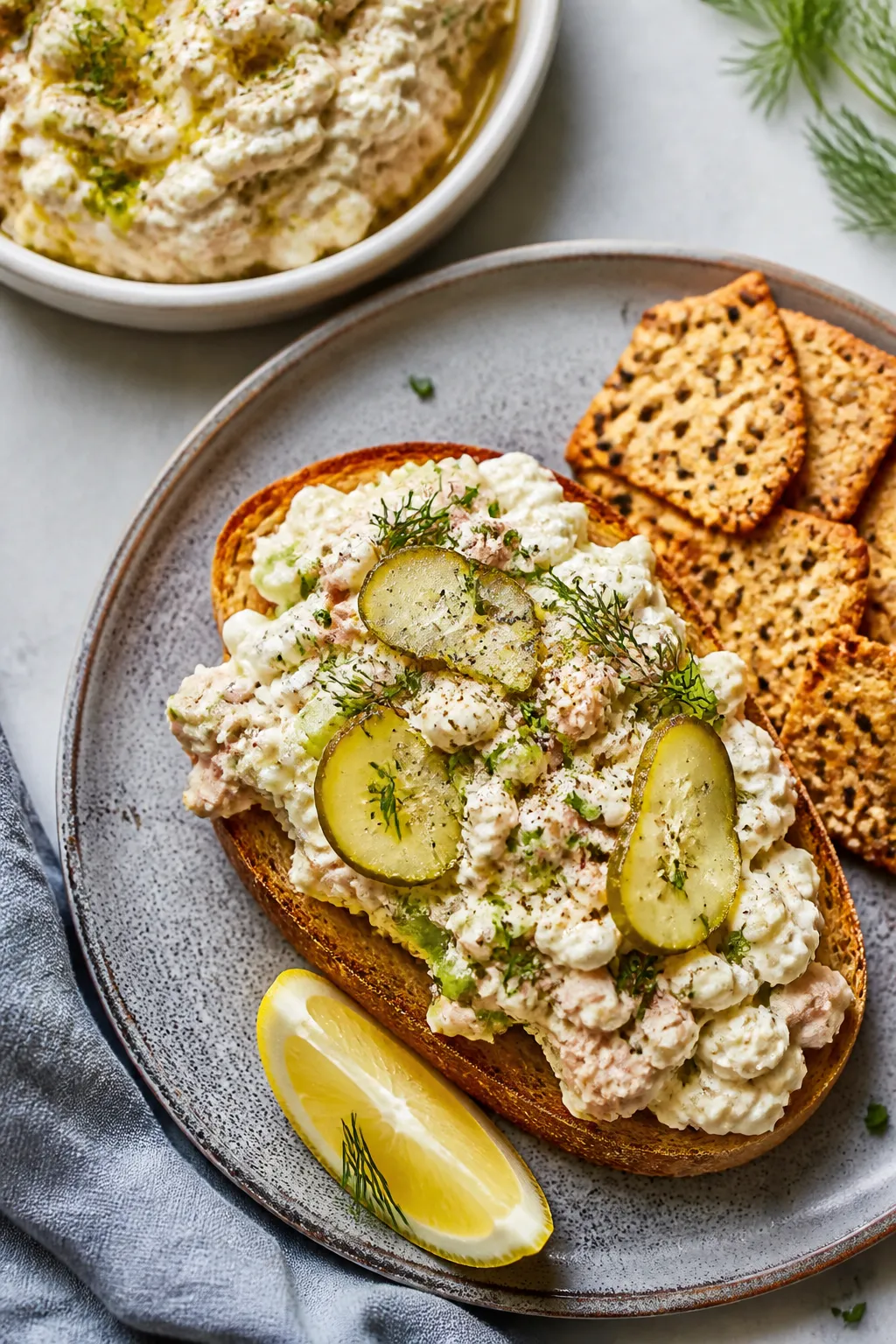
- Serve: Spoon onto toasted sourdough, wrap in a whole-wheat tortilla with lettuce, or mound over mixed greens. Crackers, cucumber rounds, or stuffed tomatoes also work well.
What Makes This Recipe So Good
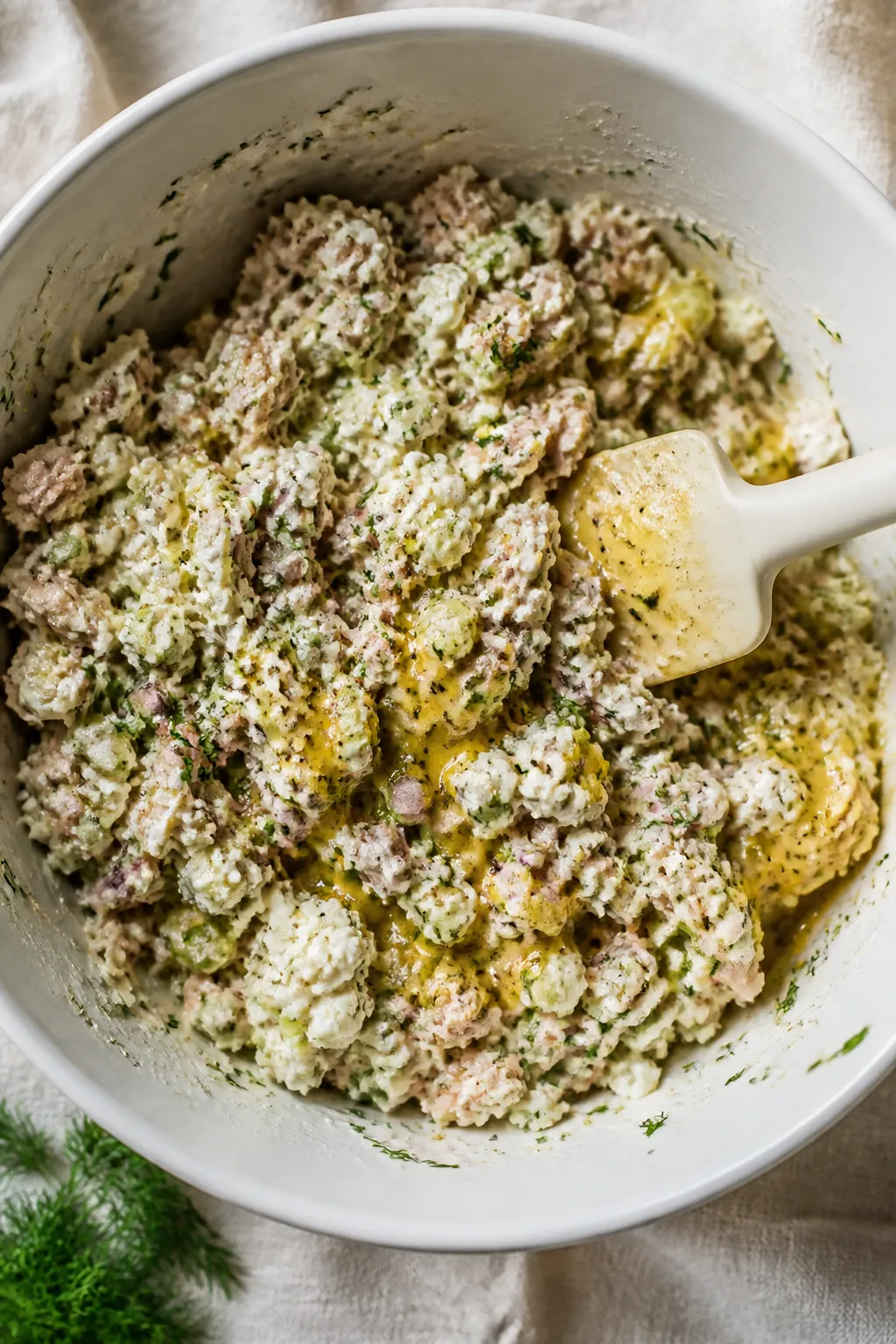
- High-protein and filling: Tuna and cottage cheese team up to give you a powerful protein boost that keeps hunger in check.
- Light but creamy: Cottage cheese adds a silky texture and mild tang without the heaviness of mayonnaise.
- Budget-friendly: Pantry tuna, basic veggies, and a few seasonings make this an affordable meal idea.
- Versatile: Serve it in a sandwich, with crackers, on cucumbers, or as a quick snack straight from the bowl.
- Customizable: Add pickles, herbs, mustard, or a squeeze of lemon to match your taste.
What You’ll Need
- Canned tuna: 2 cans (5 ounces each), drained. Choose water-packed for a lighter salad or oil-packed for extra richness.
- Cottage cheese: 1 cup.
Small curd works best for a smooth mix; use 2% or 4% for more creaminess.
- Greek yogurt or mayonnaise (optional): 2–3 tablespoons for added creaminess and classic flavor balance.
- Celery: 2 ribs, finely diced, for crunch.
- Red onion or shallot: 2–3 tablespoons, finely minced, for bite and flavor.
- Dill pickles or relish: 2 tablespoons, chopped. Adds tang and brightness.
- Dijon mustard: 1–2 teaspoons, for a gentle kick.
- Lemon juice: 1 tablespoon, fresh if possible.
- Fresh herbs: 2 tablespoons chopped dill, parsley, or chives.
- Salt and black pepper: To taste.
- Optional add-ins: A pinch of garlic powder, 1 teaspoon capers, 1 tablespoon olive oil, or a dash of hot sauce.
Instructions
- Prep the tuna: Drain the cans thoroughly, then flake the tuna with a fork in a mixing bowl to break up large pieces.
- Mix the base: Add cottage cheese to the tuna. If using, fold in Greek yogurt or mayonnaise until the texture looks creamy but not soupy.
- Add crunch and flavor: Stir in celery, red onion, and pickles.
Sprinkle in fresh herbs.
- Season it: Add Dijon mustard, lemon juice, salt, and pepper. Mix gently until everything is well combined.
- Taste and adjust: Add more lemon for brightness, more mustard for zip, or a pinch of salt if it needs it. If it’s too thick, a splash of pickle juice or olive oil loosens it up.
- Chill briefly: Let the salad rest in the fridge for 15–30 minutes to allow flavors to meld.
Not required, but worth it.
- Serve: Spoon onto toasted sourdough, wrap in a whole-wheat tortilla with lettuce, or mound over mixed greens. Crackers, cucumber rounds, or stuffed tomatoes also work well.
Keeping It Fresh
- Storage: Store in an airtight container in the refrigerator for up to 3 days. Stir before serving.
- Moisture control: Drain tuna well and pat it dry if needed.
If your cottage cheese is very watery, spoon off excess liquid before mixing.
- Layering tip: If packing for lunch, layer greens separately and assemble right before eating to avoid soggy lettuce or bread.
- Freezing: Not recommended. The texture of cottage cheese and tuna changes after freezing.
Health Benefits
- Lean protein: Tuna and cottage cheese are both high in protein, helping with satiety and muscle maintenance.
- Calcium and B vitamins: Cottage cheese provides calcium and B12; tuna adds niacin and B6.
- Omega-3 fats: Tuna contains heart-friendly omega-3s, which support brain and heart health.
- Lower in calories: Using cottage cheese and Greek yogurt instead of all mayo keeps calories and saturated fat in check while staying creamy.
- High-volume, nutrient-dense: Crunchy veggies add fiber and volume without many calories, making this both satisfying and light.
Pitfalls to Watch Out For
- Watery salad: Excess liquid from tuna or cottage cheese can thin the mixture. Drain well and avoid overmixing.
- Too salty: Pickles, cottage cheese, and canned tuna all carry salt.
Taste before salting, and use low-sodium tuna if needed.
- Bland flavor: Without acid and herbs, it can taste flat. Lemon juice, Dijon, and fresh dill make a big difference.
- Onion overload: Raw onion is potent. Mince it finely and measure lightly; you can always add more.
- Texture mismatch: If you dislike curds, pulse the cottage cheese in a blender for 10–15 seconds for a smoother base.
Alternatives
Need More Easy Dinner Ideas?
Get my FREE 7-Day Easy Dinner Reset and enjoy a full week of healthy dinners without the meal-planning stress.
- No dairy: Replace cottage cheese with mashed avocado or a dairy-free yogurt.
Add lemon and olive oil to balance.
- No tuna: Use canned salmon or shredded rotisserie chicken. For a vegetarian option, try mashed chickpeas.
- Lower fat: Choose low-fat cottage cheese and skip mayo. Add a splash of lemon and a little Greek yogurt for creaminess.
- Extra crunch: Add diced cucumber, bell pepper, or shredded carrots.
Sunflower seeds or toasted almonds are great too.
- Flavor twists: Stir in curry powder and raisins for a curried version, or add capers, chopped olives, and parsley for a Mediterranean spin.
- Spicy kick: Mix in hot sauce, red pepper flakes, or minced jalapeño.
FAQ
Can I make this ahead?
Yes. It holds up well for 2–3 days in the fridge. For best texture, stir before serving and add delicate herbs the day you plan to eat it.
What kind of tuna is best?
Solid or chunk light tuna in water keeps it light and flaky.
Albacore is richer and meatier but can be drier; add a bit more cottage cheese or olive oil if using albacore.
How can I reduce the sodium?
Use low-sodium tuna and low-sodium cottage cheese. Rinse the tuna briefly and drain well, and skip added salt until after tasting.
Is there a way to make it smoother?
Blend the cottage cheese briefly before mixing, or mash the salad with a fork. This reduces curd size and makes the spread silkier for sandwiches.
Can I use frozen or fresh tuna?
You can, but cook it first and flake it once cooled.
Season lightly, then proceed with the recipe. Canned tuna is faster and has the classic texture.
What should I serve it with?
Try whole-grain toast, lettuce cups, cherry tomatoes, avocado halves, pita, or seeded crackers. A side of fruit or a simple green salad rounds out the meal.
Final Thoughts
Cottage cheese tuna salad is a no-fuss, high-protein meal that actually tastes great.
It’s creamy, bright, and endlessly flexible, whether you like it classic or with a twist. Keep a batch in the fridge for quick lunches, snacks, or an easy dinner. With simple ingredients and smart seasoning, it earns a spot in your weekly rotation.
Printable Recipe Card
Want just the essential recipe details without scrolling through the article? Get our printable recipe card with just the ingredients and instructions.
Loved This Recipe?
If you're looking for more simple, healthy dinners your family will actually eat, grab my FREE 7-Day Easy Dinner Reset. You'll get 7 easy dinner recipes, simple grocery lists, and a done-for-you plan that takes the stress out of mealtime.