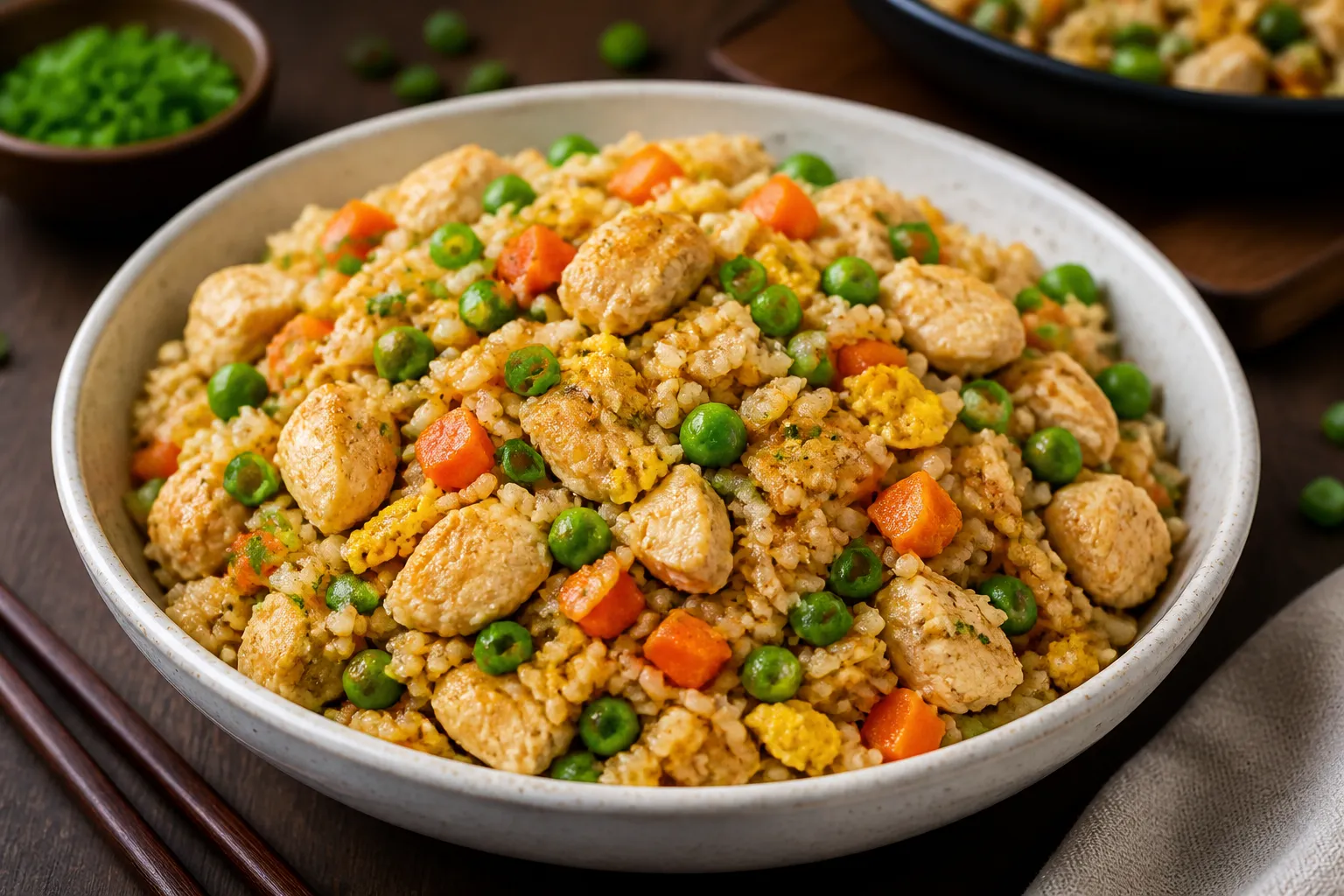
High Protein Chicken Fried Rice – A Satisfying, Balanced Weeknight Favorite
If you love takeout fried rice but want something more filling and better for you, this version hits the sweet spot. It’s loaded with tender chicken, fluffy eggs, and a smart mix of veggies for crunch and color. The best part?
Never wonder what's for dinner again.
Get 7 healthy, family-friendly dinners complete with recipes, grocery lists, and simple meal plans delivered straight to your inbox.
It’s high in protein without feeling heavy or complicated. You’ll get that signature stir-fried flavor with a few simple tweaks that make it feel fresh and homemade. Perfect for meal prep, quick dinners, or a post-workout meal that actually tastes great.
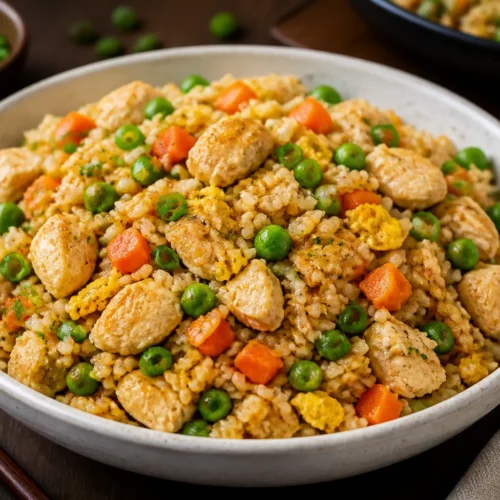
High Protein Chicken Fried Rice - A Satisfying, Balanced Weeknight Favorite
Ingredients
- Cooked, chilled rice (4 cups) – Day-old jasmine or long-grain works best. Cold rice prevents clumping.
- Chicken breast or thighs (1 to 1.25 pounds) – Cut into small, bite-size pieces for quick cooking.
- Eggs (3 large) – Scrambled for extra protein and richness.
- Edamame, shelled (1 cup) – Optional but adds a clean protein boost and color.
- Carrots (1 cup, diced) – Fresh or frozen both work.
- Frozen peas (1 cup) – Sweet pop and classic fried rice vibe.
- Green onions (4–5 stalks, sliced) – Whites for aromatics, greens for garnish.
- Garlic (3 cloves, minced) – Builds savory depth.
- Ginger (1 tablespoon, minced) – Fresh and brightens the whole dish.
- Low-sodium soy sauce (3–4 tablespoons) – Start with less; adjust to taste.
- Oyster sauce (1 tablespoon) – Optional, adds a savory, slightly sweet note.
- Sesame oil (1–2 teaspoons) – For aroma at the end; don’t overdo it.
- Neutral high-heat oil (2–3 tablespoons) – Avocado, canola, or peanut oil.
- White pepper (1/4 teaspoon) – Traditional touch; black pepper works too.
- Salt (to taste) – Adjust at the end after the sauces.
- Optional add-ins – Chili crisp or sriracha for heat, a squeeze of lime for brightness.
Instructions
- Prep the rice. If your rice is clumped, spread it on a tray and break it up with your fingers. Cold, separated grains are key to a good stir-fry texture.
- Make a simple sauce. In a small bowl, mix 3 tablespoons soy sauce, 1 tablespoon oyster sauce (if using), and a pinch of white pepper. Set aside.
- Scramble the eggs. Heat 1 teaspoon oil in a large skillet or wok over medium heat. Beat the eggs with a pinch of salt, pour in, and gently scramble until just set. Transfer to a plate.
- Sear the chicken. Add 1 tablespoon oil and increase heat to medium-high. Season chicken lightly with salt and pepper. Cook in a single layer until browned and cooked through, about 4–6 minutes. Transfer to the plate with eggs.
- Sauté aromatics and veggies. Add another tablespoon oil if needed. Stir-fry garlic, ginger, and the white parts of the green onions for 30–45 seconds until fragrant. Add carrots, peas, and edamame; cook 2–3 minutes until crisp-tender.
- Fry the rice. Add the cold rice to the pan. Spread it out and let it sit undisturbed for 30–60 seconds to get some light browning. Then stir-fry, breaking up any remaining clumps.
- Combine and season. Return chicken and eggs to the pan. Pour in the sauce and toss to coat evenly. Taste and add more soy sauce or a pinch of salt if needed.
- Finish with aroma. Turn off the heat and drizzle in sesame oil. Toss in the green onion tops. Add chili crisp or sriracha if you like heat.
- Serve hot. Plate it up and enjoy as is, or squeeze a little lime over the top for brightness.
What Makes This Special
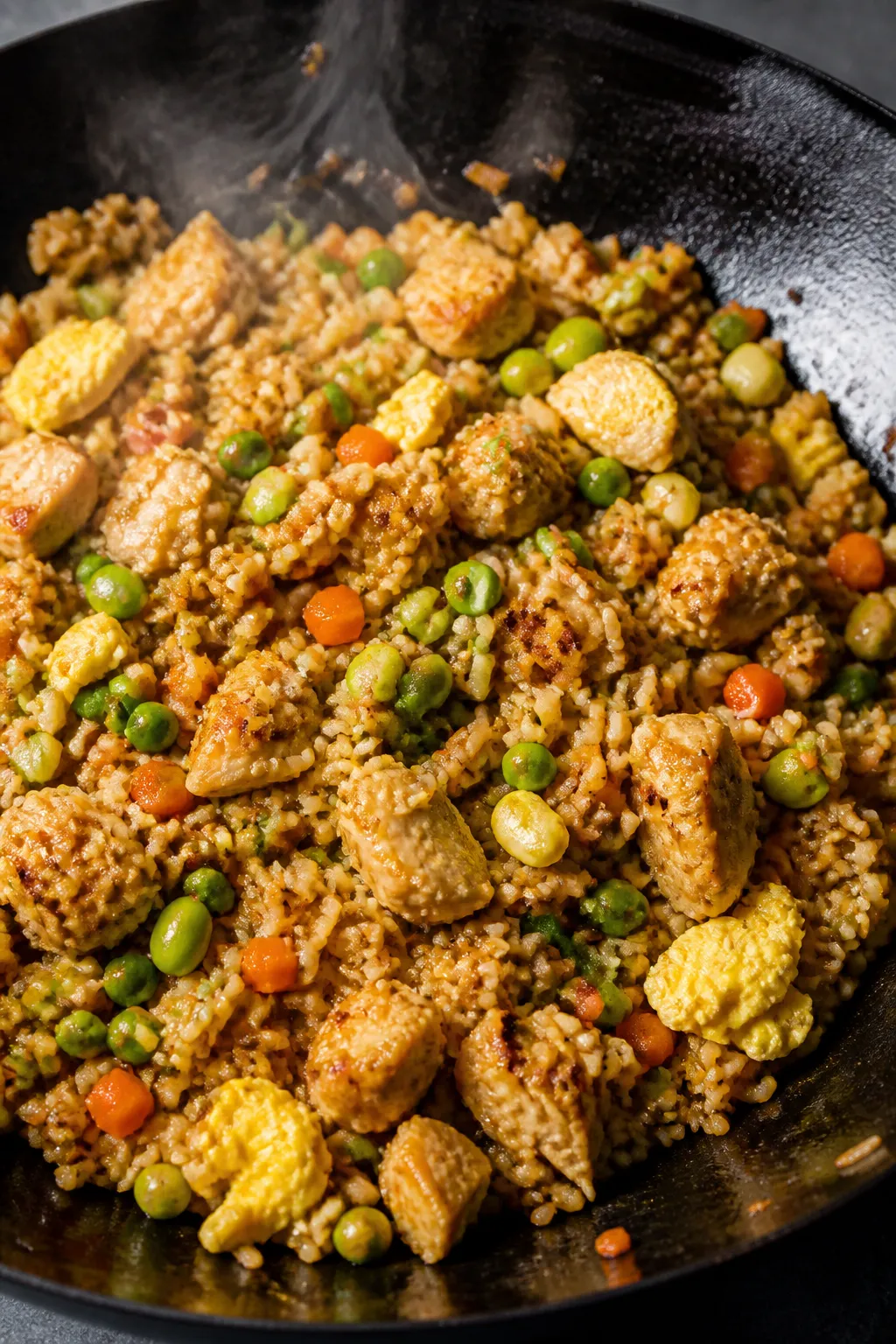
This fried rice leans into protein from multiple sources—chicken, eggs, and a subtle boost from edamame—so it keeps you full longer.
Using day-old rice gives you the right texture: separated grains with a nice chew and light crisp edges. A simple sauce made from low-sodium soy and a splash of sesame oil brings big flavor without drowning the dish. It’s weeknight-friendly, customizable, and plays well with whatever vegetables you have on hand.
Plus, it’s all cooked in one pan, which means less cleanup and more time to relax.
What You’ll Need
- Cooked, chilled rice (4 cups) – Day-old jasmine or long-grain works best. Cold rice prevents clumping.
- Chicken breast or thighs (1 to 1.25 pounds) – Cut into small, bite-size pieces for quick cooking.
- Eggs (3 large) – Scrambled for extra protein and richness.
- Edamame, shelled (1 cup) – Optional but adds a clean protein boost and color.
- Carrots (1 cup, diced) – Fresh or frozen both work.
- Frozen peas (1 cup) – Sweet pop and classic fried rice vibe.
- Green onions (4–5 stalks, sliced) – Whites for aromatics, greens for garnish.
- Garlic (3 cloves, minced) – Builds savory depth.
- Ginger (1 tablespoon, minced) – Fresh and brightens the whole dish.
- Low-sodium soy sauce (3–4 tablespoons) – Start with less; adjust to taste.
- Oyster sauce (1 tablespoon) – Optional, adds a savory, slightly sweet note.
- Sesame oil (1–2 teaspoons) – For aroma at the end; don’t overdo it.
- Neutral high-heat oil (2–3 tablespoons) – Avocado, canola, or peanut oil.
- White pepper (1/4 teaspoon) – Traditional touch; black pepper works too.
- Salt (to taste) – Adjust at the end after the sauces.
- Optional add-ins – Chili crisp or sriracha for heat, a squeeze of lime for brightness.
Instructions
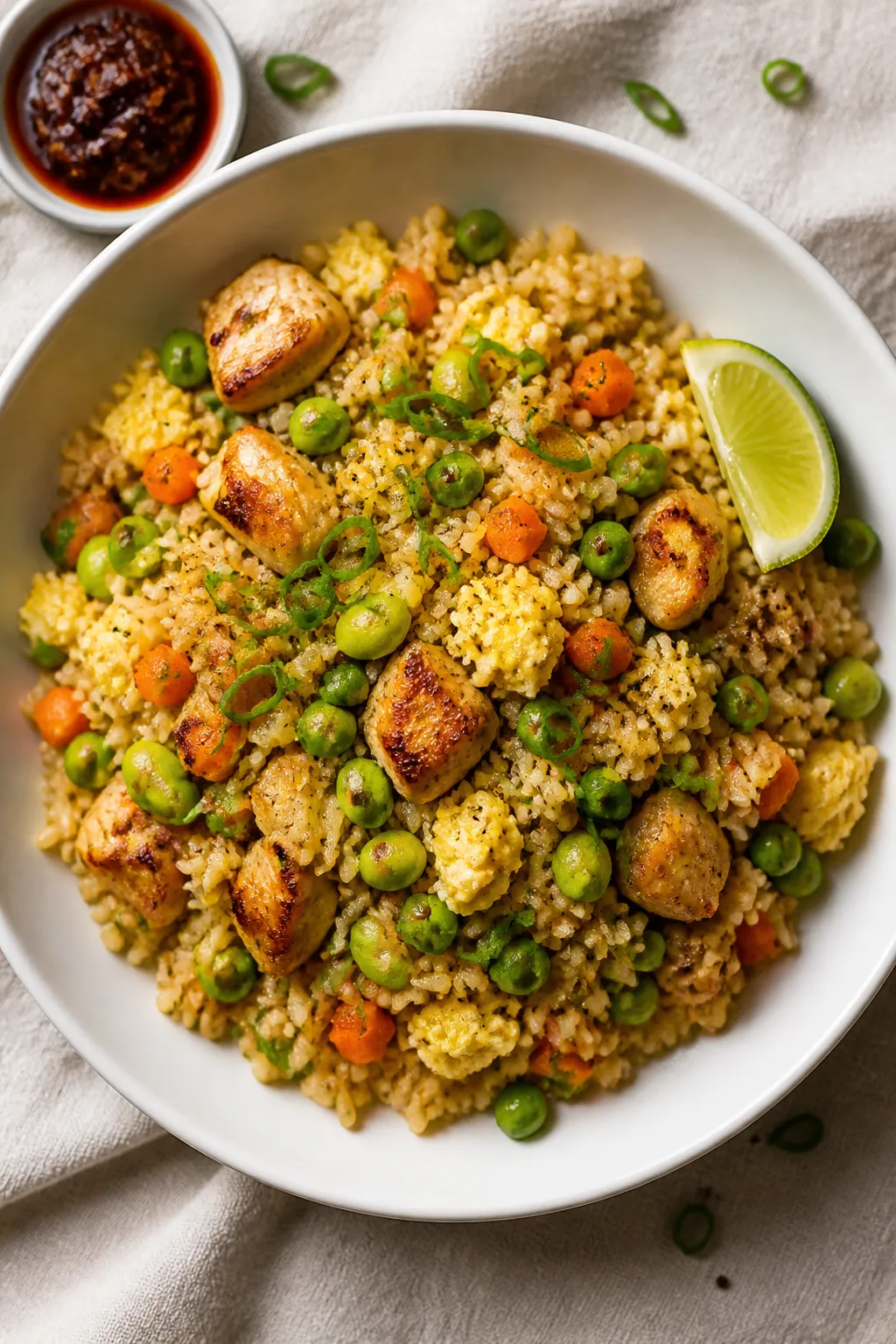
- Prep the rice. If your rice is clumped, spread it on a tray and break it up with your fingers. Cold, separated grains are key to a good stir-fry texture.
- Make a simple sauce. In a small bowl, mix 3 tablespoons soy sauce, 1 tablespoon oyster sauce (if using), and a pinch of white pepper.
Set aside.
- Scramble the eggs. Heat 1 teaspoon oil in a large skillet or wok over medium heat. Beat the eggs with a pinch of salt, pour in, and gently scramble until just set. Transfer to a plate.
- Sear the chicken. Add 1 tablespoon oil and increase heat to medium-high.
Season chicken lightly with salt and pepper. Cook in a single layer until browned and cooked through, about 4–6 minutes. Transfer to the plate with eggs.
- Sauté aromatics and veggies. Add another tablespoon oil if needed.
Stir-fry garlic, ginger, and the white parts of the green onions for 30–45 seconds until fragrant. Add carrots, peas, and edamame; cook 2–3 minutes until crisp-tender.
- Fry the rice. Add the cold rice to the pan. Spread it out and let it sit undisturbed for 30–60 seconds to get some light browning.
Then stir-fry, breaking up any remaining clumps.
- Combine and season. Return chicken and eggs to the pan. Pour in the sauce and toss to coat evenly. Taste and add more soy sauce or a pinch of salt if needed.
- Finish with aroma. Turn off the heat and drizzle in sesame oil.
Toss in the green onion tops. Add chili crisp or sriracha if you like heat.
- Serve hot. Plate it up and enjoy as is, or squeeze a little lime over the top for brightness.
How to Store
Let the fried rice cool until just warm, then transfer to airtight containers. Refrigerate for up to 4 days.
For longer storage, freeze portions in freezer-safe bags or containers for up to 2 months.
To reheat, microwave with a damp paper towel on top to keep moisture, or warm in a skillet with a splash of water to steam it back to life. Avoid reheating multiple times; reheat only what you plan to eat.
Health Benefits
- High-quality protein: Chicken, eggs, and edamame deliver a strong protein profile to support muscle repair and keep you full.
- Balanced macros: You get a good mix of complex carbs (rice), lean protein, and moderate fats, which helps with steady energy.
- Micronutrients: Peas, carrots, and green onions bring vitamin A, vitamin K, folate, and fiber to support overall health and digestion.
- Lower sodium option: Using low-sodium soy sauce and controlling your own seasoning keeps salt in check compared to most takeout versions.
- Customizable for goals: Swap in brown rice or cauliflower rice, or add more veggies to match your calorie and fiber targets.
Pitfalls to Watch Out For
- Using warm, fresh rice: It clumps and turns mushy. Always use chilled rice or cool freshly cooked rice on a sheet pan in the fridge first.
- Overcrowding the pan: Too much at once steams the ingredients.
If your skillet is small, cook in batches.
- Adding sesame oil too early: It can burn and taste bitter. Use it at the end for fragrance.
- Over-salting before sauces: Soy and oyster sauce add salt. Season lightly early on and adjust at the end.
- Chicken cut too large: Big chunks take longer and can dry out.
Keep pieces small and uniform for a quick, juicy sear.
Alternatives
- Rice swaps: Use brown rice for extra fiber, or try half rice and half cauliflower rice for a lighter bowl.
- Protein swaps: Turkey, shrimp, or extra-firm tofu work well. For tofu, press it, cube it, and sear until golden before adding back in.
- Sauce variations: Add a splash of fish sauce for umami, a little hoisin for sweet-savory depth, or rice vinegar for brightness.
- Veggie upgrades: Toss in bell peppers, mushrooms, corn, or baby spinach at the end. Kimchi is great if you like tang and heat.
- Lower-carb tweak: Use all cauliflower rice and bump the eggs to four for a higher protein-to-carb ratio.
FAQ
Can I use freshly cooked rice?
You can, but cool it first.
Need More Easy Dinner Ideas?
Get my FREE 7-Day Easy Dinner Reset and enjoy a full week of healthy dinners without the meal-planning stress.
Spread the hot rice on a baking sheet and chill it in the fridge for 30–45 minutes. The drier the rice, the better the fry.
What’s the best pan to use?
A carbon steel wok or a large nonstick skillet works great. The key is high heat and enough room to move the rice around so it doesn’t steam.
How do I keep the chicken juicy?
Cut it small, cook over medium-high heat, and don’t move it too much at first so it sears.
Pull it as soon as it’s cooked through and add it back at the end.
Is this gluten-free?
Use tamari or a certified gluten-free soy sauce, and check your oyster sauce label. With those swaps, it can be gluten-free.
How much protein is in a serving?
It depends on portions, but a typical serving (about 1.5 to 2 cups) with chicken, eggs, and edamame can land around 30–40 grams of protein. Exact numbers vary by brands and amounts used.
Can I make it spicy?
Yes.
Add red pepper flakes with the aromatics, or finish with chili crisp, sriracha, or sambal to taste.
What if I don’t have oyster sauce?
Skip it and add an extra teaspoon of soy sauce plus a pinch of sugar. You can also use a bit of hoisin for sweetness, just go light.
Can I meal prep this?
Absolutely. Portion into containers, store in the fridge, and reheat as needed.
It holds texture well for several days, especially if you reheat gently.
Is thigh meat better than breast?
Thighs stay juicier and are more forgiving. Breasts are leaner and still great if you don’t overcook them. Use what you prefer.
Can I add more eggs?
Go for it.
Adding a fourth egg is an easy way to bump up protein and creaminess without changing the method.
Wrapping Up
High Protein Chicken Fried Rice brings together comfort, speed, and solid nutrition in one skillet. With a few smart steps—cold rice, high heat, and a light hand with the sauce—you’ll get takeout flavor at home with more protein and less fuss. Keep the formula the same, swap in what you have, and make it your own.
It’s a reliable, satisfying meal you’ll come back to again and again.
Printable Recipe Card
Want just the essential recipe details without scrolling through the article? Get our printable recipe card with just the ingredients and instructions.
Loved This Recipe?
If you're looking for more simple, healthy dinners your family will actually eat, grab my FREE 7-Day Easy Dinner Reset. You'll get 7 easy dinner recipes, simple grocery lists, and a done-for-you plan that takes the stress out of mealtime.