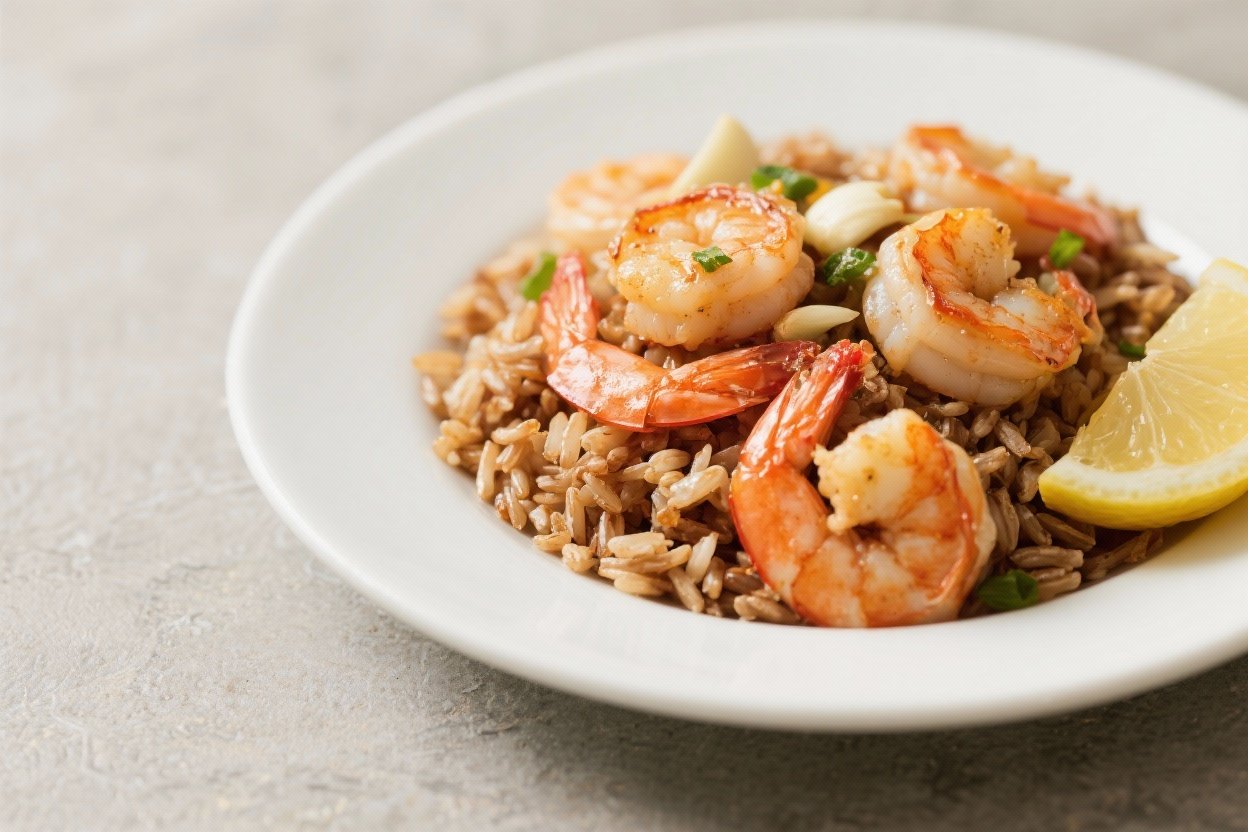
Lemon Garlic Shrimp With Brown Rice – Bright, Quick, and Satisfying
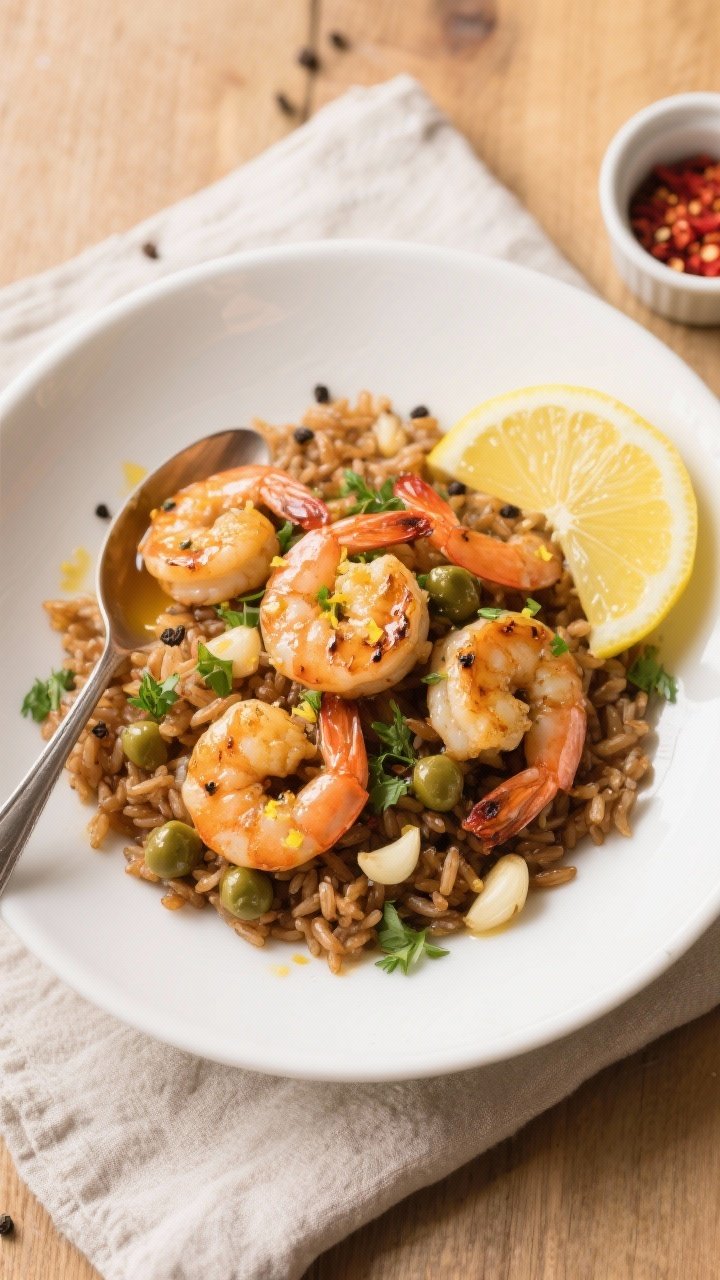
Shrimp cooked with lemon and garlic is the kind of dinner that feels special without a lot of fuss. It’s bright, buttery, and full of flavor, yet takes less than 30 minutes to get on the table. Paired with nutty brown rice, it becomes a wholesome meal that’s both light and filling.
Never wonder what's for dinner again.
Get 7 healthy, family-friendly dinners complete with recipes, grocery lists, and simple meal plans delivered straight to your inbox.
This is the kind of recipe you can make on a busy weeknight and still feel like you treated yourself. Simple ingredients, quick steps, and very little cleanup—what’s not to love?
What Makes This Special
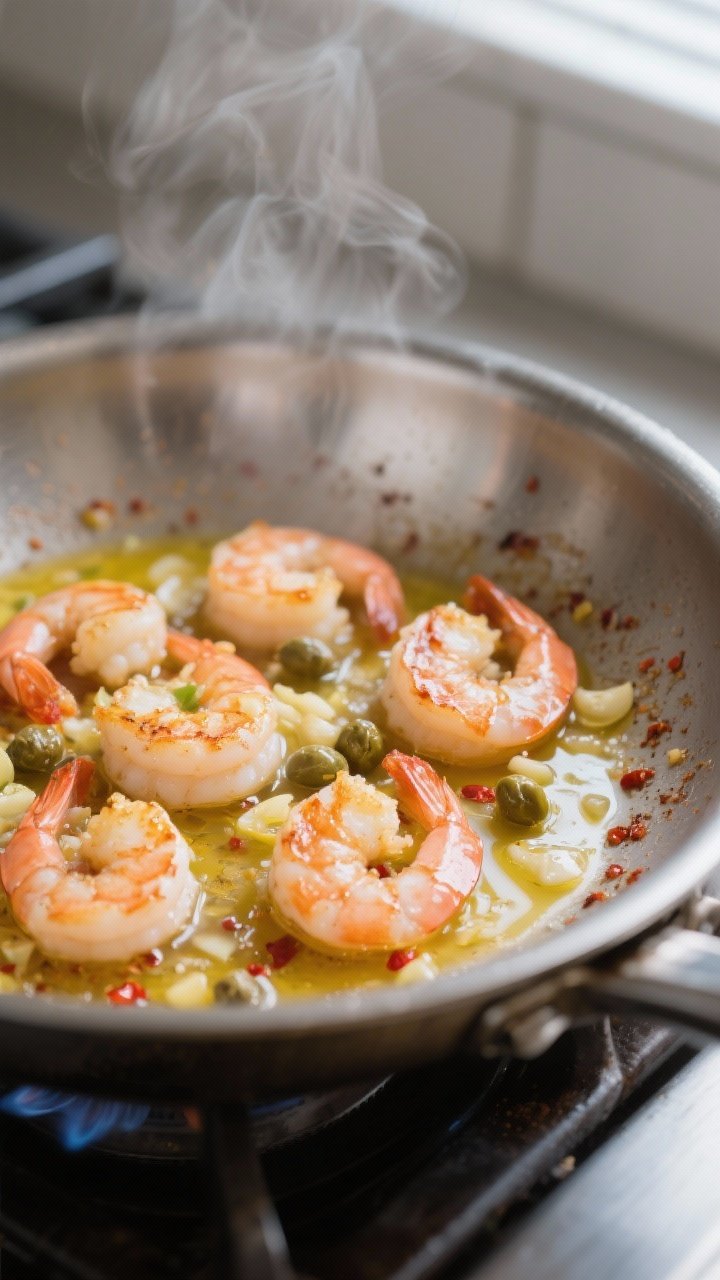
This dish balances fresh citrus and savory garlic with the natural sweetness of shrimp. The brown rice adds hearty texture and fiber, making the meal more satisfying than a typical white rice side.
The whole recipe relies on pantry staples—olive oil, lemon, garlic, and a few spices—so it’s easy to pull off without a special shopping trip. It also scales up beautifully for meal prep and can be adapted for different diets with small tweaks.
Ingredients
- 1 pound (450 g) raw shrimp, peeled and deveined (medium or large)
- 1 cup uncooked brown rice (yields about 3 cups cooked)
- 2 tablespoons olive oil
- 3 tablespoons unsalted butter (or use all olive oil)
- 4 cloves garlic, minced
- 1 large lemon (zest and juice)
- 1/2 teaspoon red pepper flakes (optional, for heat)
- 1/2 teaspoon smoked paprika (optional, adds depth)
- 1/4 cup fresh parsley, chopped
- Salt and black pepper, to taste
- 1/4 cup low-sodium chicken or vegetable broth (or dry white wine)
- 1 tablespoon capers (optional, for briny punch)
- Lemon wedges, for serving
How to Make It
- Cook the brown rice. Rinse 1 cup of brown rice under cold water. Combine with 2 cups of water and a pinch of salt in a pot.
Bring to a boil, reduce to low, cover, and simmer for 35–45 minutes until tender. Fluff and keep warm.
- Prep the shrimp. Pat the shrimp dry with paper towels. Season with 1/2 teaspoon salt, 1/4 teaspoon black pepper, and the smoked paprika if using.
Dry shrimp sear better and won’t steam in the pan.
- Get the aromatics ready. Mince the garlic, chop the parsley, and zest the lemon. Cut the lemon in half and set aside for juicing.
- Heat the pan. Use a large skillet over medium-high heat. Add 1 tablespoon olive oil and 1 tablespoon butter.
When the butter foams, it’s ready.
- Sear the shrimp. Add the shrimp in a single layer. Cook 1–2 minutes per side until pink and just opaque. Remove to a plate.
Don’t overcook; they’ll finish in the sauce.
- Build the sauce. Lower heat to medium. Add remaining 1 tablespoon olive oil and 2 tablespoons butter. Stir in garlic and red pepper flakes, cooking 30–45 seconds until fragrant, not browned.
- Deglaze. Pour in the broth or wine and scrape up the browned bits.
Simmer 1–2 minutes to slightly reduce.
- Add lemon. Stir in lemon zest and 2–3 tablespoons lemon juice. Taste and adjust with more juice if you like it brighter.
- Finish the shrimp. Return shrimp (and any juices) to the pan. Add capers if using.
Toss 30–60 seconds until heated through. Sprinkle with parsley and a pinch of salt and pepper.
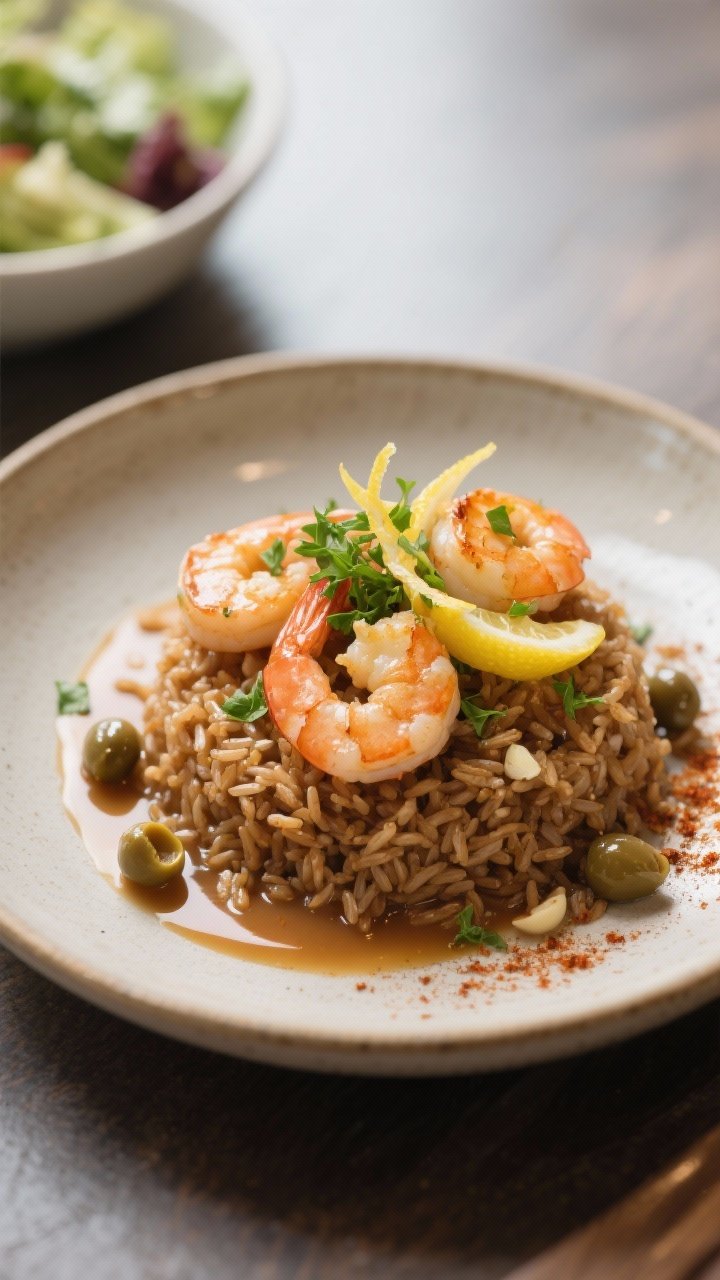
- Serve. Spoon shrimp and sauce over warm brown rice. Finish with extra parsley and lemon wedges for squeezing.
How to Store
- Refrigerate: Store shrimp and rice separately in airtight containers for up to 3 days.
Keeping them separate prevents the rice from soaking up all the sauce.
- Reheat: Warm shrimp gently in a skillet over low heat with a splash of broth or water, 2–3 minutes. Reheat rice in the microwave with a damp paper towel to keep it fluffy.
- Freeze: You can freeze the cooked rice for up to 3 months. Shrimp is best fresh, but leftovers can be frozen for up to 1 month.
Thaw overnight in the fridge and reheat gently to avoid rubbery texture.
Health Benefits
- High in lean protein: Shrimp delivers protein with minimal saturated fat, helping with satiety and muscle maintenance.
- Whole-grain goodness: Brown rice provides fiber, B vitamins, and minerals that support steady energy and digestion.
- Healthy fats and antioxidants: Olive oil and lemon bring heart-friendly fats and vitamin C, while garlic offers compounds linked to immune and cardiovascular benefits.
- Balanced macros: Protein, complex carbs, and a bit of fat make this meal satisfying without feeling heavy.
Pitfalls to Watch Out For
- Overcooking shrimp: This is the biggest mistake. Shrimp turn tough fast—pull them as soon as they curl and turn opaque.
- Watery pan: Crowding the skillet steams shrimp. Cook in batches if your pan is small.
- Bitter garlic: Garlic burns quickly.
Lower the heat and cook it briefly before adding liquid.
- Too sour or too bland: Balance lemon with butter/oil and salt. Taste and adjust with a pinch of salt or a touch more lemon at the end.
- Gummy rice: Measure water, simmer gently, and let it rest 5–10 minutes before fluffing. Rinsing rice removes excess starch.
Recipe Variations
- Herb swap: Try cilantro, basil, or dill instead of parsley for a different aroma.
- Veggie boost: Stir in baby spinach, cherry tomatoes, peas, or asparagus tips during the final minute.
- Spicy version: Add extra red pepper flakes or a dash of hot sauce when deglazing.
- Dairy-free: Use all olive oil and skip butter.
Add a splash of extra-virgin oil at the end for richness.
- Low-carb: Serve the shrimp over cauliflower rice or sautéed zucchini ribbons.
- Creamy twist: Finish with a tablespoon of Greek yogurt or a splash of coconut milk for a silky sauce.
- Grilled option: Marinate shrimp with lemon, garlic, oil, and paprika. Grill 2–3 minutes per side and spoon warm lemon-garlic butter over the top.
FAQ
Can I use frozen shrimp?
Yes. Thaw them overnight in the fridge or quickly under cold running water in a colander.
Pat very dry before seasoning so they sear instead of steam.
What size shrimp works best?
Medium to large shrimp (31–40 or 21–25 per pound) cook evenly and stay juicy. Smaller shrimp cook too fast and can turn rubbery if you’re not careful.
Need More Easy Dinner Ideas?
Get my FREE 7-Day Easy Dinner Reset and enjoy a full week of healthy dinners without the meal-planning stress.
Can I make it without wine or broth?
Use water with a pinch of salt and an extra squeeze of lemon. The flavor will still be bright, but broth or wine adds more depth if you have it.
How do I prevent the garlic from burning?
Lower the heat and add garlic after the butter and oil are hot but not smoking.
Cook for less than a minute and quickly add liquid to cool the pan down.
Is there a way to speed up the brown rice?
Use quick-cooking brown rice or pre-cooked frozen brown rice. You can also make a big batch on the weekend and keep portions in the freezer for fast dinners.
What can I substitute for shrimp?
Scallops, chunks of firm white fish (like cod), or even chicken breast cut into small pieces work well. Adjust cooking times so the protein is just cooked through.
How do I know when the shrimp are done?
They turn pink and opaque, curl into a loose “C,” and feel slightly firm.
If they form a tight “O,” they’re overcooked.
Can I use bottled lemon juice?
Fresh lemon juice gives the best flavor and aroma. If you use bottled, start with less and taste as you go—it can be sharper and less aromatic.
What’s the best skillet for this recipe?
A large stainless steel or cast-iron skillet helps with browning and flavor. Nonstick works, but you’ll get less of those delicious browned bits for the sauce.
How can I make it more filling?
Add roasted vegetables on the side or stir in white beans or chickpeas for extra fiber and protein.
A simple side salad also rounds out the meal.
In Conclusion
Lemon Garlic Shrimp with Brown Rice is proof that simple ingredients can deliver big flavor. It’s fast enough for weeknights and classy enough for company, with a lively sauce and a wholesome base. Keep this one in your rotation for a bright, satisfying meal that never feels heavy.
A squeeze of fresh lemon and a handful of herbs at the end make it feel fresh every time you make it.
Loved This Recipe?
If you're looking for more simple, healthy dinners your family will actually eat, grab my FREE 7-Day Easy Dinner Reset. You'll get 7 easy dinner recipes, simple grocery lists, and a done-for-you plan that takes the stress out of mealtime.