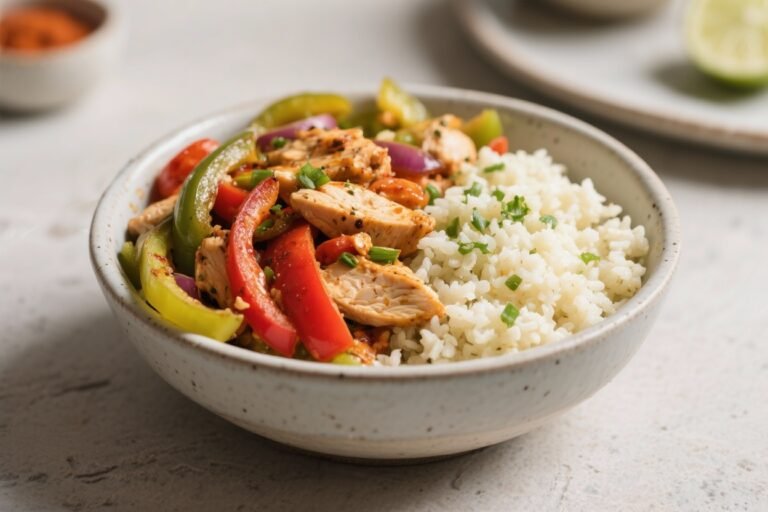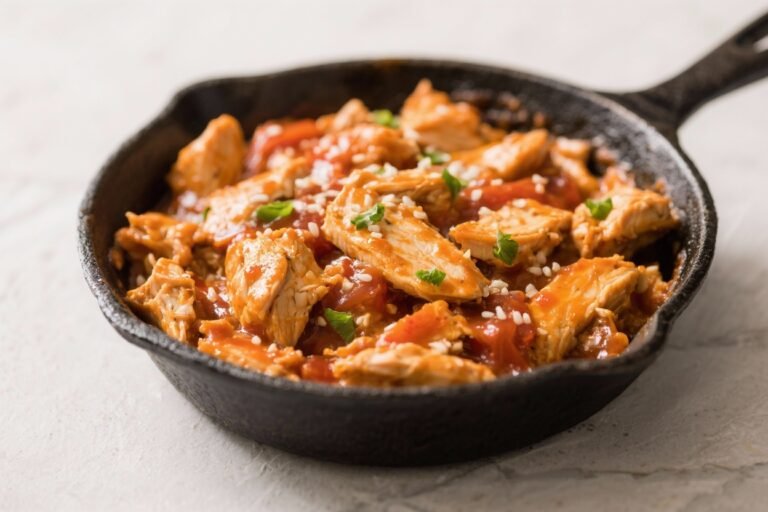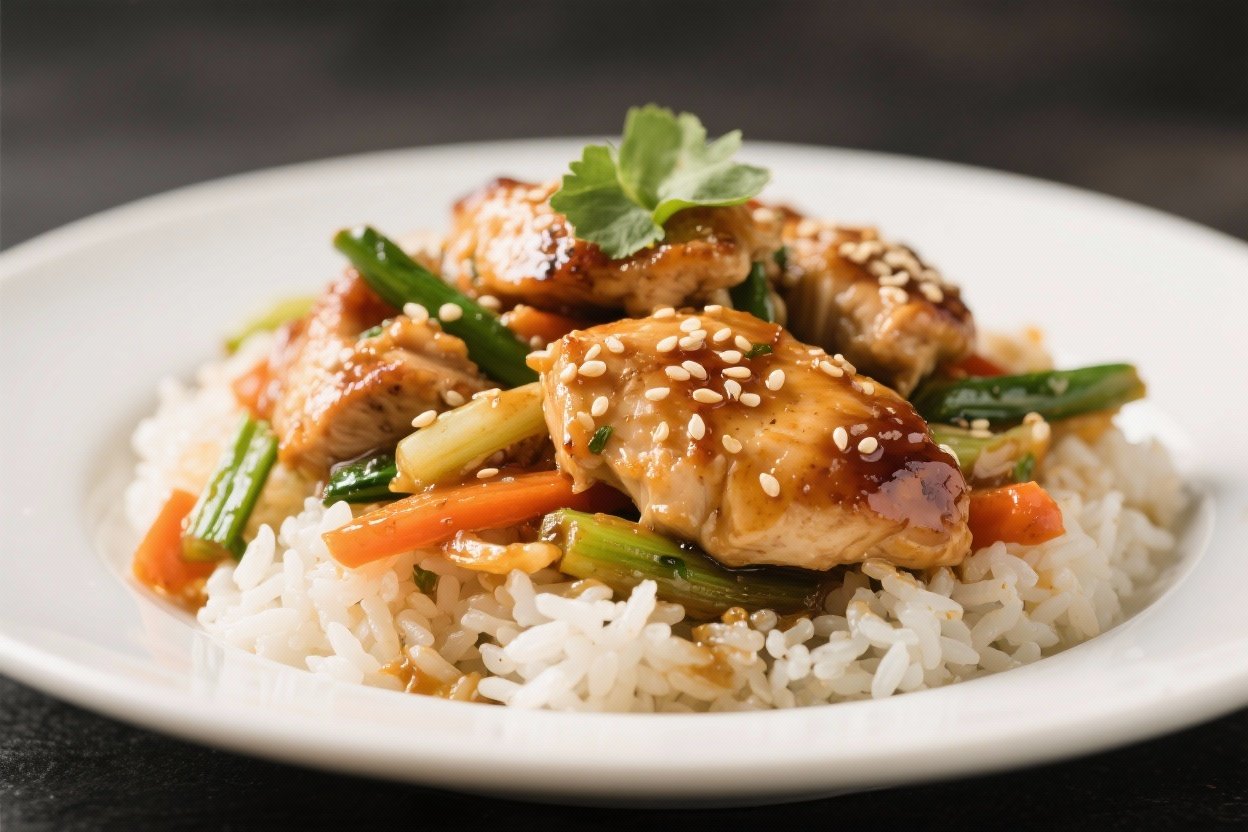
Sesame Ginger Chicken With Veggie Rice – A Bright, Weeknight-Friendly Stir-Fry
This is the kind of dinner that makes a busy night feel a bit calmer. Tender chicken, a glossy sesame-ginger sauce, and colorful veggie-packed rice come together fast, with ingredients you probably have on hand. It’s full of flavor, not fussy, and easy to tweak to your taste.
Never wonder what's for dinner again.
Get 7 healthy, family-friendly dinners complete with recipes, grocery lists, and simple meal plans delivered straight to your inbox.
If you like takeout-style stir-fries but want something lighter and fresher, this is a great fit. The best part: it reheats beautifully for lunch the next day.
What Makes This Special
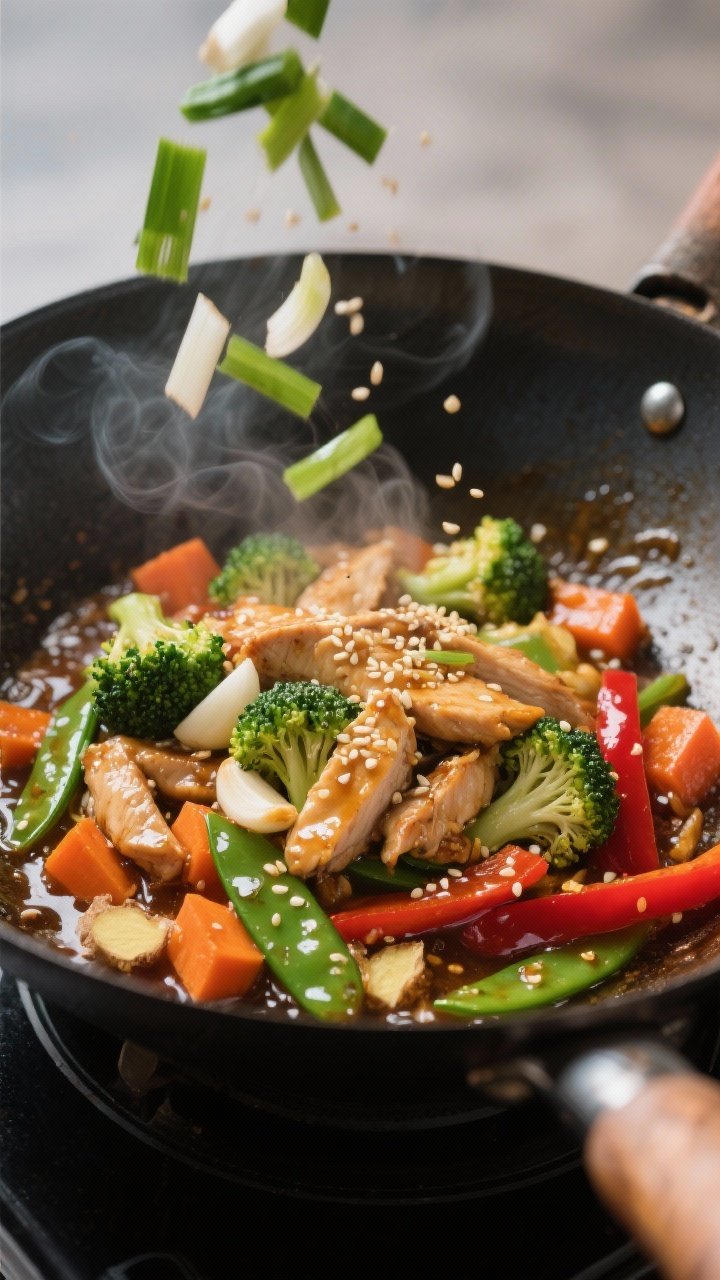
This dish hits the sweet spot between comfort and freshness. The sauce is bright with ginger, savory with soy, and just a touch sweet—nothing overpowering.
The veggie rice is a smart shortcut to add color, texture, and nutrients without an extra side dish. Everything cooks in one large pan or wok, which keeps cleanup simple. And because the ingredients are flexible, you can swap in what you have without losing the spirit of the dish.
What You’ll Need
- Chicken: 1.25–1.5 pounds boneless, skinless chicken thighs or breasts, thinly sliced
- Neutral oil: 2–3 tablespoons (avocado, canola, or grapeseed)
- Aromatics: 3 cloves garlic (minced), 1–2 tablespoons fresh ginger (finely grated)
- Vegetables: 1 cup carrots (diced), 1 cup bell pepper (thinly sliced), 1 cup broccoli florets (small), 1 cup snap peas or green beans (trimmed), 3 green onions (sliced)
- Rice: 3 cups cooked and cooled rice (white or brown)
- Sesame seeds: 1–2 tablespoons, for garnish
- Fresh cilantro or parsley: small handful, chopped (optional)
For the Sesame Ginger Sauce:
- 1/3 cup low-sodium soy sauce or tamari
- 2 tablespoons rice vinegar
- 1–2 tablespoons honey or maple syrup (to taste)
- 1 tablespoon toasted sesame oil
- 1 tablespoon fresh grated ginger
- 2 cloves garlic, minced
- 1–2 teaspoons sriracha or chili-garlic sauce (optional, for heat)
- 1/3 cup low-sodium chicken broth or water
- 2 teaspoons cornstarch (for thickening)
Optional Add-Ins: 1 cup frozen peas or corn, 2 eggs for scrambling into the rice, lime or lemon wedges for serving.
Step-by-Step Instructions
- Cook and cool the rice. If you don’t have leftover rice, cook it earlier in the day and let it cool on a sheet pan. Cool rice fries better and won’t clump.
- Make the sauce. In a bowl, whisk soy sauce, rice vinegar, honey, sesame oil, ginger, garlic, sriracha (if using), broth, and cornstarch until smooth.
Set aside.
- Prep the chicken and veggies. Slice chicken thinly against the grain. Cut vegetables into small, quick-cooking pieces. Pat the chicken dry with paper towels for better searing.
- Heat the pan. Set a large skillet or wok over medium-high heat.
Add 1 tablespoon oil and swirl to coat.
- Sear the chicken. Add half the chicken in a single layer. Let it sear undisturbed for 2–3 minutes, then stir-fry until mostly cooked through, about 3–4 more minutes. Transfer to a plate.
Repeat with remaining chicken, adding a bit more oil if needed. Keep the browned bits in the pan—they’re flavor.
- Stir-fry the veggies. Add 1 tablespoon oil to the pan. Toss in carrots and broccoli first, cook 2 minutes.
Add bell pepper and snap peas, cook another 2–3 minutes until crisp-tender. Add the white parts of the green onions and cook 30 seconds. Push veggies to the edges of the pan.
- Add aromatics. In the center of the pan, add a small splash of oil, then the minced garlic and grated ginger.
Stir 30 seconds until fragrant, mixing into the veggies.
- Bring back the chicken. Return chicken (and any juices) to the pan. Give the sauce a quick whisk, then pour it in. Cook, stirring, 1–2 minutes until the sauce bubbles and thickens, coating the chicken and veggies.
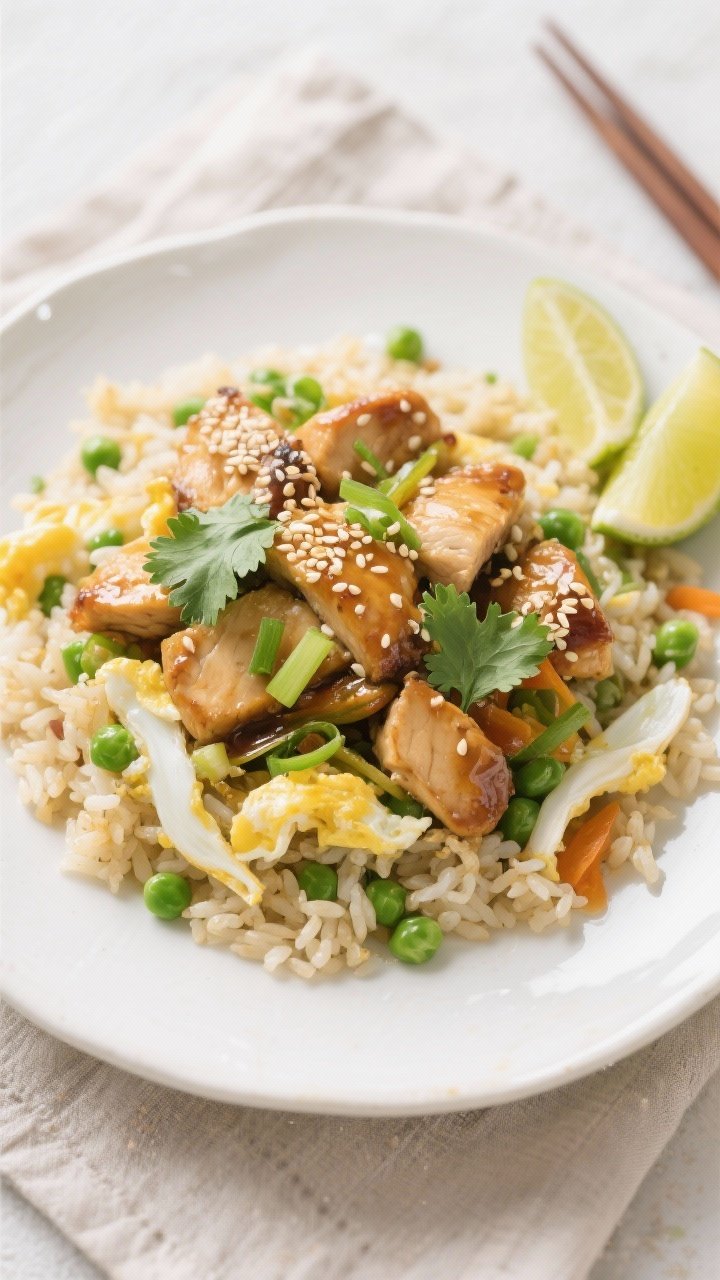
- Make the veggie rice. In a separate large nonstick pan, heat 1 tablespoon oil over medium-high heat.
Add cooked rice and spread into an even layer. Let it sit 1 minute, then stir. Add frozen peas or corn if using.
For egg-fried style, push rice to the side, scramble 2 eggs in the empty space, then mix into the rice. Season with a splash of soy sauce and a few drops of sesame oil to taste.
- Combine or plate. You can stir the chicken mixture into the rice, or serve the sesame ginger chicken over the veggie rice. Top with sesame seeds, the green onion tops, and chopped cilantro.
Add lime wedges if you like a citrus pop.
How to Store
- Refrigerator: Store in airtight containers for up to 4 days. Keep rice and chicken separate if you want to control moisture when reheating.
- Freezer: Freeze in meal-size portions for up to 2 months. Let cool completely before sealing to avoid ice crystals.
- Reheating: Reheat in a skillet over medium heat with a splash of water or broth until hot.
Microwave works too; stir halfway for even heating.
Why This Is Good for You
- Lean protein: Chicken supports muscle repair and helps keep you satisfied.
- Vegetable variety: A mix of colors means a broader range of vitamins, minerals, and fiber.
- Balanced sauce: Using low-sodium soy sauce and a modest amount of sweetener keeps sodium and sugar in check.
- Smarter carbs: Brown rice bumps up fiber, but even white rice balanced with veggies gives steady energy.
- Healthy fats: Toasted sesame oil adds flavor with minimal quantity, so you get impact without heaviness.
What Not to Do
- Don’t overcrowd the pan. That traps steam and stewing chicken gets tough. Cook in batches for a proper sear.
- Don’t skip cooling the rice. Warm, freshly cooked rice turns sticky and mushy in the pan.
- Don’t overcook the veggies. You want crisp-tender, not soft. Pull them as soon as they turn bright and slightly tender.
- Don’t forget to whisk the sauce before adding. Cornstarch settles.
A quick whisk prevents lumps and ensures even thickening.
- Don’t rely only on salt. Balance is key: a touch of acid (vinegar or lime) and a hint of sweetness make the flavors pop.
Variations You Can Try
- Swap the protein: Use shrimp, thin-sliced beef, or extra-firm tofu. Adjust cook times—shrimp cooks in minutes.
- Go gluten-free: Use tamari or coconut aminos and check labels on vinegar and broth.
- Low-carb twist: Replace rice with cauliflower rice. Sauté it quickly to keep some bite.
- Extra vegetables: Add mushrooms, zucchini, or baby spinach in the last minute of cooking.
- Citrus lift: Finish with grated orange zest or a squeeze of lime for a fresh top note.
- Nutty crunch: Sprinkle with chopped cashews or peanuts along with sesame seeds.
FAQ
Can I make the sauce ahead?
Need More Easy Dinner Ideas?
Get my FREE 7-Day Easy Dinner Reset and enjoy a full week of healthy dinners without the meal-planning stress.
Yes.
Mix it up to 3 days ahead and store it in the fridge. Give it a good whisk before using, since cornstarch settles.
Is fresh ginger required?
Fresh ginger has the best flavor and aroma. If you must substitute, use 1/2 teaspoon ground ginger, but expect a milder, slightly different taste.
What’s the best rice for this recipe?
Day-old jasmine or basmati works very well because the grains stay separate.
Brown rice is great for extra fiber. Any cooked and cooled rice will do in a pinch.
How can I make it spicier?
Add more sriracha to the sauce, toss in red pepper flakes with the aromatics, or finish with chili crisp.
Can I use frozen vegetables?
Absolutely. Add them straight to the hot pan and cook off excess moisture.
Choose mixes with smaller cuts for faster cooking.
What if I don’t have a wok?
Use the largest, heaviest skillet you have. High sides help, but a wide cooking surface matters more to avoid overcrowding.
How do I keep chicken tender?
Slice it thin, pat it dry, and cook it hot and fast. Pull it as soon as it’s done and avoid simmering it for too long in the sauce.
Can I reduce the sodium?
Use low-sodium soy sauce, add more broth to the sauce, and skip extra salty add-ins.
Taste at the end and adjust with acid instead of salt.
Wrapping Up
Sesame Ginger Chicken with Veggie Rice is simple, flexible, and full of bright, satisfying flavor. It’s a solid weeknight option that still feels special, and it’s easy to scale for meal prep. Keep the sauce ingredients on hand, use whatever vegetables you’ve got, and you’ll always be a few quick steps away from a balanced, tasty dinner.
Enjoy it hot tonight and just as happily for lunch tomorrow.
Printable Recipe Card
Want just the essential recipe details without scrolling through the article? Get our printable recipe card with just the ingredients and instructions.
Loved This Recipe?
If you're looking for more simple, healthy dinners your family will actually eat, grab my FREE 7-Day Easy Dinner Reset. You'll get 7 easy dinner recipes, simple grocery lists, and a done-for-you plan that takes the stress out of mealtime.