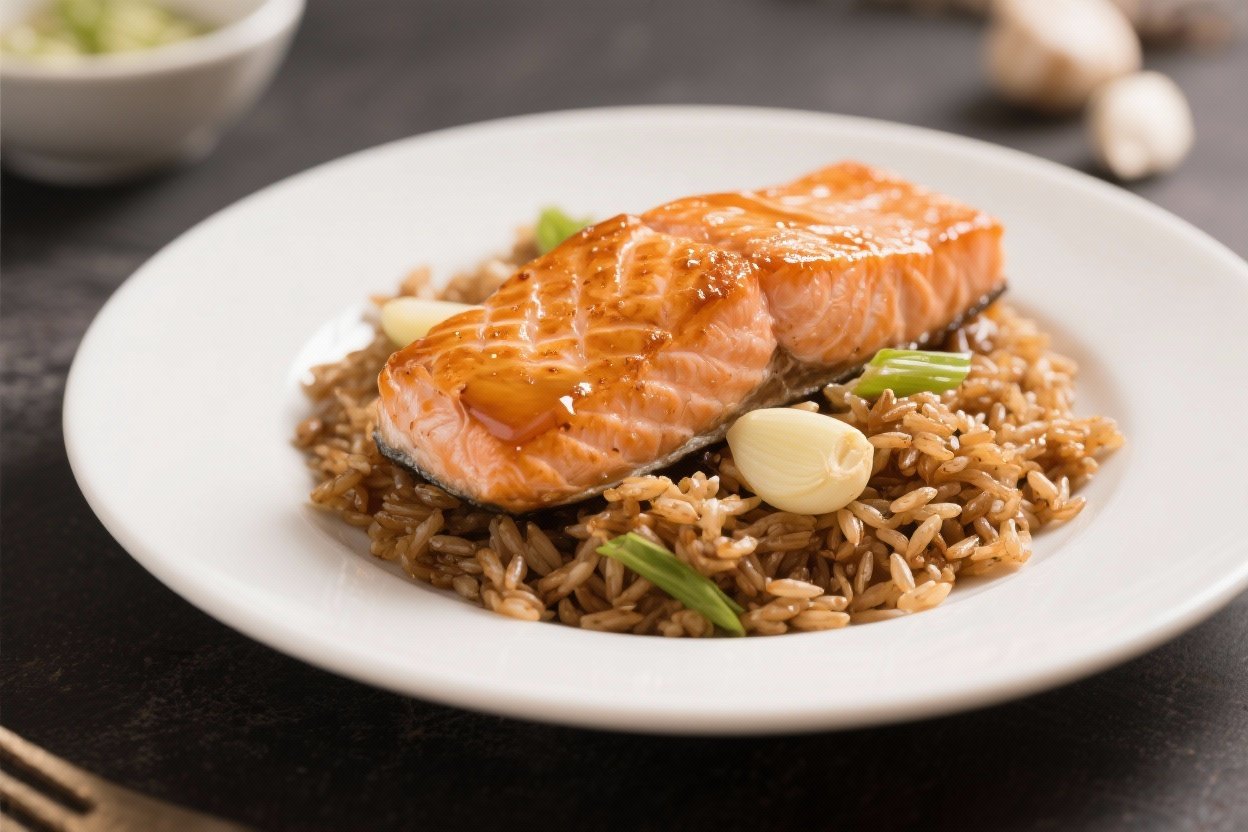
Honey Garlic Salmon With Brown Rice – Simple, Flavorful, and Weeknight-Friendly
This Honey Garlic Salmon with Brown Rice is the kind of meal that makes weeknights feel special without any extra fuss. The salmon is tender with a caramelized glaze, the rice is nutty and satisfying, and the whole thing comes together in under 30 minutes. You’ll get big flavor from pantry staples and a balanced plate that feels good to eat.
Never wonder what's for dinner again.
Get 7 healthy, family-friendly dinners complete with recipes, grocery lists, and simple meal plans delivered straight to your inbox.
It’s hearty, a little sweet, a little garlicky, and totally reliable. Make it once, and it will quickly become part of your regular rotation.
Why This Recipe Works
This recipe hits the sweet spot of flavor and simplicity. The honey and soy sauce create a sticky glaze that clings to the salmon and browns beautifully in the pan or oven. Garlic and a splash of acid (like lemon or rice vinegar) keep the sweetness balanced and bright.
Pairing it with brown rice adds a wholesome, slightly chewy base that soaks up all that saucy goodness. It’s fast, forgiving, and uses ingredients you likely already have.
Shopping List
- Salmon fillets (skin-on or skinless, about 4 fillets, 5–6 oz each)
- Honey (2–3 tablespoons)
- Low-sodium soy sauce or tamari (2–3 tablespoons)
- Fresh garlic (3–4 cloves, minced)
- Fresh ginger (optional but great, 1 teaspoon grated)
- Lemon juice or rice vinegar (1–2 teaspoons)
- Sesame oil (1 teaspoon, optional for flavor)
- Olive oil or neutral cooking oil (1–2 tablespoons)
- Brown rice (1 cup uncooked)
- Low-sodium chicken or vegetable broth (optional, for cooking rice)
- Green onions (2–3, sliced for garnish)
- Sesame seeds (optional garnish)
- Salt and black pepper
- Red pepper flakes (optional, for heat)
- Steamed vegetables (optional: broccoli, snap peas, or green beans)
Instructions
- Cook the brown rice: Rinse 1 cup of brown rice under cold water. Add to a pot with 2 cups water or broth and a pinch of salt.
Bring to a boil, then reduce heat, cover, and simmer for 35–40 minutes until tender. Fluff and keep warm.
- Pat the salmon dry: Use paper towels to dry the fillets. This helps them sear nicely and prevents steaming.
Season both sides with a little salt and pepper.
- Mix the sauce: In a small bowl, whisk together honey, soy sauce, minced garlic, grated ginger (if using), lemon juice or rice vinegar, and sesame oil. Taste and adjust—more honey for sweetness, more soy for salt, more lemon for brightness.
- Choose your cooking method: You can cook the salmon in a skillet for caramelized edges or bake it for a hands-off approach. Both are great.
- Skillet method (fast and flavorful): Heat a large nonstick or well-seasoned skillet over medium-high with a drizzle of oil.
Place salmon skin-side up first and sear 2–3 minutes until lightly browned. Flip, reduce heat to medium, and pour in the sauce. Spoon sauce over salmon as it simmers and thickens, 3–5 minutes, until the fish flakes easily and the glaze turns glossy.
- Oven method (easy and consistent): Preheat to 400°F (200°C).
Place salmon on a lined sheet pan, brush with sauce, and bake 8–12 minutes depending on thickness. For a sticky finish, broil 1–2 minutes at the end, watching closely. Warm any remaining sauce in a small pan and spoon over when serving.
- Steam a veggie (optional but recommended): While the salmon cooks, steam broccoli or snap peas until crisp-tender.
A squeeze of lemon and a pinch of salt is all they need.
- Plate it up: Scoop brown rice into bowls, top with salmon, and spoon over extra glaze. Finish with sliced green onions, sesame seeds, and a pinch of red pepper flakes if you like heat.
- Check doneness: Salmon is done when it flakes easily and is just opaque in the center. If using a thermometer, aim for 125–130°F (52–54°C) for moist, medium doneness; carryover heat will finish the job.
How to Store
Let leftovers cool, then store salmon and rice in separate airtight containers.
They’ll keep in the fridge for up to 3 days. Reheat gently in the microwave at 50–60% power or in a low oven with a splash of water to keep the fish moist. If you plan to freeze, freeze the salmon and rice separately for up to 2 months.
Thaw overnight in the fridge before reheating.
Health Benefits
- Omega-3 fats from salmon: Support heart and brain health and help reduce inflammation.
- Lean protein: Keeps you satisfied and supports muscle maintenance.
- Brown rice fiber: Aids digestion, promotes steady energy, and keeps you full longer.
- Garlic and ginger: Offer antioxidant and anti-inflammatory compounds with bright flavor.
- Balanced plate: Pairing protein, whole grains, and vegetables provides a steady, nourishing meal.
What Not to Do
- Don’t overcook the salmon. It turns dry quickly. Pull it early; it continues cooking off the heat.
- Don’t skip patting the fish dry. Moisture prevents a good sear and glaze adhesion.
- Don’t drown the pan. Too much sauce too soon can burn. Add it after searing or bake and then broil briefly.
- Don’t use high-sodium soy sauce without tasting. The glaze can become overly salty fast.
Low-sodium keeps it balanced.
- Don’t skip acidity. A touch of lemon or vinegar cuts sweetness and lifts the flavors.
Variations You Can Try
- Spicy honey garlic: Add sriracha, gochujang, or chili flakes to the sauce for a gentle kick.
- Citrus twist: Swap lemon for orange juice and zest for a brighter, sweeter profile.
- Miso upgrade: Whisk in 1 teaspoon white miso for savory depth and extra umami.
- Ginger-forward: Double the fresh ginger and add a bit of grated garlic at the end for a fresh pop.
- Grill option: Grill skin-on fillets over medium heat, brushing with sauce in the last few minutes to avoid burning.
- Swap the grain: Use quinoa, cauliflower rice, or farro if you want a change from brown rice.
- Veg-heavy bowl: Add roasted carrots, edamame, or sautéed mushrooms to make it more substantial.
FAQ
Can I use frozen salmon?
Yes. Thaw it overnight in the fridge or under cold running water in a sealed bag, then pat very dry before cooking. Frozen salmon can be great quality and budget-friendly.
Need More Easy Dinner Ideas?
Get my FREE 7-Day Easy Dinner Reset and enjoy a full week of healthy dinners without the meal-planning stress.
What if I don’t have fresh garlic?
Use 1/2 teaspoon garlic powder per clove as a backup.
Add it directly to the sauce and taste as you go.
How do I know when the salmon is done?
It should flake easily with a fork and look just opaque in the center. If you use a thermometer, 125–130°F (52–54°C) is a good target for moist fish.
Can I make this gluten-free?
Yes. Use tamari or coconut aminos instead of soy sauce, and confirm any broth you use is gluten-free.
Is white rice okay instead of brown?
Absolutely.
White rice cooks faster and has a softer texture. If you want more fiber, stick with brown, but both are delicious with this sauce.
What pan works best?
A nonstick skillet or well-seasoned cast-iron pan works best to prevent sticking and to get a nice glaze without tearing the fish.
Can I meal prep this?
Yes. Portion rice, salmon, and veggies into containers.
Keep sauce on the side if you want to refresh the flavor when reheating.
How can I reduce the sugar?
Cut the honey to 1 tablespoon and add more lemon juice or a splash of water. The sauce will be less sticky but still tasty.
Final Thoughts
Honey Garlic Salmon with Brown Rice is one of those recipes that delivers comfort and bold flavor with minimal effort. It’s flexible enough for busy weeknights and nice enough for guests.
Keep the sauce balanced, don’t overcook the fish, and let the rice soak up every drop of glaze. With a side of greens and a sprinkle of sesame seeds, you’ve got a wholesome meal you’ll keep coming back to.
Printable Recipe Card
Want just the essential recipe details without scrolling through the article? Get our printable recipe card with just the ingredients and instructions.
Loved This Recipe?
If you're looking for more simple, healthy dinners your family will actually eat, grab my FREE 7-Day Easy Dinner Reset. You'll get 7 easy dinner recipes, simple grocery lists, and a done-for-you plan that takes the stress out of mealtime.