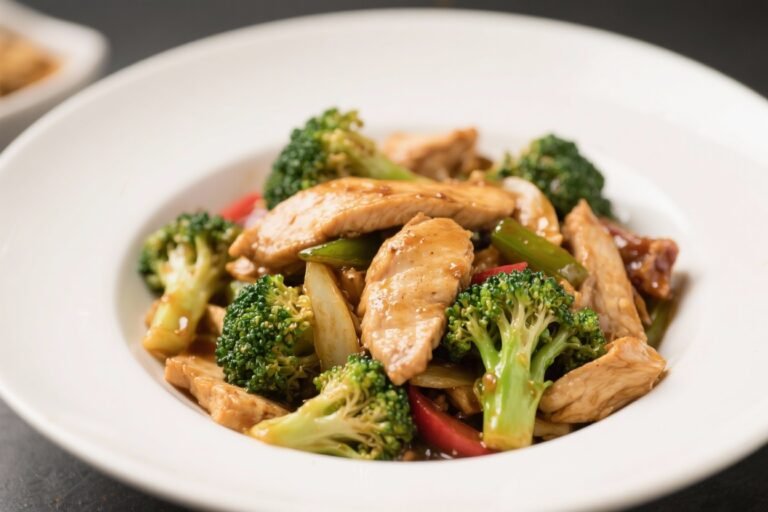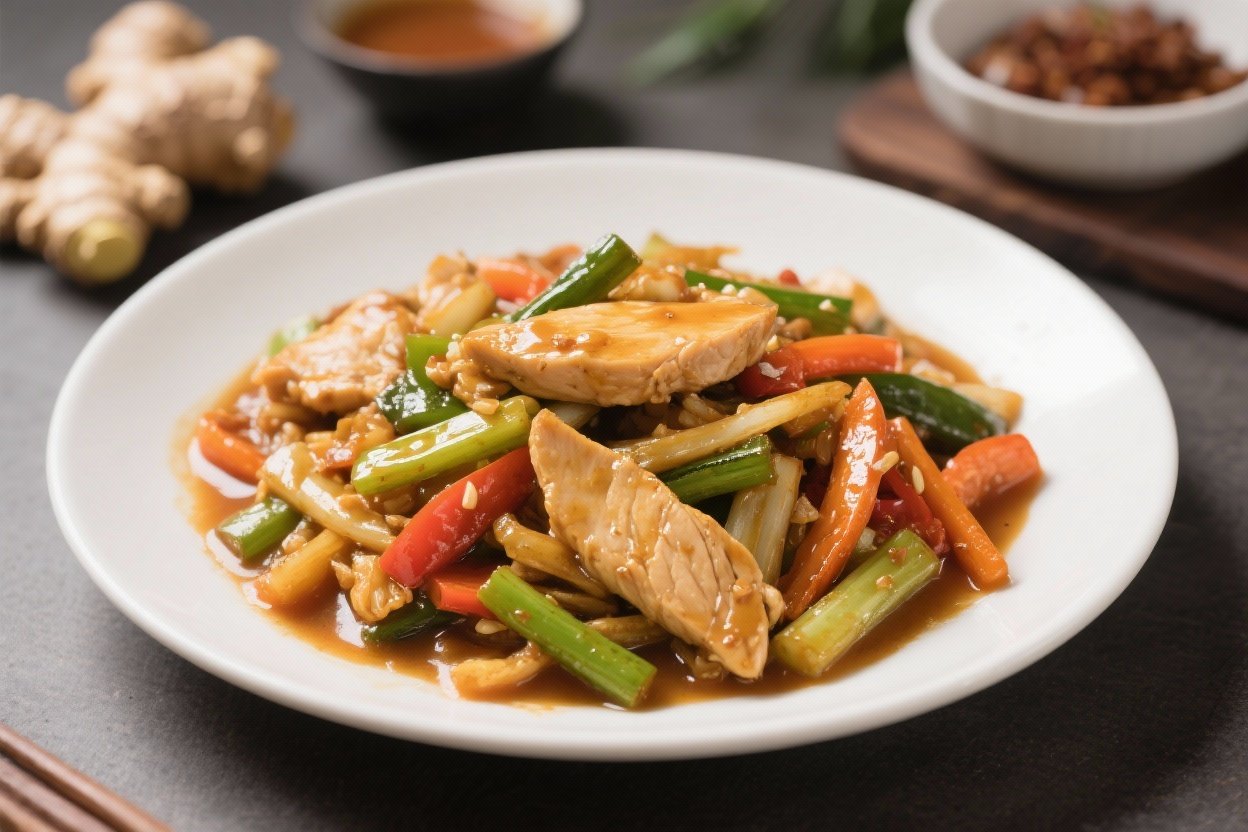
Chicken Veggie Stir-Fry With Ginger Sauce – Fast, Flavorful, and Fresh
This stir-fry brings tender chicken, crisp veggies, and a bright ginger sauce together in one pan. It’s the kind of weeknight dinner that tastes like takeout but feels homey and fresh. The flavors are clean and balanced: savory, garlicky, a little sweet, and a touch of heat if you want it.
Everything cooks fast, so the vegetables keep their crunch and color. Serve it over rice or noodles and you’ve got a satisfying meal in under 30 minutes.
Overeating is a pattern. This helps you fix that problem. A quick reset for cravings, snacking, and “I’ll start tomorrow” moments.
Built for busy home cooks who want real-life structure. Simple steps that fit meal prep, family dinners, and late-night snack attacks.
What Makes This Recipe So Good
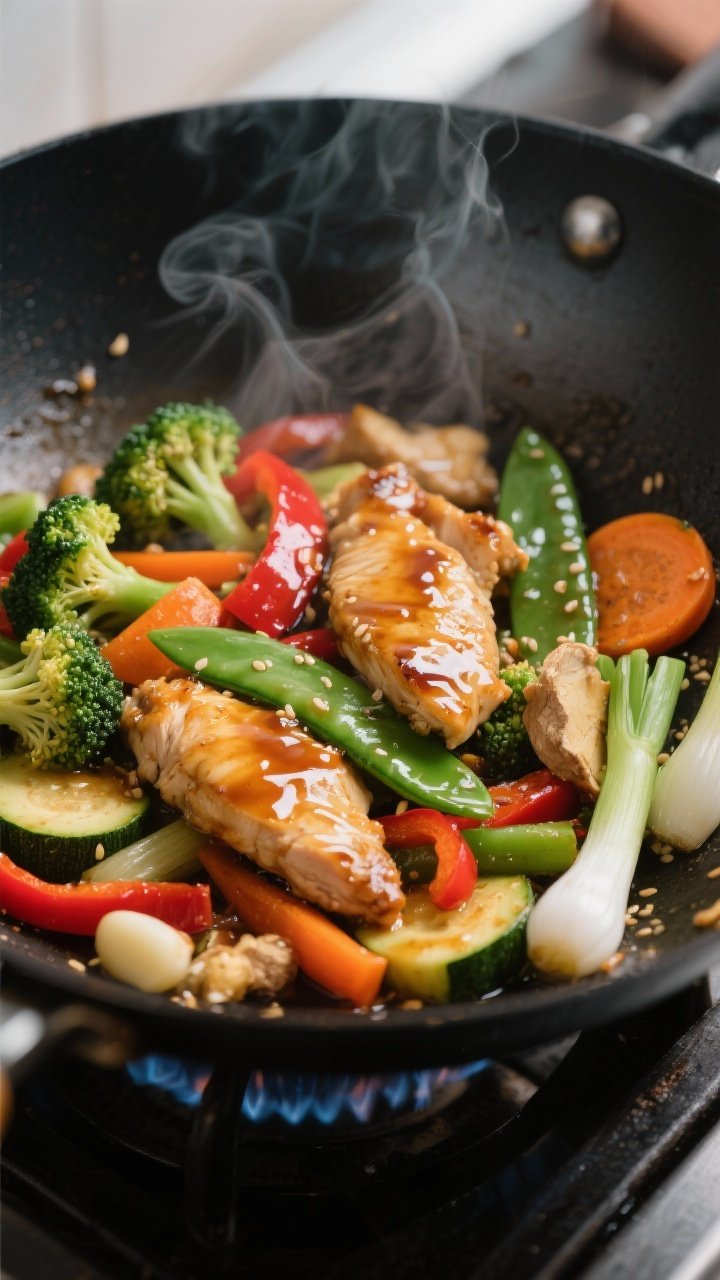
- Quick and easy: The prep is straightforward and the cooking time is short. Perfect for busy nights.
- Big flavor, simple ingredients: Fresh ginger and garlic do most of the heavy lifting.
A few pantry staples round it out.
- Customizable: Swap veggies based on what you have. Adjust the sauce to taste—sweeter, spicier, or more savory.
- Balanced texture: Tender chicken, crisp-tender veggies, and a glossy sauce that clings to everything.
- Nutritious: Lean protein, fiber-rich vegetables, and a light sauce make this a feel-good dish.
What You’ll Need
- Chicken: 1 lb boneless, skinless chicken breasts or thighs, thinly sliced
- Vegetables:
- 1 red bell pepper, sliced
- 1 cup broccoli florets
- 1 medium carrot, thinly sliced
- 1 small zucchini, sliced into half-moons
- 1 cup sugar snap peas or snow peas
- 3 green onions, sliced (whites and greens separated)
- Aromatics: 1 tablespoon fresh ginger, finely grated; 3 cloves garlic, minced
- Neutral oil: 2–3 tablespoons (canola, avocado, or peanut oil)
- Sauce:
- 1/3 cup low-sodium soy sauce or tamari
- 2 tablespoons rice vinegar
- 1–2 tablespoons honey or brown sugar (to taste)
- 1 tablespoon toasted sesame oil
- 1/2 cup low-sodium chicken broth or water
- 1–2 teaspoons sriracha or chili-garlic sauce (optional)
- 1 tablespoon cornstarch (for slurry)
- 2 tablespoons cold water (for slurry)
- Garnishes: Sesame seeds, lime wedges, extra green onions
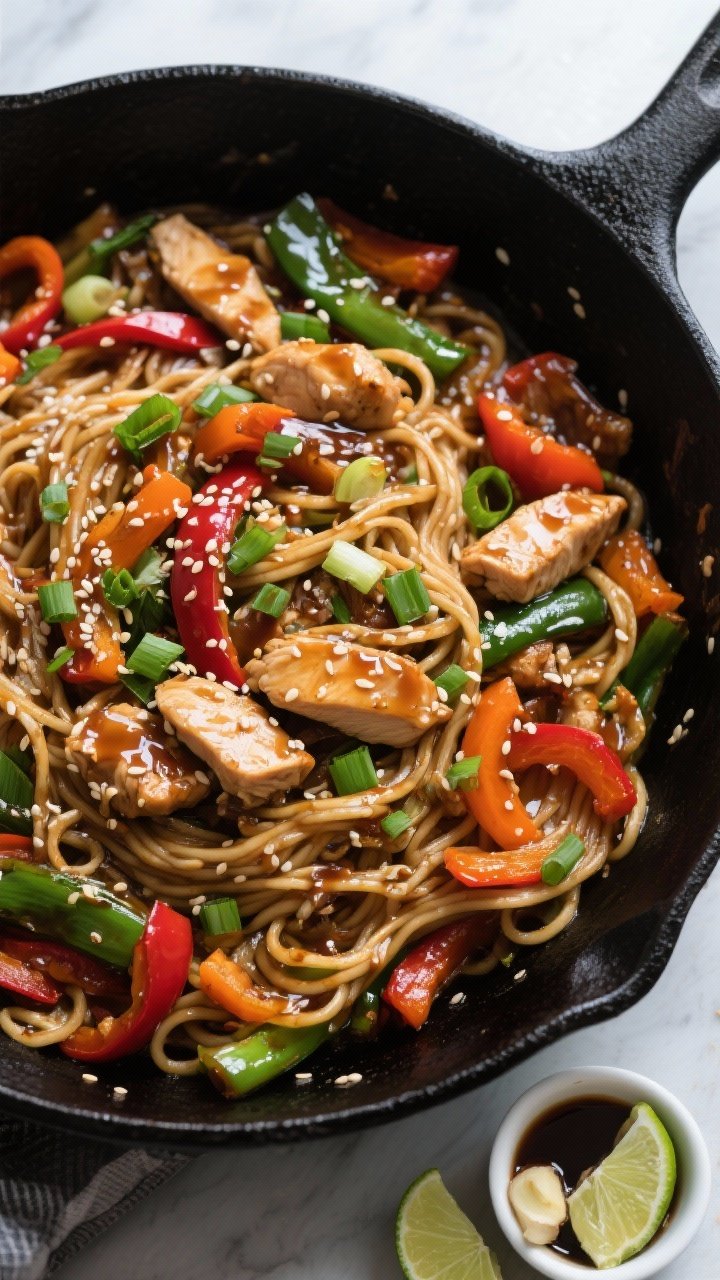
- To serve: Steamed rice or noodles
How to Make It
- Prep everything first. Slice the chicken and vegetables. Grate the ginger and mince the garlic.
Stir-frying moves fast, so have it all ready.
- Make the sauce. In a bowl, combine soy sauce, rice vinegar, honey, sesame oil, broth, and sriracha if using. In a separate small cup, mix cornstarch with cold water to make a slurry. Set both aside.
- Heat the pan. Place a large skillet or wok over medium-high heat.
Add 1 tablespoon oil and swirl to coat.
- Cook the chicken. Season lightly with salt and pepper. Add chicken in a single layer. Cook 3–4 minutes, stirring once or twice, until just cooked through.
Transfer to a plate.
- Stir-fry the firm veggies. Add another tablespoon oil. Toss in broccoli, carrots, and the white parts of the green onions. Cook 2–3 minutes until they start to soften but still have bite.
- Add the tender veggies. Add bell pepper, zucchini, and snap peas.
Stir-fry 2–3 minutes, keeping them crisp-tender.
- Add aromatics. Push veggies to the sides. Add a little oil if the pan is dry. Add ginger and garlic to the center and cook 30 seconds until fragrant.
- Bring it together. Return chicken and any juices to the pan.
Stir the sauce base, pour it in, and bring to a simmer.
- Thicken the sauce. Give the cornstarch slurry a quick stir and add it while tossing everything. Cook 1–2 minutes until the sauce turns glossy and coats the chicken and vegetables.
- Taste and adjust. Add more soy for salt, honey for sweetness, or a splash of vinegar for brightness. Sprinkle in the green onion tops.
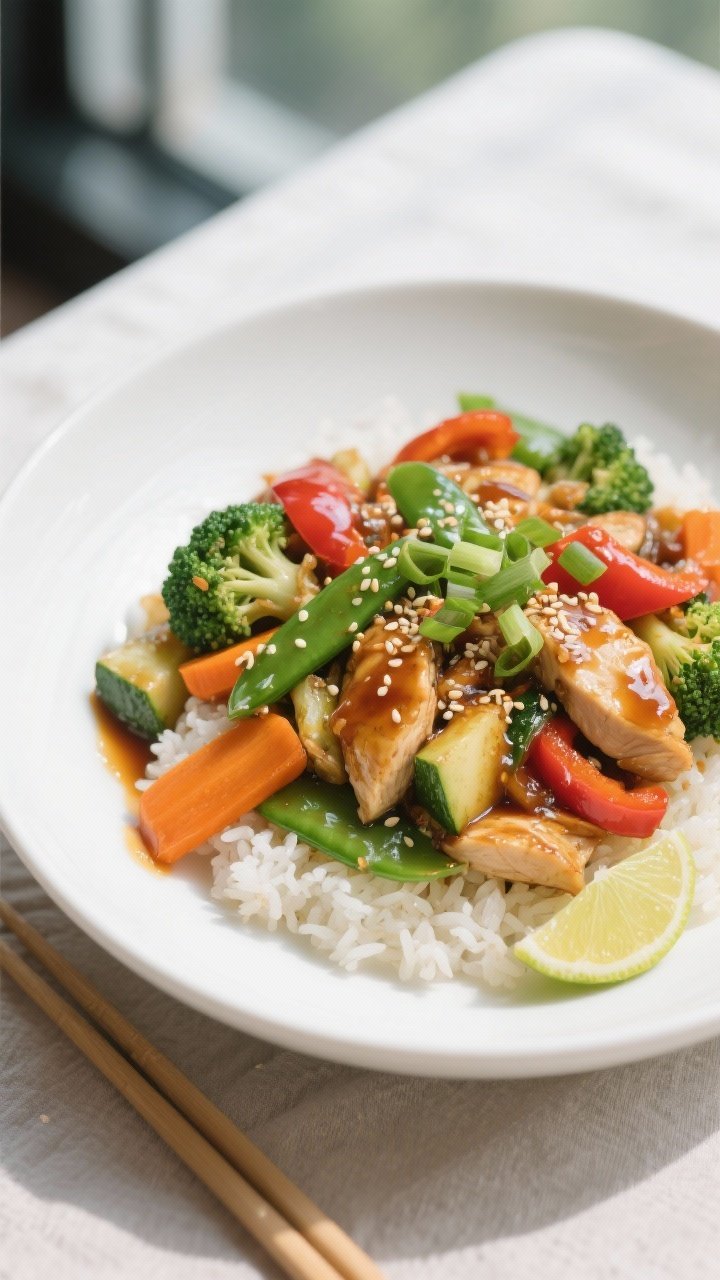
- Serve. Spoon over hot rice or toss with noodles.
Finish with sesame seeds and a squeeze of lime if you like.
Keeping It Fresh
- Storage: Cool completely, then refrigerate in an airtight container for up to 3 days.
- Reheating: Reheat gently in a skillet over medium heat with a splash of water to loosen the sauce. Microwave in short bursts, stirring in between to avoid overcooking the veggies.
- Make-ahead tips: Slice the chicken and vegetables up to a day ahead. Mix the sauce (without the cornstarch) and refrigerate.
Add the slurry right before cooking.
- Freezing: Freeze only the cooked chicken and sauce for best texture. Add fresh veggies when reheating for a crisper bite.
Health Benefits
- Lean protein: Chicken breast offers protein with minimal saturated fat, helping with muscle repair and satiety.
- Colorful vegetables: Broccoli, peppers, and carrots provide fiber, vitamin C, beta-carotene, and antioxidants.
- Ginger and garlic: Known for anti-inflammatory and immune-supportive properties, plus big flavor without extra calories.
- Smart sauce: Using low-sodium soy sauce and a modest amount of sweetener keeps sodium and sugar in check.
- Balanced meal: Pairing with brown rice or whole-grain noodles adds complex carbs and more fiber.

What Not to Do
- Don’t overcrowd the pan. It steams the ingredients instead of searing them. Cook the chicken in batches if needed.
- Don’t skip the prep. Stir-fries move quickly.
If you prep while cooking, something will overcook.
- Don’t add the slurry too early. It can clump if added before the sauce is hot and simmering.
- Don’t overcook the vegetables. Aim for crisp-tender. Soft, dull veggies lose flavor and nutrients.
- Don’t use sesame oil for high heat. It’s a finishing oil. Use a neutral, high-heat oil for stir-frying.
Alternatives
- Protein swaps: Use shrimp, thin-sliced beef, pork tenderloin, or extra-firm tofu (pressed and cubed).
Adjust cook time accordingly.
- Vegetable swaps: Try mushrooms, baby corn, bok choy, green beans, or cabbage. Use what’s in season.
- Gluten-free: Use tamari or coconut aminos. Check labels on broth and sriracha.
- Low-carb: Serve over cauliflower rice or shirataki noodles and reduce the sweetener slightly.
- No cornstarch: Use arrowroot or tapioca starch.
Add at the end and avoid boiling hard to prevent a gummy sauce.
- Citrus twist: Add 1 teaspoon orange zest and 2 tablespoons orange juice to the sauce for a bright note.
FAQ
Can I use frozen vegetables?
Yes, but thaw and pat them dry first. Cook them hot and fast to avoid excess moisture. Expect a slightly softer texture compared to fresh.
How do I keep the chicken tender?
Slice it thinly against the grain and don’t overcook it.
You can also briefly “velvet” it by tossing with 1 teaspoon cornstarch, 1 teaspoon soy sauce, and 1 teaspoon oil for 10 minutes before cooking.
What if I don’t have a wok?
A large, heavy skillet works fine. Give the ingredients room and keep the heat medium-high to get good color without steaming.
Is there a way to make it spicier?
Add more sriracha to the sauce, toss in red pepper flakes with the aromatics, or finish with chili oil at the table.
Can I double the recipe?
Yes, but cook the chicken in batches and stir-fry the vegetables in two rounds. Combine everything at the end with the sauce so it stays hot and crisp.
What’s the best rice to serve with it?
Jasmine rice is fragrant and fluffy.
Brown rice adds nuttiness and extra fiber. For a chewier option, try short-grain rice.
Wrapping Up
This Chicken Veggie Stir-Fry with Ginger Sauce is the kind of meal you’ll make on repeat. It’s quick, flexible, and full of fresh flavor.
Keep the ingredients simple, cook hot and fast, and let the ginger and garlic shine. With a pot of rice and a squeeze of lime, dinner is done—and it’s delicious.