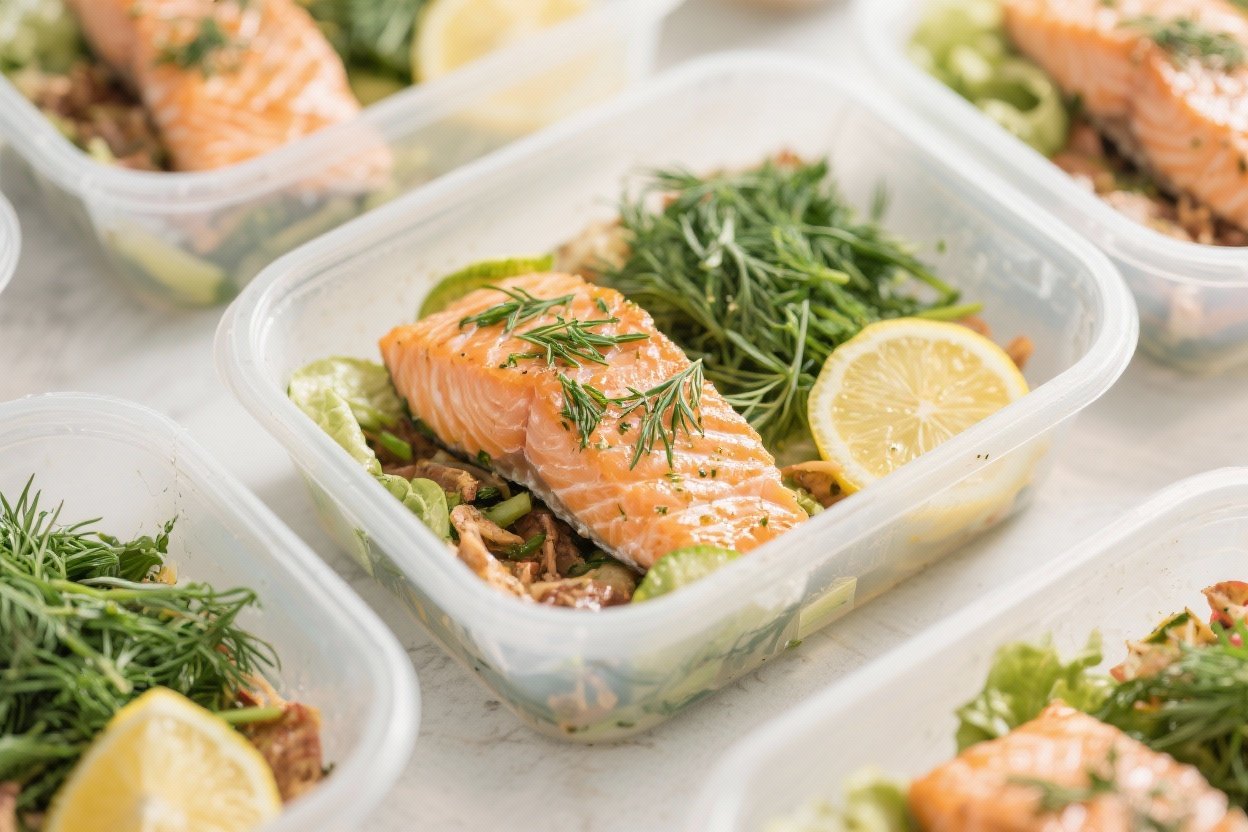
Lemon Dill Salmon Meal Prep – Bright, Fresh, and Ready for the Week
If your week feels packed, a simple meal prep can make all the difference. This Lemon Dill Salmon Meal Prep is light, zesty, and satisfying without weighing you down. You get tender salmon, crisp veggies, and fluffy rice or potatoes—all tied together with fresh lemon and herbs.
It’s simple enough for beginners but feels special enough for a weekday treat. Make it once, and you’ll have balanced, ready-to-go meals that taste great on day one and day four.
Lemon Dill Salmon Meal Prep - Bright, Fresh, and Ready for the Week
Ingredients
- 4 salmon fillets (about 4–6 ounces each), skin-on or skinless
- 2 lemons (zest and juice), plus extra slices for garnish
- 3 tablespoons fresh dill, finely chopped (plus more for serving)
- 3 cloves garlic, minced
- 3 tablespoons extra-virgin olive oil
- 1 teaspoon Dijon mustard
- 1 teaspoon honey or maple syrup (optional, for balance)
- 1 teaspoon kosher salt, plus more to taste
- 1/2 teaspoon black pepper
- 1 teaspoon paprika (optional, for warmth and color)
- 1 pound baby potatoes or cooked brown rice/quinoa for a grain base
- 12 ounces asparagus or green beans, trimmed
- 1 red bell pepper, sliced
- 1 tablespoon olive oil (for veggies)
- 1/2 teaspoon garlic powder (for veggies)
- Lemon wedges, for serving
- Meal prep containers (3–4, microwave-safe)
Instructions
- Preheat the oven to 400°F (200°C). Line a large sheet pan with parchment paper for easy cleanup.
- Make the marinade: In a small bowl, whisk together lemon zest, lemon juice, dill, minced garlic, olive oil, Dijon, honey (if using), salt, pepper, and paprika. Taste and adjust salt or lemon as needed.
- Season the salmon: Pat the salmon dry with paper towels. Place on one side of the sheet pan. Spoon the marinade over the fillets, coating the tops well. Let sit while you prep the vegetables.
- Prep the veggies: If using baby potatoes, halve or quarter them for quicker cooking. Toss potatoes, asparagus/green beans, and bell pepper with olive oil, garlic powder, salt, and pepper. Spread on the other side of the sheet pan. If your pan is crowded, use a second pan to avoid steaming.
- Roast: Bake for 12–15 minutes, depending on the thickness of your salmon. The fish should flake easily with a fork and remain slightly translucent in the center. Potatoes may need 20–25 minutes total; if so, start them first and add salmon and tender veggies in the last 12–15 minutes.
- Cook grains (if using): While the tray bakes, cook brown rice or quinoa according to package directions. Fluff with a fork and season lightly with salt and a squeeze of lemon.
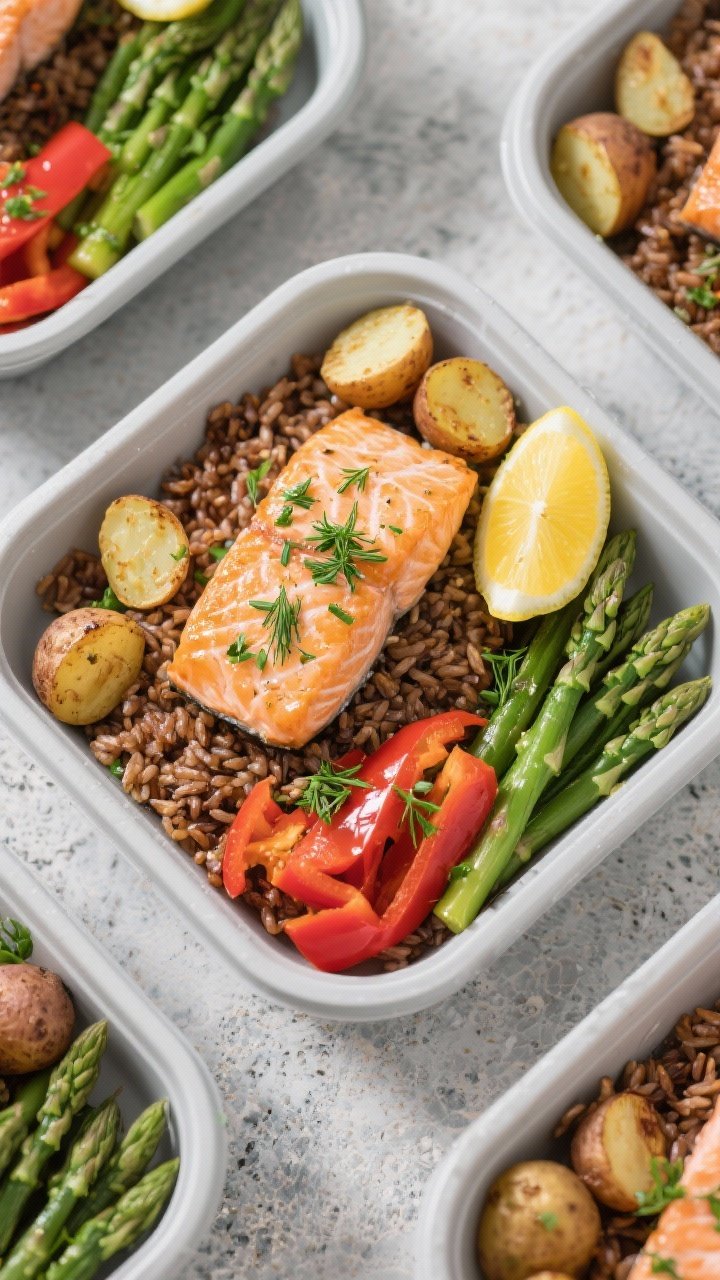
- Rest and portion: Let the salmon rest for 5 minutes. Portion grains or potatoes and vegetables into your containers. Top with a salmon fillet. Add a lemon wedge and a sprinkle of fresh dill.
- Cool and store: Let containers cool, uncovered, for 15–20 minutes before sealing. Refrigerate up to 4 days.
Overeating is a pattern. This helps you fix that problem. A quick reset for cravings, snacking, and “I’ll start tomorrow” moments.
Built for busy home cooks who want real-life structure. Simple steps that fit meal prep, family dinners, and late-night snack attacks.
Why This Recipe Works
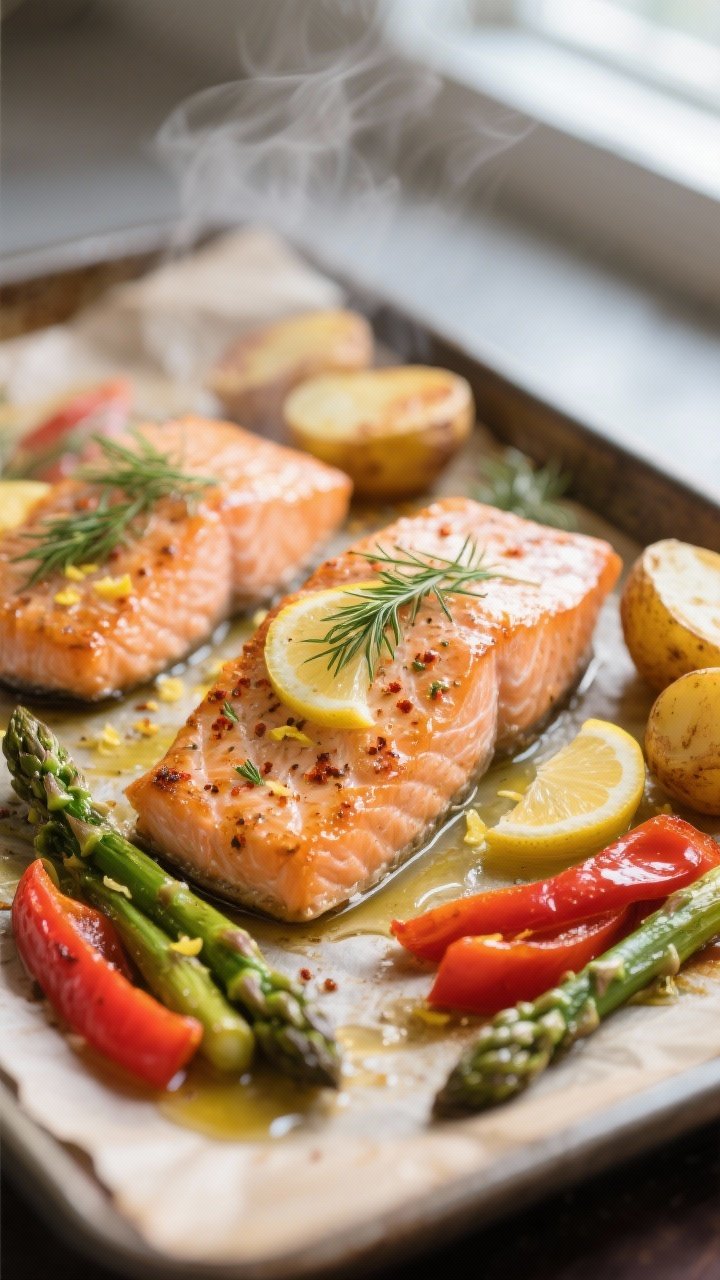
This recipe is built around clean flavors that never get boring. Fresh lemon, dill, and garlic brighten the salmon without overpowering it. Roasted or steamed veggies keep well and reheat nicely, and the whole meal stays balanced and satisfying.
The marinade comes together in minutes, and you cook everything on one or two sheet pans. It’s a smart combination of high-protein salmon, fiber-rich sides, and fresh herbs that keep your meals tasting lively all week.
Ingredients
- 4 salmon fillets (about 4–6 ounces each), skin-on or skinless
- 2 lemons (zest and juice), plus extra slices for garnish
- 3 tablespoons fresh dill, finely chopped (plus more for serving)
- 3 cloves garlic, minced
- 3 tablespoons extra-virgin olive oil
- 1 teaspoon Dijon mustard
- 1 teaspoon honey or maple syrup (optional, for balance)
- 1 teaspoon kosher salt, plus more to taste
- 1/2 teaspoon black pepper
- 1 teaspoon paprika (optional, for warmth and color)
- 1 pound baby potatoes or cooked brown rice/quinoa for a grain base
- 12 ounces asparagus or green beans, trimmed
- 1 red bell pepper, sliced
- 1 tablespoon olive oil (for veggies)
- 1/2 teaspoon garlic powder (for veggies)
- Lemon wedges, for serving
- Meal prep containers (3–4, microwave-safe)
Instructions
- Preheat the oven to 400°F (200°C). Line a large sheet pan with parchment paper for easy cleanup.
- Make the marinade: In a small bowl, whisk together lemon zest, lemon juice, dill, minced garlic, olive oil, Dijon, honey (if using), salt, pepper, and paprika.
Taste and adjust salt or lemon as needed.
- Season the salmon: Pat the salmon dry with paper towels. Place on one side of the sheet pan. Spoon the marinade over the fillets, coating the tops well.
Let sit while you prep the vegetables.
- Prep the veggies: If using baby potatoes, halve or quarter them for quicker cooking. Toss potatoes, asparagus/green beans, and bell pepper with olive oil, garlic powder, salt, and pepper. Spread on the other side of the sheet pan.
If your pan is crowded, use a second pan to avoid steaming.
- Roast: Bake for 12–15 minutes, depending on the thickness of your salmon. The fish should flake easily with a fork and remain slightly translucent in the center. Potatoes may need 20–25 minutes total; if so, start them first and add salmon and tender veggies in the last 12–15 minutes.
- Cook grains (if using): While the tray bakes, cook brown rice or quinoa according to package directions.
Fluff with a fork and season lightly with salt and a squeeze of lemon.
- Rest and portion: Let the salmon rest for 5 minutes. Portion grains or potatoes and vegetables into your containers. Top with a salmon fillet.
Add a lemon wedge and a sprinkle of fresh dill.
- Cool and store: Let containers cool, uncovered, for 15–20 minutes before sealing. Refrigerate up to 4 days.
Keeping It Fresh
Moisture control is key. Cool the food before sealing to avoid condensation, which can make veggies soggy. Keep lemon wedges separate and squeeze them fresh after reheating.
Store salmon on top of grains or potatoes to absorb any juices and keep textures pleasant. If you like extra sauce, mix a quick dip of Greek yogurt, lemon, dill, and a pinch of salt, and keep it in a small lidded cup so it stays bright.
Health Benefits
- Omega-3s for heart and brain: Salmon is rich in EPA and DHA, which support heart health, cognitive function, and healthy inflammation levels.
- Protein that satisfies: Each serving delivers high-quality protein, helping with muscle repair and steady energy.
- Fiber and vitamins from veggies: Asparagus, beans, and peppers bring fiber, vitamin C, folate, and potassium. They keep your plate colorful and your digestion happy.
- Wholesome carbs: Potatoes, rice, or quinoa provide steady fuel.
Choose what works best for your routine and energy needs.
- Lemon and dill: Fresh herbs and citrus add flavor without heavy sauces, helping you keep sodium and calories in check.
What Not to Do
- Don’t overcook the salmon. Dry salmon loses flavor fast. Pull it when it just flakes, or when the internal temp hits about 125–130°F for medium.
- Don’t cram the pan. Crowding traps steam. Use two pans if needed to keep veggies roasting instead of getting mushy.
- Don’t skip seasoning the base. Lightly salt the grains or potatoes; bland sides make the whole meal feel flat.
- Don’t store hot food sealed. Let it cool before covering to keep textures crisp and prevent excess moisture.
- Don’t forget to refresh. A quick squeeze of lemon and extra dill at serving makes leftovers taste newly cooked.
Alternatives
- Protein swaps: Try trout, cod, or shrimp.
For a plant-based option, use firm tofu or chickpeas tossed in the same marinade.
- Veggie swaps: Broccoli, zucchini, cherry tomatoes, or Brussels sprouts all roast well. Mix and match based on what’s in season.
- Carb options: Quinoa, farro, cauliflower rice, or roasted sweet potatoes are excellent bases.
- Flavor twists: Swap dill for parsley and chives, or add capers for a briny pop. A tiny pinch of red pepper flakes adds gentle heat.
- Dairy-friendly sauce: Stir together Greek yogurt, lemon juice, dill, and a drizzle of olive oil for a creamy, tangy topping.
FAQ
Can I use frozen salmon?
Yes.
Thaw it overnight in the fridge or place sealed fillets in cold water for 30–45 minutes. Pat very dry before marinating so the flavors stick and the fish roasts instead of steaming.
How long does it keep?
Up to 4 days in the fridge. For best quality, eat salmon by day 3 and save day 4 for the portion with the most sauce or lemon to keep it bright.
How should I reheat it?
Microwave at 50–70% power for 60–90 seconds to keep the salmon tender.
Or warm in a 300°F oven for 8–10 minutes. Add fresh lemon after reheating.
Can I make it without dill?
Absolutely. Use parsley, cilantro, or chives.
The lemon-garlic base carries the flavor, and fresh herbs simply lift it further.
What if I don’t have Dijon?
Skip it or use a pinch of dry mustard. Dijon adds subtle tang and helps the marinade emulsify, but the recipe still works without it.
Is this recipe gluten-free?
Yes, as written. Just make sure your mustard and any packaged grains are certified gluten-free if needed.
Can I grill the salmon instead?
Yes.
Grill over medium heat for about 3–4 minutes per side, depending on thickness. Roast the veggies separately or grill them in a basket.
What’s a good portion size?
Plan on one 4–6 ounce salmon fillet per serving, 1 cup cooked grains or a handful of roasted potatoes, and 1–1.5 cups of veggies. Adjust based on your needs.
Wrapping Up
This Lemon Dill Salmon Meal Prep is fresh, flexible, and fast.
With a handful of pantry staples and bright herbs, you get balanced meals that reheat beautifully. Make it once, portion it out, and give yourself calmer, easier lunches or dinners all week. A squeeze of lemon and a sprinkle of dill at serving is the simple finishing touch that keeps every bite vibrant.
Printable Recipe Card
Want just the essential recipe details without scrolling through the article? Get our printable recipe card with just the ingredients and instructions.