Lemon Garlic Tuna Steak Plates – Bright, Fresh, and Fast
Juicy tuna steaks, a punchy lemon-garlic marinade, and crisp sides—the kind of meal that tastes restaurant-level but comes together on a weeknight. The flavors are clean and bold, with just enough freshness to feel light and satisfying. You’ll sear the tuna hot and fast so it stays tender inside, then finish with a zesty drizzle that wakes everything up.
This is a great option when you want a protein-forward plate that doesn’t feel heavy. It looks impressive, but the steps are simple and very doable.
Overeating is a pattern. This helps you fix that problem. A quick reset for cravings, snacking, and “I’ll start tomorrow” moments.
Built for busy home cooks who want real-life structure. Simple steps that fit meal prep, family dinners, and late-night snack attacks.
What Makes This Special
- Fast cooking: Tuna steaks sear in minutes, which makes this a quick dinner that still feels special.
- Big, bright flavor: Lemon and garlic bring tang and warmth without overpowering the fish.
- Flexible plating: Pair with greens, rice, roasted potatoes, or a simple salad. It all works.
- Meal-prep friendly: The marinade doubles as a finishing sauce, so prep is streamlined.
- Restaurant feel at home: Crisp sear on the outside, tender in the center—no fancy equipment needed.
Ingredients
- 2 tuna steaks (about 6–8 oz each, 1 to 1 1/2 inches thick), preferably sushi-grade or high-quality ahi/yellowfin
- 2 lemons (zest of 1, juice of both)
- 3–4 garlic cloves, finely minced
- 3 tablespoons extra-virgin olive oil, plus more for searing
- 1 tablespoon soy sauce or tamari (optional but recommended for depth)
- 1 teaspoon Dijon mustard
- 1/2 teaspoon honey or maple syrup (to balance acidity)
- 1/2 teaspoon crushed red pepper flakes (optional for heat)
- 1 tablespoon fresh parsley, finely chopped (plus extra for garnish)
- Sea salt and freshly ground black pepper
- To plate: cooked rice or roasted potatoes, simple greens (like arugula or spinach), and lemon wedges
How to Make It
- Pat the tuna dry: Remove excess moisture with paper towels.
This helps you get a good sear.
- Make the marinade: In a bowl, whisk together lemon zest, lemon juice, minced garlic, olive oil, soy sauce, Dijon, honey, red pepper flakes, parsley, and a pinch of salt and pepper.
- Marinate briefly: Place tuna steaks in a shallow dish. Spoon over about half the marinade and turn to coat. Let sit for 10–15 minutes at room temperature. Reserve the rest for finishing.
- Preheat your pan: Heat a heavy skillet (cast iron or stainless) over medium-high until very hot.
Add a thin sheen of olive oil.
- Sear the tuna: Add steaks to the pan. Cook 1 1/2 to 2 minutes per side for medium-rare (interior still rosy). For more done, add 30–60 seconds per side, but avoid overcooking.
- Rest and slice: Transfer to a cutting board and rest 2–3 minutes.
Slice against the grain into thick strips, or leave whole if you prefer.
- Reduce the sauce (optional): Pour the reserved marinade into the hot pan for 30–45 seconds to warm and slightly thicken, scraping any browned bits. Don’t boil for long or it will turn bitter.
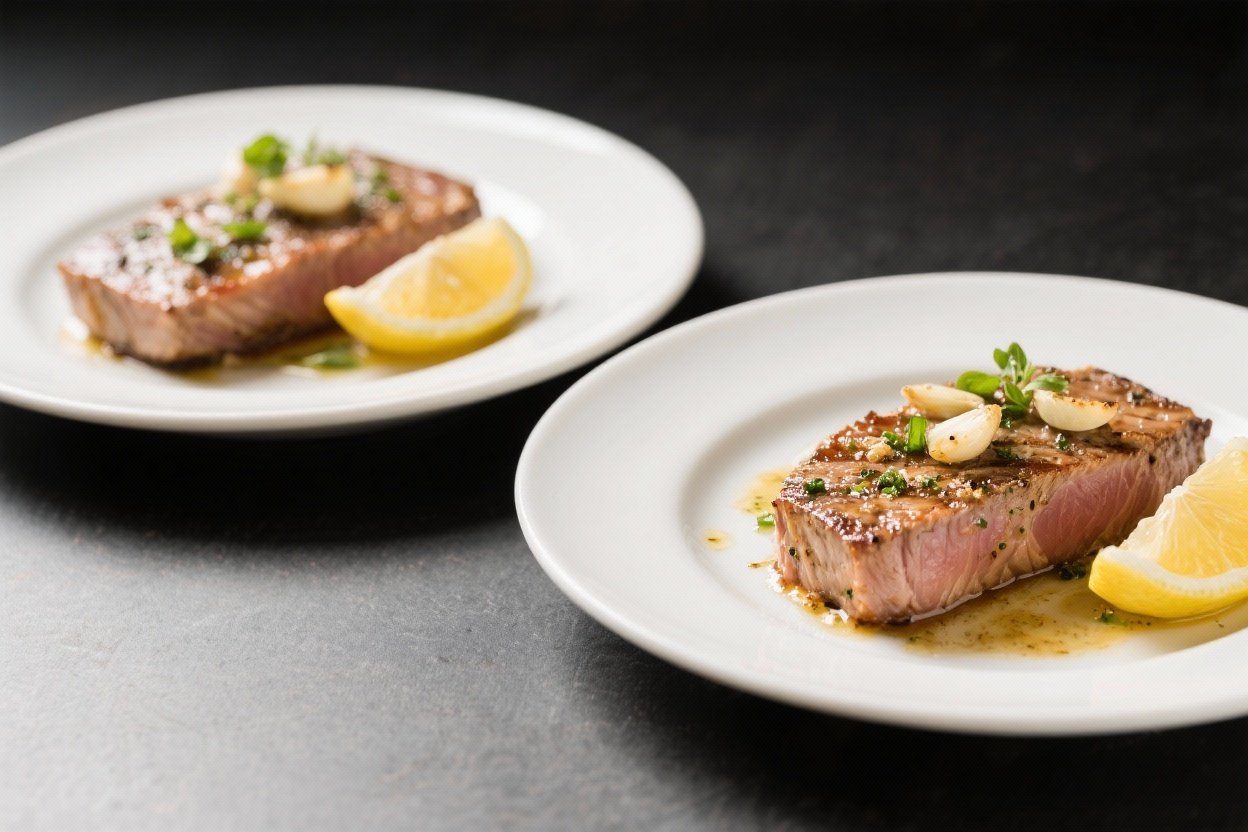
- Plate it up: Add a scoop of rice or potatoes, a handful of greens, and the sliced tuna. Spoon the warm lemon-garlic sauce over the fish.
Finish with extra parsley, black pepper, and lemon wedges.
How to Store
- Refrigerate: Store leftover tuna in an airtight container for up to 2 days. Keep sauce in a separate container if possible.
- Reheat gently: Tuna dries out fast. Eat it cold or rewarm briefly in a low skillet for 30–60 seconds per side.
- Use leftovers smartly: Slice and add to salads, grain bowls, or wrap in a tortilla with greens and a squeeze of lemon.
Why This is Good for You
- Lean protein: Tuna delivers high-quality protein that keeps you full without feeling heavy.
- Healthy fats: Tuna contains omega-3s, while olive oil adds heart-friendly monounsaturated fats.
- Fresh flavors, lighter feel: Lemon and herbs add brightness without extra calories or cream.
- Balanced plate: Pairing with greens and a smart carb gives you a mix of fiber, vitamins, and energy.

What Not to Do
- Don’t over-marinate: Acidic marinades can “cook” the tuna if left too long.
Keep it under 20 minutes.
- Don’t start with a cold pan: You won’t get that golden crust. The pan should be hot before the tuna touches it.
- Don’t overcrowd: If you’re cooking more than two steaks, sear in batches so the pan stays hot.
- Don’t overcook: Tuna goes from succulent to dry quickly. Aim for medium-rare to medium for best texture.
- Don’t skip drying the fish: Moisture is the enemy of a good sear.
Variations You Can Try
- Herb swap: Use basil, cilantro, or dill instead of parsley for a different accent.
- Mediterranean twist: Add chopped olives, capers, and a few cherry tomatoes to the warm sauce.
- Spicy citrus: Replace some lemon with lime and add a dash of chili crisp or sriracha.
- Sesame crust: Press sesame seeds onto the tuna before searing for extra crunch and nutty flavor.
- Grilled version: Grill over high heat 1–2 minutes per side.
Brush with the reserved sauce after grilling.
- Veg-forward plate: Serve with blistered green beans, roasted broccoli, or a cucumber-tomato salad.
FAQ
What kind of tuna steaks should I buy?
Look for high-quality ahi or yellowfin tuna with a firm texture and a fresh, clean smell. If you plan to keep the center quite rare, choose sushi-grade where available.
Can I use frozen tuna?
Yes. Thaw in the fridge overnight and pat very dry before marinating.
Frozen tuna can be excellent if it’s good quality and handled properly.
How do I know when the tuna is done?
For medium-rare, the center should still be rosy and slightly translucent. If you have an instant-read thermometer, aim for about 115–120°F in the center right off the heat; it will rise slightly as it rests.
Is it safe to eat tuna a little rare?
Tuna is commonly served rare to medium-rare when high-quality and handled safely. If you prefer it more cooked, sear slightly longer, but expect a firmer texture.
What can I use instead of soy sauce?
Tamari works well for a gluten-free option.
You can also skip it and add an extra pinch of salt plus a splash of fish sauce for umami.
Can I bake the tuna instead?
You can, but you’ll lose some of the sear. If baking, cook at 400°F for 6–10 minutes depending on thickness, checking often to avoid overcooking.
What sides pair best?
Light sides work beautifully: lemony rice, garlicky roasted potatoes, sautéed spinach, arugula salad, or grilled asparagus.
Can I meal-prep this?
Yes. Make the rice/potatoes and salad ahead.
Sear the tuna fresh if you can, or cook it slightly under and chill for bowls and salads the next day.
How do I keep the garlic from burning?
Since the garlic is in the marinade, avoid leaving excess marinade on the fish during searing. Pat lightly and add the reserved sauce at the end, warming it briefly.
What if I don’t have Dijon mustard?
Use a small pinch of dried mustard or skip it. It helps emulsify the sauce and adds a subtle tang, but the dish will still be great without it.
Wrapping Up
Lemon Garlic Tuna Steak Plates bring together bold flavor and easy technique in a way that fits any weeknight.
With a quick marinade, a hot sear, and a bright finish, you get a meal that feels fresh and satisfying without a lot of fuss. Keep the sides simple, let the tuna shine, and finish with a squeeze of lemon. It’s the kind of recipe you’ll return to whenever you want dinner to feel a little special—fast.