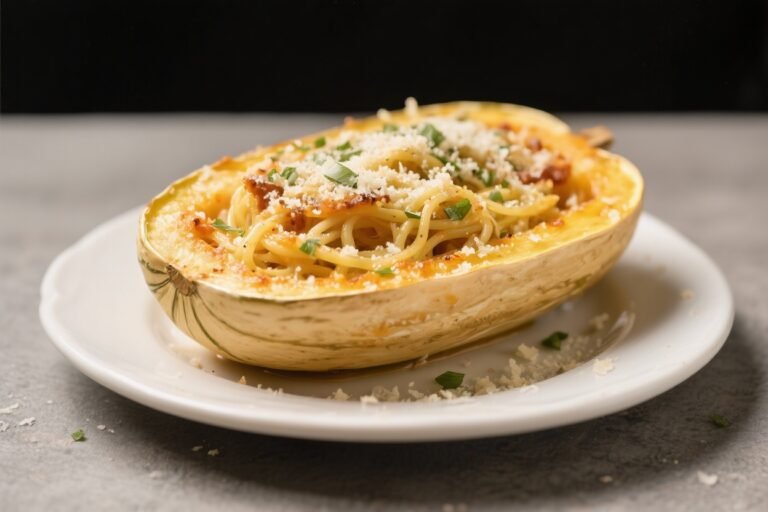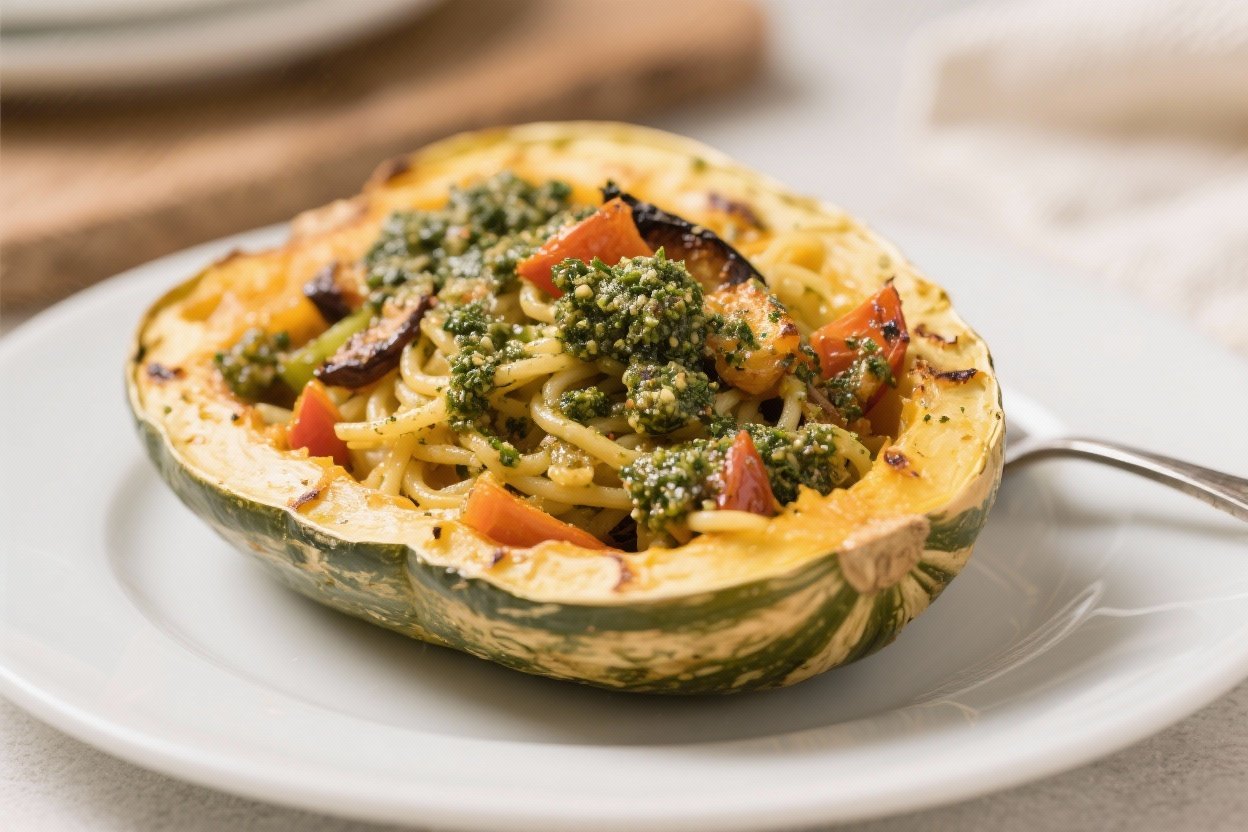
Pesto Roasted Vegetable Spaghetti Squash: The Low-Carb Pasta Swap You’ll Actually Crave
You want a dinner that tastes like comfort food, looks like you have your life together, and doesn’t hijack your macros. This is it. Pesto Roasted Vegetable Spaghetti Squash is the kind of dish that steals the spotlight without trying—fresh basil, roasted veggies, and those magical spaghetti-like strands that trick your brain in the best way.
It’s fast, vibrant, and wildly satisfying. Bonus: it’s a leftover champion and smells like an Italian vacation.
Overeating is a pattern. This helps you fix that problem. A quick reset for cravings, snacking, and “I’ll start tomorrow” moments.
Built for busy home cooks who want real-life structure. Simple steps that fit meal prep, family dinners, and late-night snack attacks.
Why You’ll Love This Recipe

- Big flavor, low effort: Roasting does 80% of the work, pesto does the rest.
- Weeknight-friendly: While the squash roasts, prep everything else. You’ll feel like a multitasking wizard.
- Light but filling: It’s veggie-forward but still hearty, thanks to healthy fats and fiber.
- Meal-prep gold: Reheats beautifully and tastes even better the next day.
- Customizable: Use what’s in your fridge—zucchini, peppers, mushrooms—no stress.
What Goes Into This Recipe – Ingredients
- 1 large spaghetti squash (about 3–4 pounds)
- 2 cups mixed vegetables, cut into bite-size pieces (bell peppers, zucchini, cherry tomatoes, red onion, mushrooms)
- 3 tablespoons olive oil, divided
- 1 teaspoon kosher salt, plus more to taste
- 1/2 teaspoon freshly ground black pepper
- 1/2 teaspoon garlic powder (optional but recommended)
- 1/4 teaspoon red pepper flakes (optional for heat)
- 1/2 cup basil pesto (store-bought or homemade)
- 1/4 cup grated Parmesan or pecorino, plus more for serving
- 1 tablespoon fresh lemon juice, plus zest to taste
- Fresh basil, torn, for garnish
- Pine nuts or chopped walnuts, toasted, for crunch (optional)
Instructions
- Preheat and prep: Heat the oven to 400°F (205°C).
Line two baking sheets with parchment for easy cleanup.
- Cut the squash: Carefully slice the spaghetti squash in half lengthwise. Scoop out the seeds. Drizzle cut sides with 1 tablespoon olive oil and season with salt and pepper.
- Roast the squash: Place cut side down on one baking sheet.
Roast for 35–45 minutes, until the skin yields to pressure and strands pull apart easily with a fork.
- Prep the veggies: Toss mixed vegetables with 2 tablespoons olive oil, 1 teaspoon salt, 1/2 teaspoon pepper, garlic powder, and red pepper flakes. Spread on the second baking sheet.
- Roast the veggies: Slide into the oven for the last 18–22 minutes of the squash’s cook time, stirring once. You want caramelized edges and tender centers—brown bits = flavor.
- Shred the squash: When squash is cool enough to handle, flip and rake a fork through the flesh to create strands.
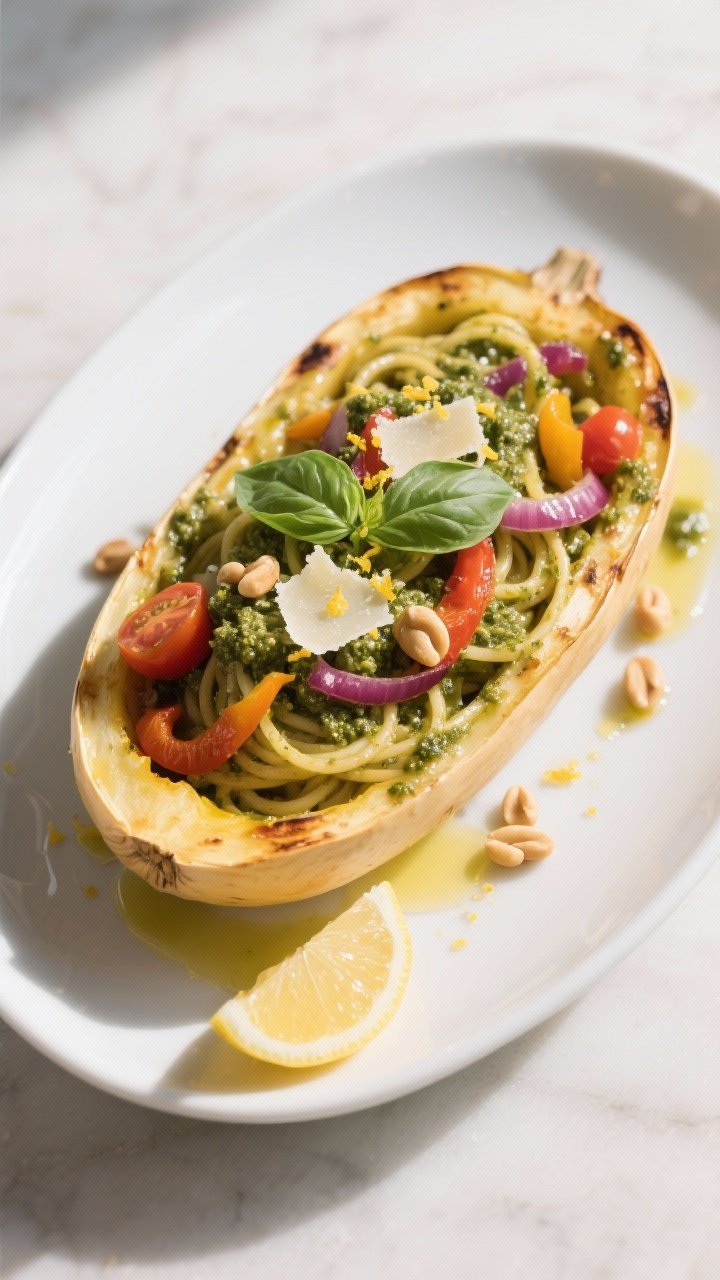
Transfer to a large bowl (or keep in the shells for a fun “boat”).
- Add the pesto magic: Stir in pesto, Parmesan, and lemon juice while everything is still warm. Taste and adjust salt, pepper, and lemon. If it looks dry, drizzle a touch more olive oil.
- Combine: Fold in the roasted vegetables.
Don’t overmix—keep those strands intact so it feels “pasta-like.”
- Finish and serve: Top with extra Parmesan, torn basil, lemon zest, and toasted nuts if using. Serve hot. Try not to eat the entire pan.
No promises.
Storage Instructions
- Fridge: Store in an airtight container for up to 4 days. Reheat gently on the stovetop over medium-low with a splash of water or olive oil.
- Freezer: Not ideal—spaghetti squash can turn watery when thawed. If you must, freeze up to 2 months and reheat in a skillet to cook off excess moisture.
- Make-ahead tip: Roast squash and veggies 1–2 days ahead.
Refrigerate separately. Toss with pesto just before serving for best texture.
What’s Great About This
- High-volume, low-calorie: Big bowl, minimal guilt. Your appetite gets satisfied, your goals stay intact.
- Balanced nutrition: Fiber from squash and veggies, healthy fats from pesto, and protein if you add chicken, shrimp, or chickpeas.
Easy win.
- Versatile as a main or side: Pairs with roasted salmon, grilled steak, or stands alone like a boss.
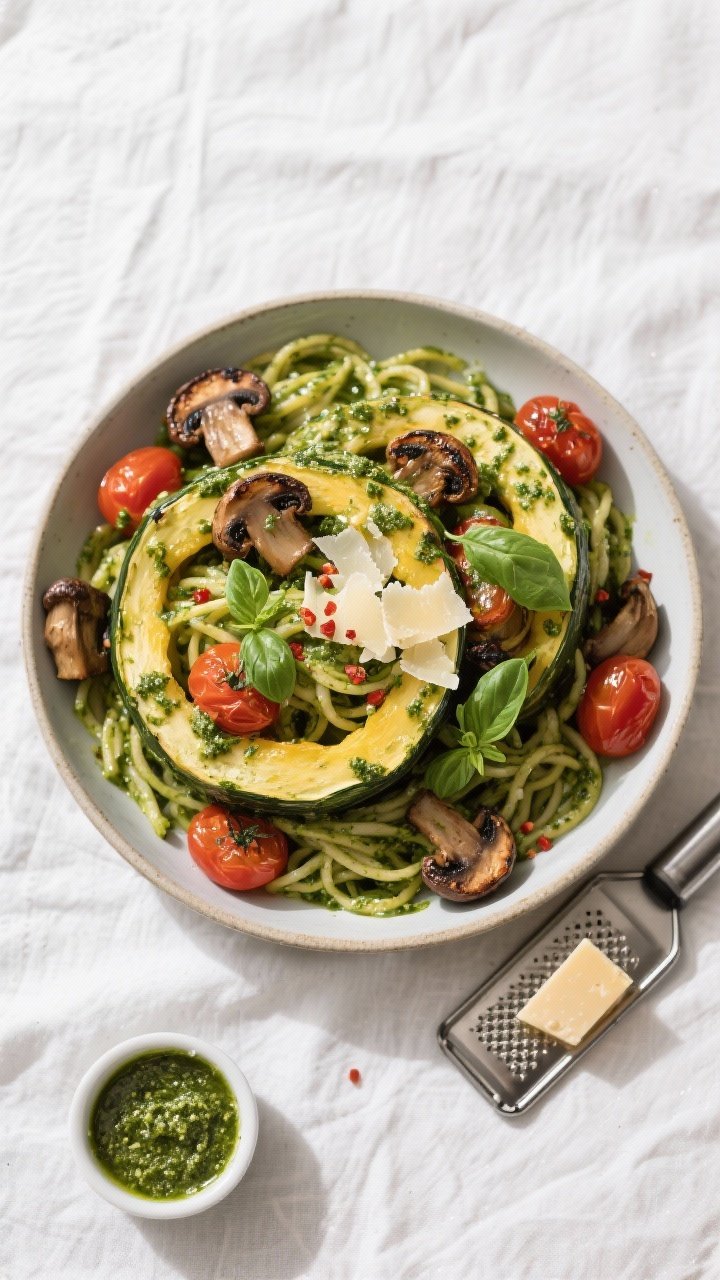
- Restaurant look, home effort: Colorful, glossy, and downright photogenic. Your feed will approve, FYI.
Pitfalls to Watch Out For
- Watery squash: If the squash is under-roasted, it leaks. Roast until the strands pull apart easily and steam dries off a bit.
- Overcrowded veggies: Crowding = steaming = sad, pale vegetables.
Use two pans or roast in batches to get those caramelized edges.
- Clumpy pesto: Add pesto while everything is warm so it melts into the strands. Cold pesto + cold squash = uneven coating.
- Under-seasoning: Taste at the end. Lemon, salt, and a sprinkle of cheese make the flavors pop.
Don’t be shy.
Variations You Can Try
- Protein boost: Add grilled chicken, sautéed shrimp, Italian sausage, or roasted chickpeas.
- Dairy-free: Use a vegan pesto and swap Parmesan for nutritional yeast or a dairy-free Parmesan.
- Mediterranean twist: Add olives, sun-dried tomatoes, and crumbled feta. Boom—instant vacation vibes.
- Green overload: Toss in baby spinach or kale when mixing; the residual heat will wilt it perfectly.
- Spicy pesto: Stir Calabrian chili paste or extra red pepper flakes into the pesto for a kick.
- Crunch factor: Breadcrumbs toasted in olive oil with garlic, or toasted pine nuts/walnuts for texture.
- Sheet-pan shortcut: Roast squash cut side up the last 5 minutes, add the veggies to the same pan, then mix pesto right on the sheet. Minimal dishes, maximal applause.
FAQ
How do I cut spaghetti squash safely?
Use a sharp chef’s knife.
Trim a tiny slice off the bottom to create a flat base, then stand the squash upright and cut downward. Microwaving the whole squash for 3–4 minutes can soften the skin and make cutting easier—just poke a few vent holes first.
Can I use store-bought pesto?
Absolutely. Choose one with olive oil, basil, nuts, and real cheese for best flavor.
If it tastes flat, brighten with lemon juice and a pinch of salt. IMO, refrigerated pesto usually beats shelf-stable.
How do I avoid soggy results?
Roast squash until strands separate easily and some edges caramelize. Don’t overcrowd vegetables.
If it’s still watery, toss squash in a dry skillet for 2–3 minutes to evaporate moisture before adding pesto.
Is this recipe keto or gluten-free?
It’s naturally gluten-free. It can be keto-friendly if you watch the carb content of your veggies and pesto. Skip sweet veggies like corn and keep an eye on serving size if you’re strict.
What’s the best way to reheat?
Stovetop is king.
Warm in a skillet over medium-low with a splash of water or olive oil, stirring gently. Microwave works in a pinch—30-second blasts and fluff with a fork between rounds.
Can I make it without nuts?
Yes. Use a nut-free pesto (many brands offer it, or make your own with sunflower seeds) and skip the pine nuts.
Flavor stays bold.
What can I substitute for Parmesan?
Pecorino Romano adds saltier, sharper notes. For dairy-free, try nutritional yeast or a plant-based Parmesan. Adjust salt since cheese contributes savoriness.
How do I know the squash is done?
Press the skin—it should yield slightly.
A fork should glide through, creating spaghetti-like strands. If resistance is strong, give it another 5–10 minutes.
Final Thoughts
Pesto Roasted Vegetable Spaghetti Squash hits that sweet spot: comforting, bright, and secretly healthy. It’s a weeknight workhorse that still feels like a treat, and the leftovers are borderline dangerous.
Keep the method, remix the add-ins, and you’ve got a craveable template for all seasons. Now go make the “pasta” that doesn’t require a nap after. Your future self says thanks.
Printable Recipe Card
Want just the essential recipe details without scrolling through the article? Get our printable recipe card with just the ingredients and instructions.