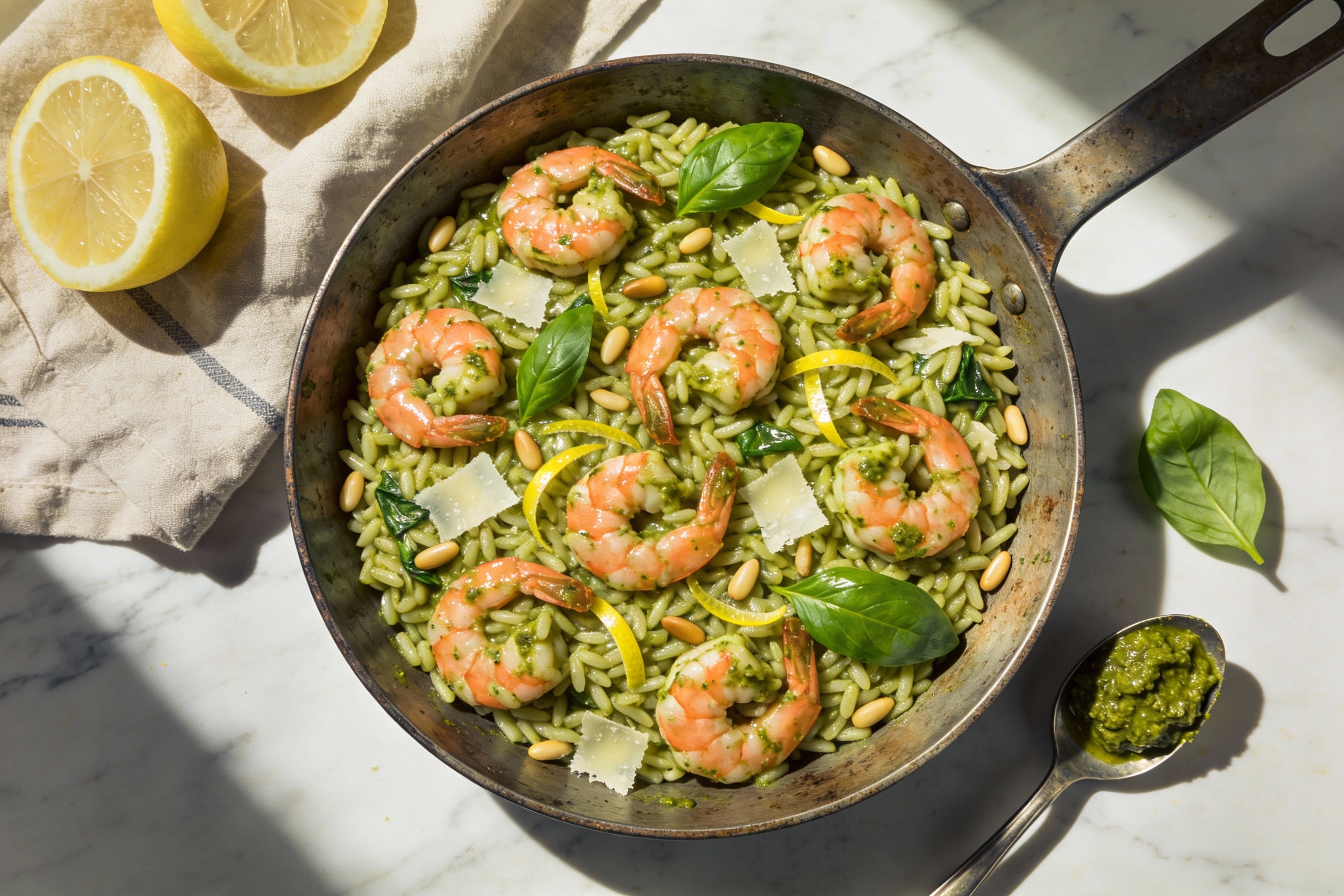
Pesto Shrimp Orzo That Tastes Like Summer Party Food
You want dinner that tastes like you tried hard but didn’t break a sweat? Meet pesto shrimp orzo. It’s bright, garlicky, and buttery—like summer threw a party in your bowl. The shrimp cook fast, the orzo soaks up all the flavor, and the pesto does the heavy lifting. You’ll get a one-pan vibe without the stress, plus leftovers that slap.
Why Pesto Shrimp Orzo Works (and Why You’ll Crave It Again)
This dish nails balance. Orzo gives you comforting, pasta-like chew; pesto brings herby richness; shrimp keep things light and quick. It’s the dinner trifecta.
You can scale it for a date night or a family crowd with zero drama. Want to swap in frozen shrimp? Totally fine. Want to use store-bought pesto? Same. FYI, you’ll get big payoff with very little effort, which, IMO, is the best kind of cooking.
Overeating is a pattern. This helps you fix that problem. A quick reset for cravings, snacking, and “I’ll start tomorrow” moments.
Built for busy home cooks who want real-life structure. Simple steps that fit meal prep, family dinners, and late-night snack attacks.
The Core Ingredients You Need
Let’s keep it simple but good. You don’t need much, but each part matters.
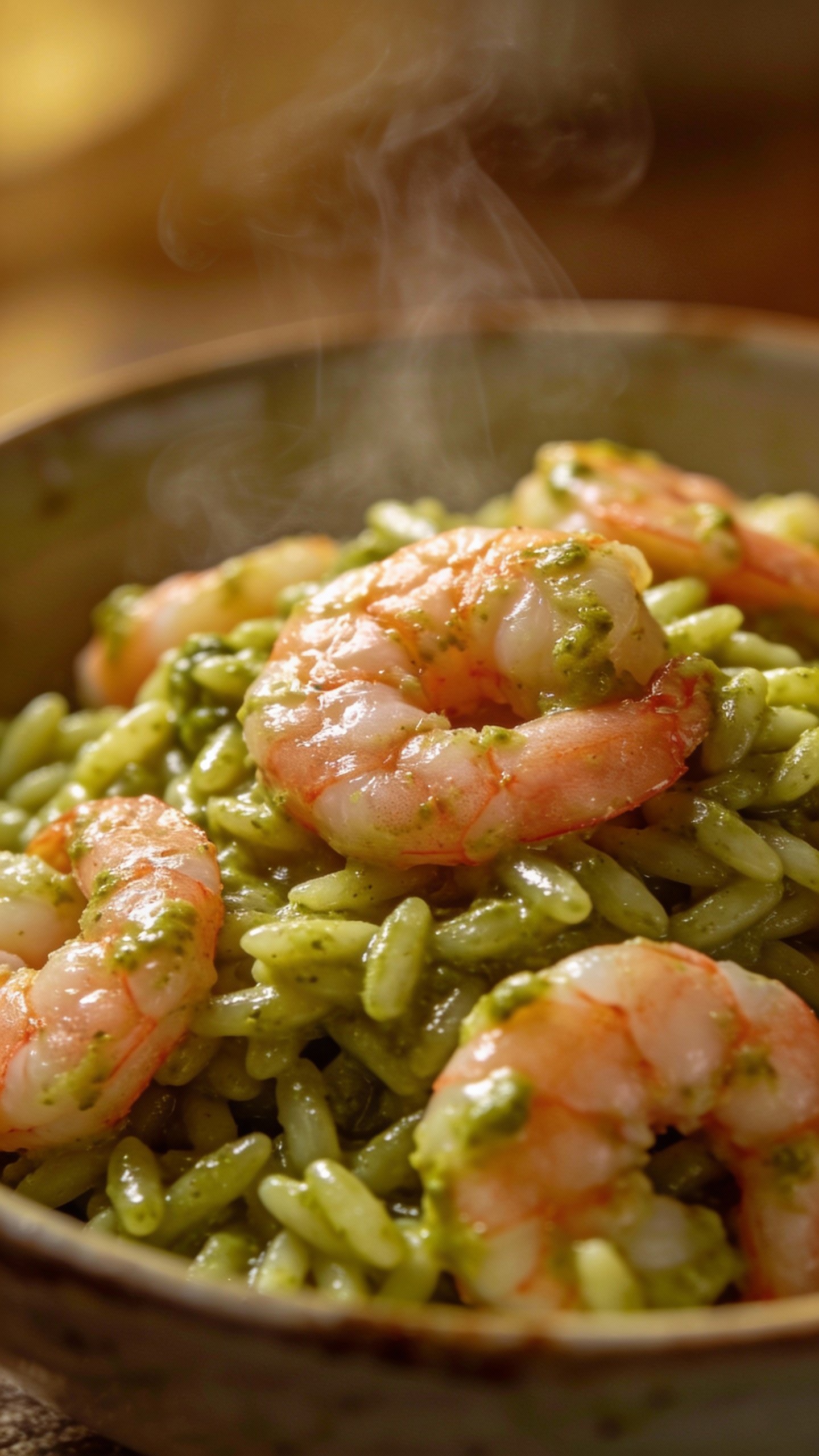
- Orzo: The pasta that looks like rice but cooks like a dream. It absorbs flavor like a sponge.
- Shrimp: Medium or large, peeled and deveined. Tail on looks fancy; tail off makes eating easier.
- Pesto: Basil, olive oil, Parm, garlic, pine nuts—homemade or store-bought. Choose a brand with real cheese, not fillers.
- Garlic and lemon: Brightness and zing. Shrimp love citrus.
- Butter and olive oil: They make everything luxurious. Use both.
- Stock: Chicken or veggie to cook the orzo. Water works in a pinch, but stock tastes better.
- Parmesan: For salty depth and creamy finish.
- Red pepper flakes: Optional heat that wakes the whole dish up.
- Cherry tomatoes or peas (optional): For bursts of color and sweetness.
Pro Tip on Pesto
If your pesto tastes dull, stir in a squeeze of lemon and a splash of olive oil. Salt fixes 80% of pesto problems. The other 20%? Better Parmesan.
Step-by-Step: From Pan to Plate in 30 Minutes
You’ll use one deep skillet or Dutch oven. Fewer dishes, more joy.
- Season the shrimp: Pat dry. Toss with salt, pepper, and a pinch of red pepper flakes. Zest half a lemon over them if you feel fancy.
- Toast the orzo: Heat olive oil and a little butter. Add dry orzo and stir for 2–3 minutes until lightly golden. That toasty flavor = chef’s kiss.
- Add aromatics: Stir in minced garlic for 30 seconds. Don’t let it burn. You’ll cry, and not in a cute way.
- Pour in stock: About 2 cups for every cup of orzo. Simmer, stirring occasionally, until it’s tender and creamy, 9–11 minutes. Add more stock if it dries out.
- Sear the shrimp: While orzo cooks, quickly sear shrimp in a separate pan with oil and butter, 1–2 minutes per side. Or push orzo to the sides and do it in the same pan—no rules here.
- Combine: Reduce heat. Stir in pesto (start with 1/3 cup and adjust), a knob of butter, and a handful of Parmesan. Add shrimp and a squeeze of lemon juice.
- Taste and finish: More salt? More lemon? A splash of pasta water or stock if you need looser sauce. Top with extra Parm and basil.
Timing Cheatsheet
– Orzo: 9–11 minutes
– Shrimp: 3–4 minutes total
– Finishing: 2 minutes
Total: Around 25–30 minutes, unless you wander off to scroll memes.
Flavor Moves That Make It Restaurant-Worthy
You can stop at good, or you can go for great. Your call.
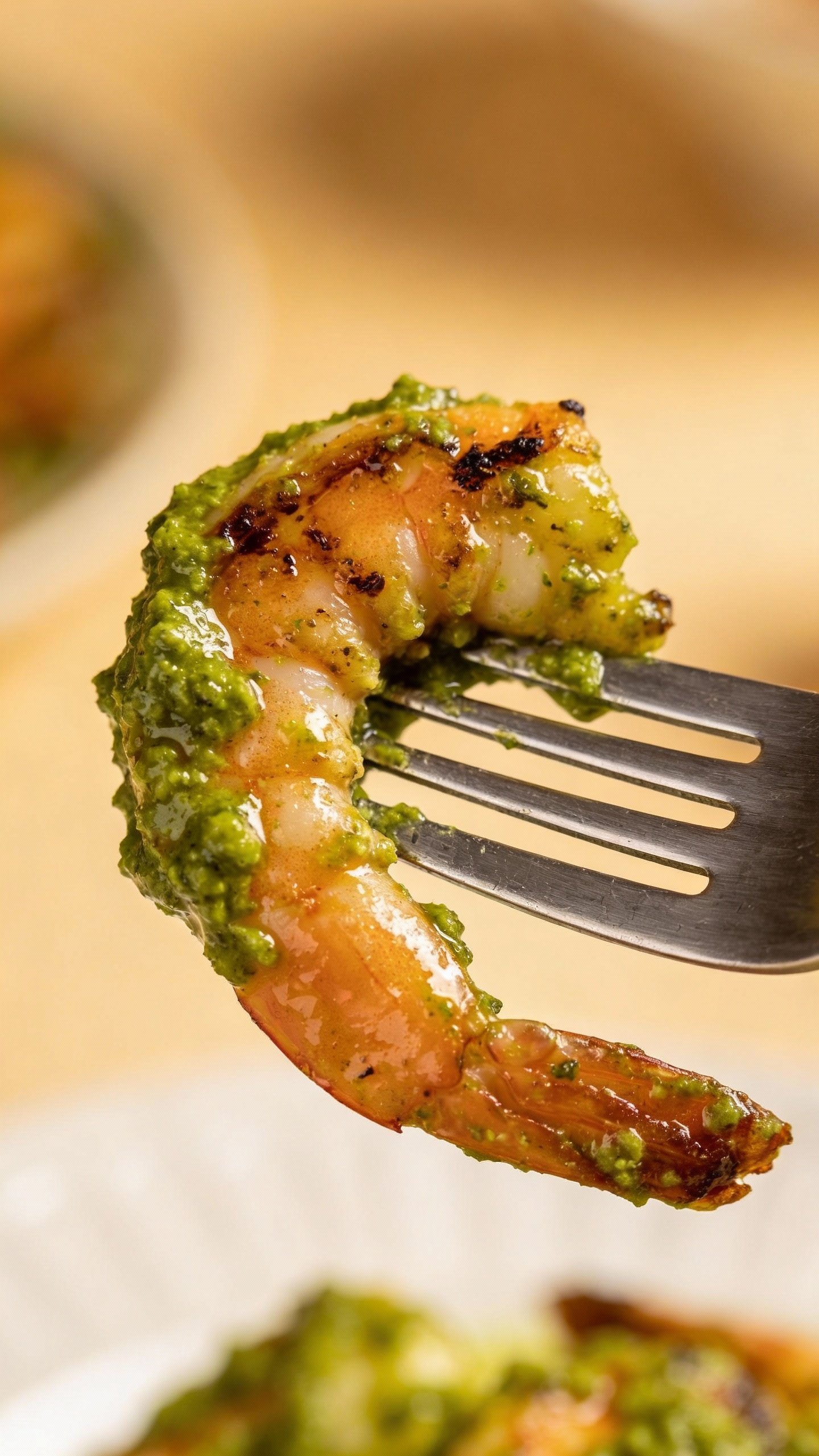
- Butter + pesto: Add a tablespoon of butter with the pesto for a silkier finish. It’s like turning the volume up.
- Acid is life: Lemon juice and zest keep everything bright. Add some at the end so it doesn’t disappear.
- Texture play: Toasted pine nuts on top add crunch. Crushed pistachios also slap.
- Heat control: Red pepper flakes in the oil first, then garlic. You’ll get fragrant spice without the burn.
- Green boost: Toss in peas or spinach in the last minute for color and smug satisfaction.
If Using Store-Bought Pesto
Some jars taste flat. Fix it by whisking in:
– A glug of extra-virgin olive oil
– A squeeze of lemon
– Freshly grated Parm
Boom—instant upgrade.
Smart Swaps and Variations
Don’t have an exact ingredient? No problem.
- No shrimp? Use scallops, rotisserie chicken, or sautéed mushrooms for a veggie version.
- No orzo? Try small shapes like ditalini or couscous. Adjust liquid and cooking time.
- Dairy-free? Use a dairy-free pesto and skip the Parm. Nutritional yeast gives a cheesy vibe.
- Nut-free pesto: Swap pine nuts for sunflower seeds or skip nuts entirely.
- Extra veg: Zucchini ribbons, asparagus tips, or blistered tomatoes turn it into a spring dream.
One-Pan Baked Option
Feeling hands-off? Toast the orzo in an oven-safe skillet, add stock, cover, and bake at 375°F for 12–15 minutes. Sear shrimp quickly on the stove, then fold everything together with pesto and lemon. Zero hovering.

Serving, Sides, and Wine (Let’s Be Honest)
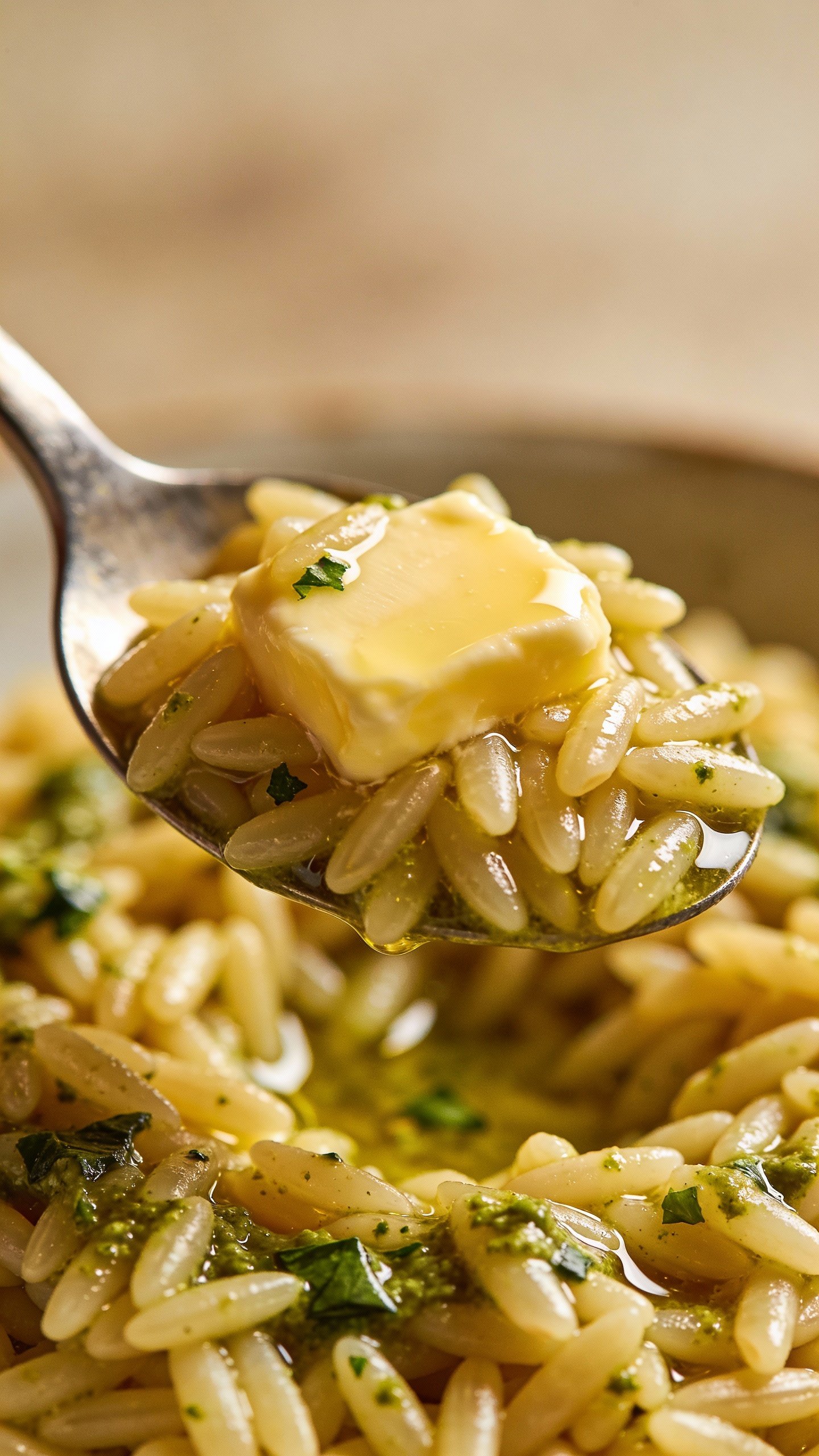
Serve it hot with crusty bread for sauce-swiping. A simple side salad with arugula, olive oil, and lemon plays nice.
Wine? A zippy Sauvignon Blanc or Pinot Grigio won’t fight the basil. If beer’s your thing, a crisp pilsner keeps it clean. And if you’re going zero-proof, sparkling water with a lemon slice feels weirdly fancy.
Make-Ahead and Leftovers
– Cook the orzo a touch al dente if you plan to reheat.
– Store in a sealed container up to 3 days.
– Reheat gently with a splash of stock or water so it turns creamy again.
– Add fresh lemon and a spoon of pesto before serving to refresh the flavors.
Common Mistakes (And How to Dodge Them)
Let’s save you from tiny disasters.
- Overcooking shrimp: When they curl into tight O’s, you went too far. Pull them at C-shape.
- Burning the garlic: Add it after the orzo toasts; cook it briefly.
- Dry orzo: Keep extra stock handy. Stir like risotto if it starts sticking.
- Flat flavor: Salt, lemon, and fresh Parm at the end fix it 99% of the time. IMO, a drizzle of good olive oil helps too.
FAQs
Can I use frozen shrimp without thawing?
You can, but you’ll get more liquid and less browning. For best results, thaw in a bowl of cold water for 15 minutes, then pat super dry. Dry shrimp sear, wet shrimp steam.
How much pesto should I add?
Start with 1/3 cup for four servings, then adjust. Some pestos hit harder than others. Add until the orzo looks glossy green and tastes bright, not oily.
What if my orzo sticks to the pan?
Add a splash of stock and scrape gently with a wooden spoon. Stir more frequently during cooking and keep heat at medium. A nonstick or well-seasoned pan helps.
Can I make it spicy?
Absolutely. Bloom red pepper flakes in the oil at the start, then add more to taste at the end. A pinch of Calabrian chili paste also works and brings a fruity kick.
Is this good for meal prep?
Yes, with two tweaks: undercook the orzo slightly and store pesto separately. Reheat with a little stock, then stir in pesto and lemon so it tastes fresh, not tired.
What protein swaps work best?
Scallops, salmon chunks, or shredded rotisserie chicken slot right in. For vegetarian, try chickpeas or seared halloumi. Keep the same method: cook separately, fold in at the end.
Conclusion
Pesto shrimp orzo hits that sweet spot: fast, impressive, and ridiculously tasty. You get silky, herby pasta with juicy shrimp and a lemony pop that keeps you going back for another forkful. Keep good pesto on hand, trust your taste buds, and don’t overthink it—dinner, done.