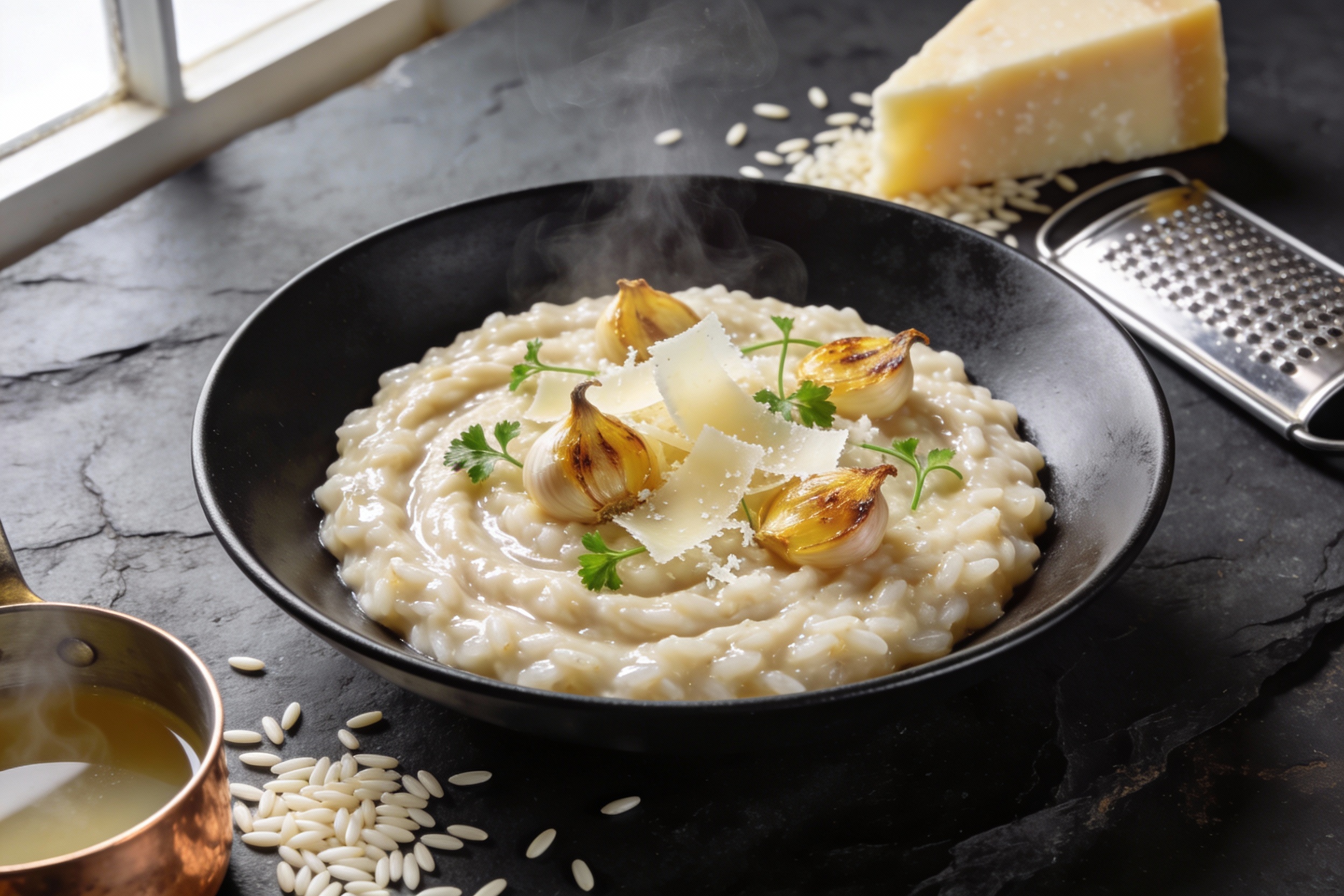
Roasted Garlic Parmesan Risotto You’Ll Crave Tonight
Roasted garlic parmesan risotto tastes like a fancy restaurant dish, but you can make it in your pajamas and socks. It’s creamy, rich, and deeply garlicky in that “wow, I didn’t know garlic could be sweet” kind of way. You don’t need a culinary degree—just a little patience and a wooden spoon. Ready to stir your way to a silky, spoonable masterpiece?
Why Roasted Garlic Changes Everything
Raw garlic punches. Roasted garlic hugs. When you roast garlic, it turns mellow, buttery, and slightly sweet, which makes it perfect for folding into risotto. It adds flavor without the harsh bite that can hijack the dish.
You’ll mash the cloves into a paste and swirl it in at the end. That keeps the flavor bright and the texture glossy. Think of it as your secret weapon—no one argues with roasted garlic. Ever.
Overeating is a pattern. This helps you fix that problem. A quick reset for cravings, snacking, and “I’ll start tomorrow” moments.
Built for busy home cooks who want real-life structure. Simple steps that fit meal prep, family dinners, and late-night snack attacks.
The Shopping List (Short and Sweet)
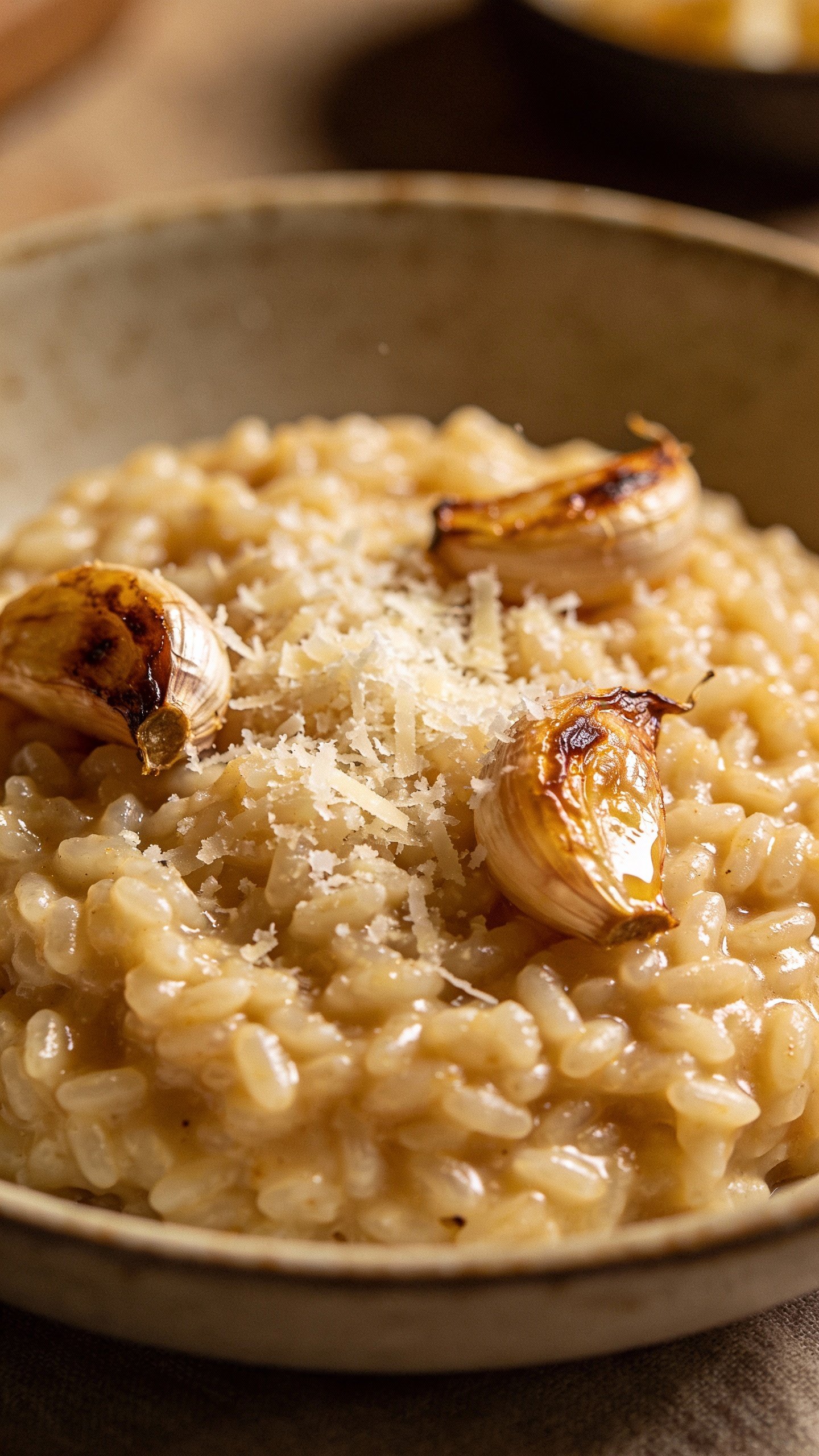
You don’t need much. Get the good stuff because each ingredient matters in risotto.
- Arborio or Carnaroli rice (Carnaroli holds up better, but Arborio works great)
- Garlic (one whole head for roasting, plus maybe an extra clove for the base if you like)
- Parmesan (freshly grated—pre-grated stuff refuses to melt right)
- Butter
- Olive oil
- Dry white wine (optional but recommended)
- Chicken or vegetable stock (low-sodium)
- Shallot (or onion)
- Salt and black pepper
- Fresh lemon (for a squeeze at the end)
- Fresh herbs (parsley or chives—optional but nice)
Roast the Garlic Like You Mean It
This takes the longest, but it’s hands-off and worth every minute.
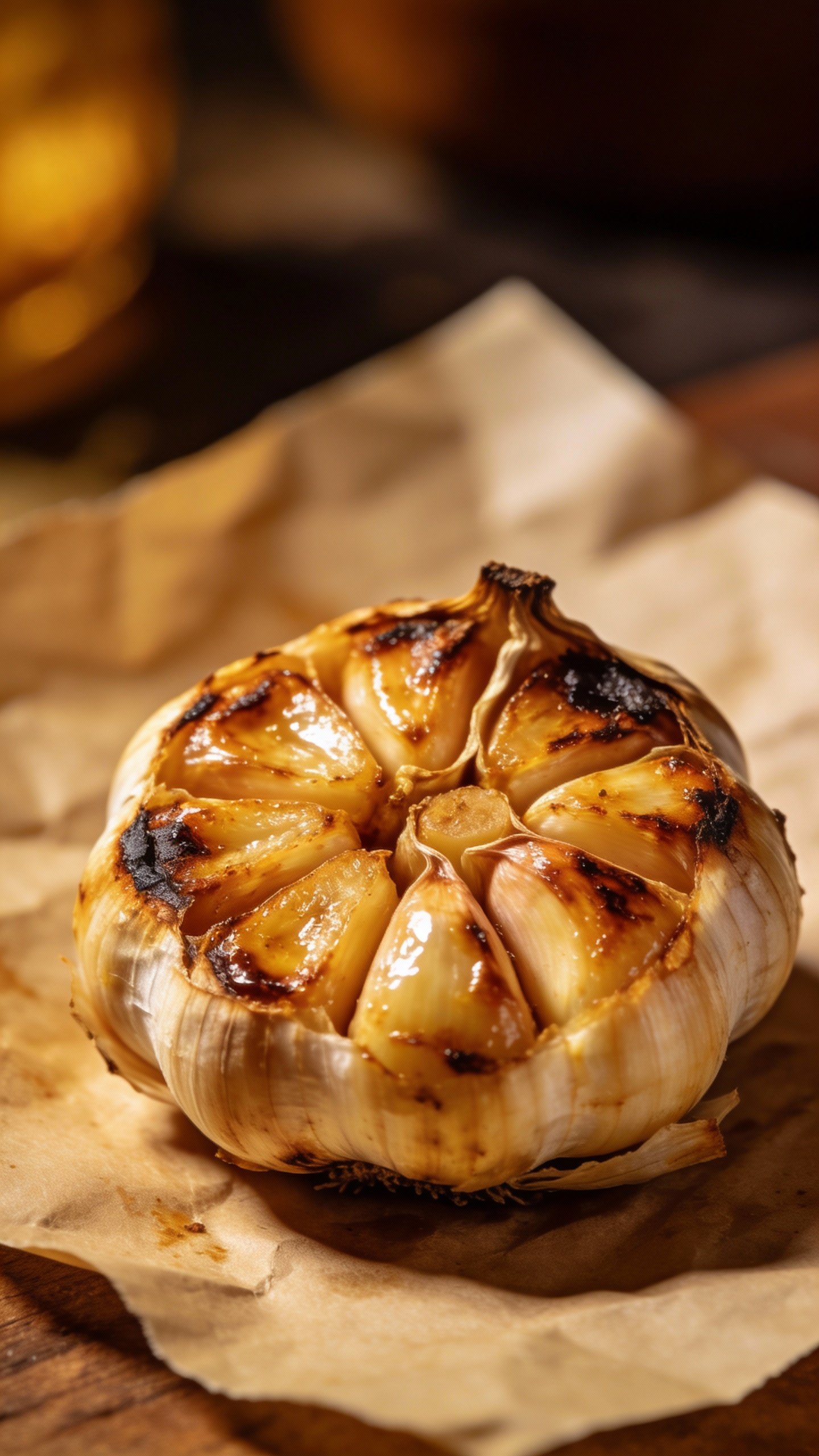
- Heat the oven to 400°F (200°C).
- Slice the top off a head of garlic to expose the cloves.
- Drizzle with olive oil, sprinkle with salt, wrap in foil.
- Roast for 35–45 minutes until the cloves turn soft and golden.
- Squeeze out the caramelized cloves and mash into a paste.
Pro tip: double up
Roast two heads. Use one for the risotto and save the other for smearing on toast or whisking into vinaigrettes. Future you will send a thank-you note.
Risotto 101: The Stirring Truth
You don’t need to stir continually like you’re summoning a storm. You just need to stir often. Stirring releases starch and creates that iconic creaminess. Take your time, sip your wine, and babysit with chill energy.
- Warm your stock in a pot and keep it at a low simmer.
- In a wide pan, heat a mix of butter and olive oil over medium.
- Soften a finely chopped shallot with a pinch of salt, 2–3 minutes.
- Add the rice and toast it 2 minutes until the edges turn translucent.
- Pour in the wine and stir until it mostly disappears.
- Add a ladle of hot stock and stir. When the rice looks almost dry, add another ladle.
- Repeat for 18–22 minutes until the rice turns creamy and al dente—tender but with a tiny bite.
How do you know it’s ready?
Pull the spoon through the risotto. It should spread slowly, like lava in a good mood. Taste a grain—if it’s chalky, keep going. If it’s mushy, you overshot, but it still tastes good, so no one needs to know.
The Flavor Bomb: Parmesan + Roasted Garlic
When the rice is 95% there, you finish it like this:
- Stir in the roasted garlic paste.
- Add a generous handful of freshly grated Parmesan.
- Drop in a tablespoon or two of cold butter.
- Season with salt and lots of black pepper.
- Add a squeeze of lemon juice to wake everything up.
The butter and cheese emulsify with the starch and create that glossy, restaurant-style finish. Don’t skimp on the pepper. Pepper plus Parmesan equals magic.
Optional add-ins that play nice
- Seared mushrooms (deep umami, pairs perfectly with garlic)
- Blanched peas or asparagus tips (color and freshness)
- Crispy pancetta or prosciutto shards (salty crunch)
- Lemon zest and chives (bright and grassy)

Texture and Timing: Your Risotto Game Plan
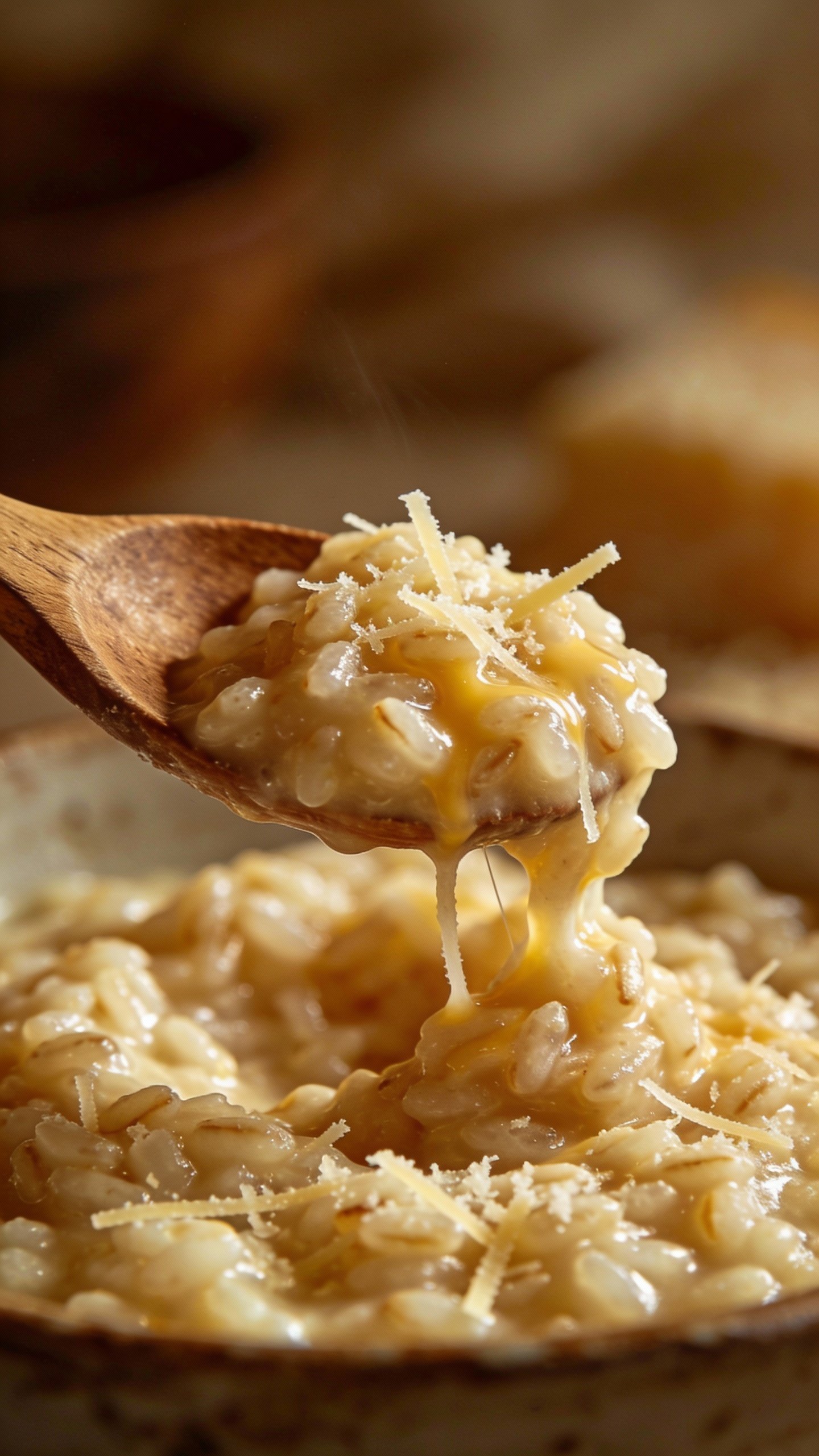
Risotto waits for no one. Plate it immediately while it still flows. If it stiffens, loosen with a splash of hot stock and stir like you mean it.
Common mistakes (and easy fixes)
- Too thick? Add hot stock a little at a time and stir.
- Too thin? Keep cooking for a minute or two; the starch will catch up.
- Too salty? Add a splash of unsalted stock and a squeeze of lemon.
- Rice still chalky? You need more time and stock. Keep going.
Serving Ideas That Make It Feel Fancy
Spoon the risotto into warm bowls and give it a final snowfall of Parmesan. A drizzle of good olive oil on top? Chef’s kiss. Add cracked pepper and a sprinkle of herbs for color.
Want to turn it into dinner-dinner? Pair it with:
- Lemon-roasted chicken thighs or a simple grilled steak
- Roasted vegetables (broccoli, carrots, or Brussels sprouts)
- Crisp salad with a zingy vinaigrette to cut the richness
FYI, it also plays great with a chilled glass of Sauvignon Blanc. IMO, that pairing slaps.
Make-Ahead, Leftovers, and Reheating
Risotto tastes best right off the stove, but you’ve got options.
- Make-ahead trick: Cook the rice 75% of the way, spread it on a sheet pan to cool, and refrigerate. Reheat with hot stock and finish with garlic, butter, and Parmesan when ready to serve.
- Leftovers: Stir in a splash of stock or water as you reheat on the stove over medium-low. Add a little butter and cheese to revive the texture.
- Arancini alert: Leftover risotto becomes legendary fried rice balls. Add mozzarella cubes inside, roll in breadcrumbs, and fry. Not health food. Still worth it.
FAQ
Can I use a different rice?
Short answer: not really. You need a high-starch, short-grain rice like Arborio, Carnaroli, or Vialone Nano. Long-grain rice won’t release enough starch, so you’ll end up with a sad, brothy situation. Hard pass.
Do I have to use wine?
Nope. You can skip it and use extra stock. If you want that hint of acidity, add a squeeze of lemon earlier and another at the end. Wine adds complexity, but the risotto still slaps without it, IMO.
How salty should the stock be?
Keep it low-sodium so you control the salt. Parmesan brings salt to the party, and stock reduces as you cook, so things can get salty fast. Taste as you go and season near the end.
What if I don’t have Parmesan?
Use Pecorino Romano for a sharper, saltier vibe. Grana Padano also works. Avoid pre-grated shelf-stable “cheese dust” because it refuses to melt and tastes, uh, suspicious.
Can I make it vegan?
Yes. Use vegetable stock, olive oil, and a vegan butter. Swap Parmesan with a good vegan parm or nutritional yeast. Finish with extra olive oil and lemon to keep it luscious.
Why is my risotto gluey?
You might have over-stirred aggressively or overcooked the rice. Also, too much cheese too early can gum things up. Add cheese and butter at the end and stir gently until silky.
Conclusion
Roasted garlic Parmesan risotto gives you peak comfort with minimal drama. You roast, stir, finish with cheese, and boom—creamy perfection. Keep your stock hot, your Parmesan fresh, and your patience intact. Then take a bow and enjoy the applause (or the quiet, which is everyone too busy eating).