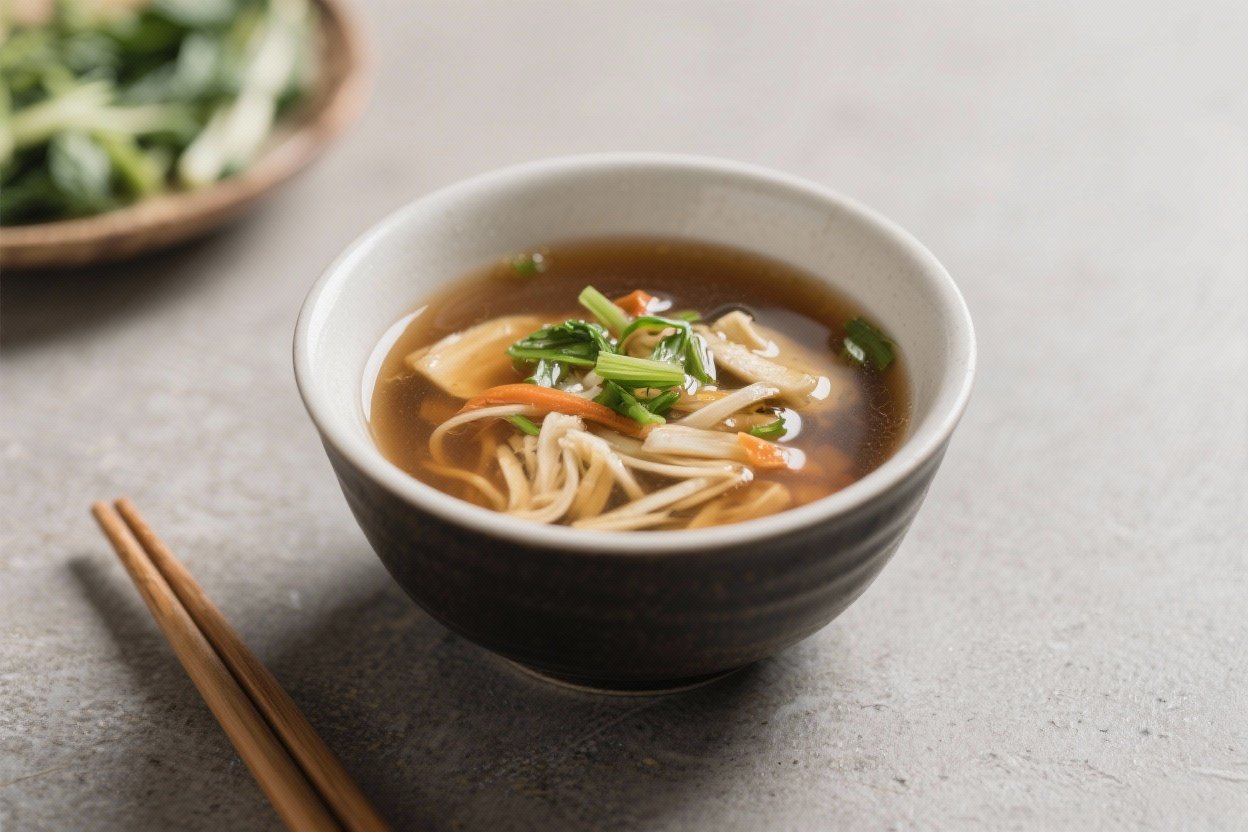
Simple Miso Soup – A Comforting, Everyday Bowl
Miso soup is the kind of comfort that sneaks up on you. It looks modest, but the warmth, savoriness, and gentle aroma do more than fill your stomach—they slow you down. If you’ve only had it at restaurants, you might be surprised by how easy it is to make at home.
With a few basic pantry items and a pot of hot water, you can have a soothing bowl in 15 minutes. This version keeps things classic: delicate dashi broth, smooth miso, soft tofu, and a sprinkle of scallions.
Simple Miso Soup - A Comforting, Everyday Bowl
Ingredients
- 4 cups (1 liter) dashi (made from instant dashi granules or homemade; see FAQ)
- 3–4 tablespoons miso paste (white/shiro miso for mild, red/aka miso for deeper flavor, or a mix)
- 1 cup soft or silken tofu, cut into small cubes
- 1–2 tablespoons dried wakame (reconstituted per package directions)
- 2 scallions, thinly sliced
- Optional: 1 teaspoon soy sauce or tamari for extra depth
- Optional: a small piece of kombu (if making dashi from scratch)
- Optional: a handful of sliced mushrooms (shiitake or enoki)
Instructions
- Make the dashi: If using instant dashi, dissolve the granules in hot water according to the package for 4 cups of broth. If making from scratch, gently simmer a piece of kombu (about 4-inch/10 cm) in water, remove before boiling, and finish with bonito flakes (see FAQ for details).
- Warm the broth: Place the dashi in a medium pot over medium heat. Keep it hot but below a full boil. A gentle steam is perfect.
- Prepare the tofu and wakame: Cut tofu into bite-size cubes. Soak dried wakame in cool water for a few minutes until it expands, then drain and chop if pieces are large.
- Add wakame (and mushrooms, if using): Stir them into the hot dashi and let them soften for 1–2 minutes.
- Temper the miso: In a small bowl, ladle in a scoop of hot dashi. Whisk in 3 tablespoons miso until smooth. This prevents clumps and protects miso’s delicate flavor.
- Stir in miso and tofu: Lower the heat. Add the miso mixture to the pot and gently slip in the tofu. Do not let the soup boil after adding miso—keep it just below a simmer.
- Taste and adjust: If you want more depth, add a little more miso or a teaspoon of soy sauce. Aim for a balanced, savory broth that isn’t too salty.
- Finish with scallions: Turn off the heat. Stir in the sliced scallions just before serving for fresh aroma and color.
- Serve immediately: Ladle into bowls and enjoy while warm. Miso soup is best fresh.
Overeating is a pattern. This helps you fix that problem. A quick reset for cravings, snacking, and “I’ll start tomorrow” moments.
Built for busy home cooks who want real-life structure. Simple steps that fit meal prep, family dinners, and late-night snack attacks.
What Makes This Special
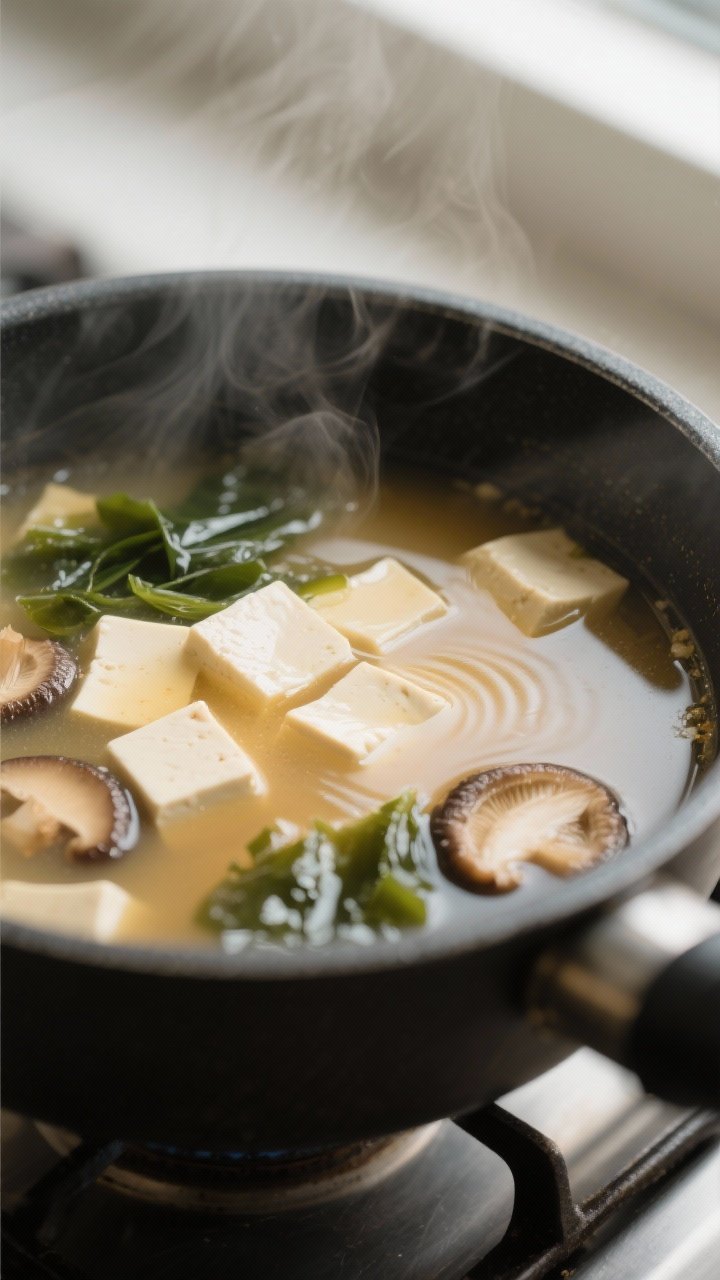
This recipe focuses on balance and simplicity, staying true to the flavors you expect from classic miso soup. The broth starts with dashi, a light Japanese stock that brings a clean, savory base without heaviness.
Miso paste adds depth and a touch of sweetness, while tofu and seaweed make it feel nourishing and complete.
- Fast and easy: Ready in about 15 minutes with minimal prep.
- Authentic taste: Uses dashi, which gives true miso soup character.
- Flexible: Add mushrooms, greens, or noodles if you want more substance.
- Light but satisfying: Great as a starter or a simple meal.
Ingredients
- 4 cups (1 liter) dashi (made from instant dashi granules or homemade; see FAQ)
- 3–4 tablespoons miso paste (white/shiro miso for mild, red/aka miso for deeper flavor, or a mix)
- 1 cup soft or silken tofu, cut into small cubes
- 1–2 tablespoons dried wakame (reconstituted per package directions)
- 2 scallions, thinly sliced
- Optional: 1 teaspoon soy sauce or tamari for extra depth
- Optional: a small piece of kombu (if making dashi from scratch)
- Optional: a handful of sliced mushrooms (shiitake or enoki)
Step-by-Step Instructions
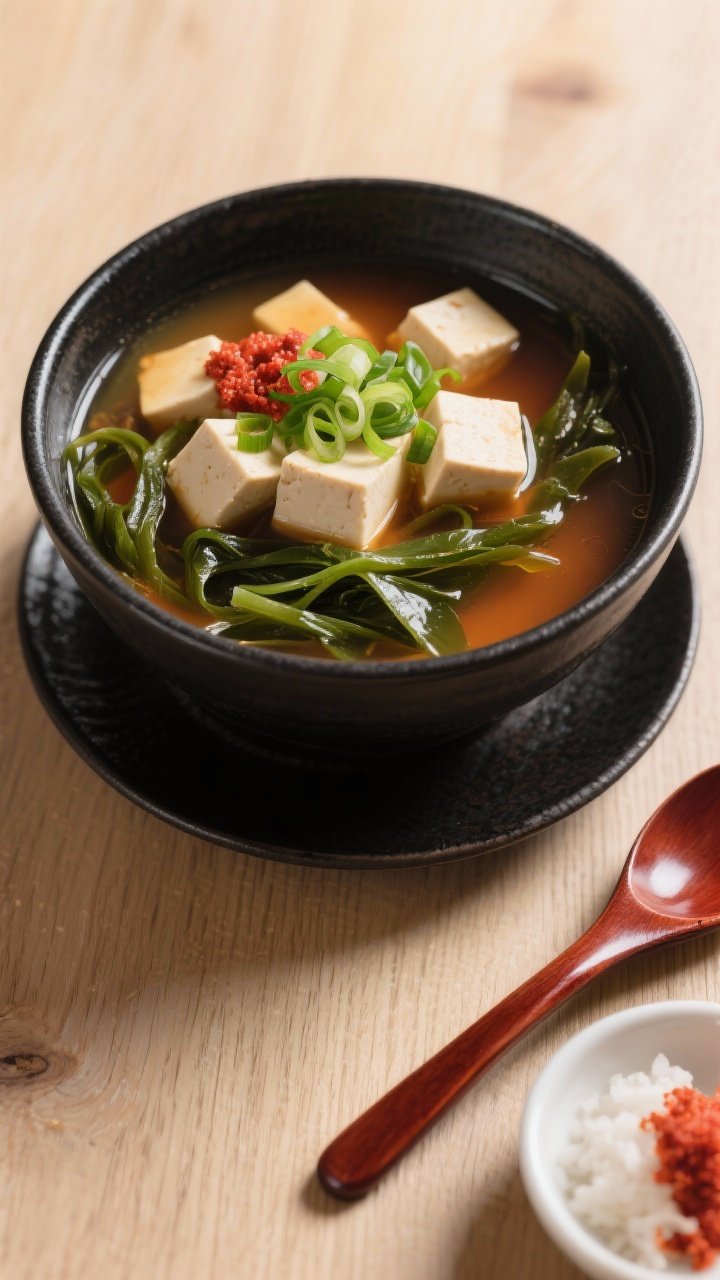
- Make the dashi: If using instant dashi, dissolve the granules in hot water according to the package for 4 cups of broth. If making from scratch, gently simmer a piece of kombu (about 4-inch/10 cm) in water, remove before boiling, and finish with bonito flakes (see FAQ for details).
- Warm the broth: Place the dashi in a medium pot over medium heat. Keep it hot but below a full boil.
A gentle steam is perfect.
- Prepare the tofu and wakame: Cut tofu into bite-size cubes. Soak dried wakame in cool water for a few minutes until it expands, then drain and chop if pieces are large.
- Add wakame (and mushrooms, if using): Stir them into the hot dashi and let them soften for 1–2 minutes.
- Temper the miso: In a small bowl, ladle in a scoop of hot dashi. Whisk in 3 tablespoons miso until smooth.
This prevents clumps and protects miso’s delicate flavor.
- Stir in miso and tofu: Lower the heat. Add the miso mixture to the pot and gently slip in the tofu. Do not let the soup boil after adding miso—keep it just below a simmer.
- Taste and adjust: If you want more depth, add a little more miso or a teaspoon of soy sauce.
Aim for a balanced, savory broth that isn’t too salty.
- Finish with scallions: Turn off the heat. Stir in the sliced scallions just before serving for fresh aroma and color.
- Serve immediately: Ladle into bowls and enjoy while warm. Miso soup is best fresh.
How to Store
- Short term: Refrigerate leftovers in an airtight container for up to 2 days.
- Reheating: Warm gently on the stove over low heat.
Do not boil; boiling dulls the miso’s flavor and can change the tofu’s texture.
- Best practice: If you anticipate leftovers, store the broth and tofu separately. Stir in miso and scallions fresh when reheating for the brightest taste.
- Freezing: Not recommended. Tofu can become spongy, and miso loses nuance.

Health Benefits
- Gut-friendly probiotics: Miso is a fermented food that can support a healthy gut microbiome.
Keeping the soup below a boil helps preserve these beneficial cultures.
- Light, nourishing protein: Tofu adds plant-based protein without heaviness, making this a satisfying but gentle meal.
- Minerals and iodine: Wakame offers iodine and minerals that support thyroid and overall wellness.
- Low in calories, big on flavor: The broth is light yet savory, so you get comfort without feeling sluggish.
Common Mistakes to Avoid
- Boiling after adding miso: High heat flattens the flavor and may reduce beneficial probiotics. Keep the heat low.
- Adding miso directly to the pot: It tends to clump. Always dissolve in a small bowl of hot broth first.
- Over-salting: Miso is salty.
Taste before adding soy sauce or extra miso.
- Overcooking tofu: Tofu is delicate. Add it near the end and handle gently.
- Skipping dashi: Plain water makes a bland soup. Dashi is the backbone of authentic flavor.
Variations You Can Try
- Mushroom miso: Add sliced shiitake or enoki for an earthy boost.
Sauté briefly or simmer in the dashi for a minute.
- Greens miso: Stir in baby spinach, napa cabbage, or bok choy at the end until just wilted.
- Ginger kick: Grate a small piece of fresh ginger into the dashi for a warming note.
- Noodle bowl: Add a handful of cooked soba or udon to make it more substantial.
- Egg ribbon: Drizzle in a lightly beaten egg while the broth is hot (before adding miso) for delicate strands.
- Mixed miso: Combine white and red miso for a more complex flavor profile.
- Vegan dashi: Use kombu and dried shiitake to make a rich, animal-free base.
FAQ
What kind of miso should I use?
White (shiro) miso is mild and slightly sweet, great for beginners. Red (aka) miso is stronger and saltier with a deeper flavor. Yellow (shinshu) miso sits in the middle. You can blend misos for balance.
How do I make dashi without instant granules?
For a simple kombu-bonito dashi: Place a 4-inch piece of kombu in 4 cups of cold water. Heat gently until small bubbles appear, then remove kombu before boiling.
Add a large handful of bonito flakes, simmer 1 minute, turn off heat, and steep 5 minutes. Strain. For vegan dashi, use kombu and dried shiitake; soak both in cold water for at least 30 minutes, then warm gently and strain.
Why shouldn’t I boil miso?
Boiling can mute the delicate flavor and aroma.
It may also reduce the live cultures in the miso. Keep the soup hot—but not bubbling—after the miso goes in.
Can I add vegetables or protein?
Yes. Mushrooms, spinach, bok choy, napa cabbage, or thinly sliced carrots work well.
For protein, tofu is classic, but you can add poached chicken or shrimp if you like—just cook them separately and add at the end.
How salty should the soup be?
It should taste savory and balanced, not briny. Start with 3 tablespoons miso and adjust to taste. Different brands vary in saltiness, so taste before adding soy sauce.
Can I make it ahead?
You can prep components in advance: make dashi, cut tofu, slice scallions, and rehydrate wakame.
For best flavor, add miso right before serving. If reheating, warm the broth gently and stir in fresh miso.
What’s the best tofu for miso soup?
Soft or silken tofu gives that classic, delicate bite. If you prefer a firmer texture that holds up better, use medium or firm tofu cut into small cubes.
Is miso soup gluten-free?
Often, but not always.
Some miso and soy sauce contain barley or wheat. Choose a certified gluten-free miso and use tamari instead of soy sauce if you need to avoid gluten.
Can I skip wakame?
Yes, but it adds minerality and texture. If you don’t have wakame, a handful of baby spinach or thinly sliced scallions can still make the bowl feel complete.
How do I keep the soup clear and clean-tasting?
Use good-quality dashi, avoid boiling, and dissolve miso in a separate bowl before adding.
Skim any foam if it appears, and add delicate ingredients at the end.
Wrapping Up
Simple miso soup is proof that you don’t need many ingredients to make something deeply satisfying. With a pot of dashi, a spoonful of miso, and a few fresh add-ins, you’ve got a soothing bowl in minutes. Keep it classic or play with variations to match your mood.
Either way, this is the kind of everyday comfort that never gets old.
Printable Recipe Card
Want just the essential recipe details without scrolling through the article? Get our printable recipe card with just the ingredients and instructions.