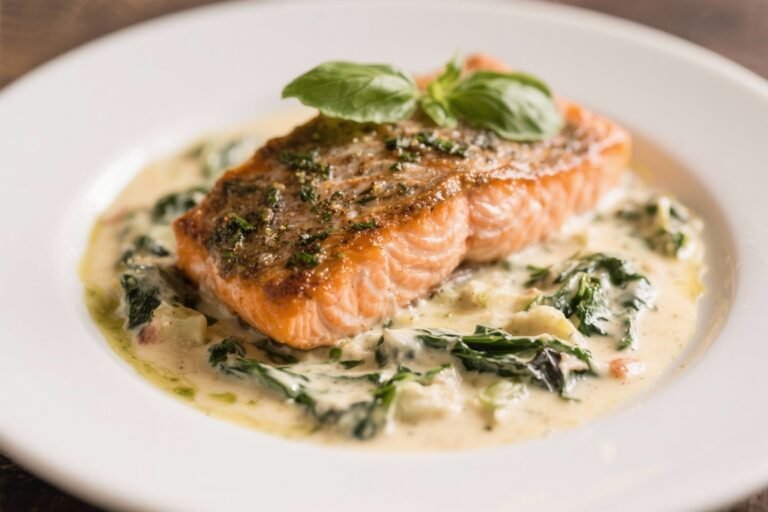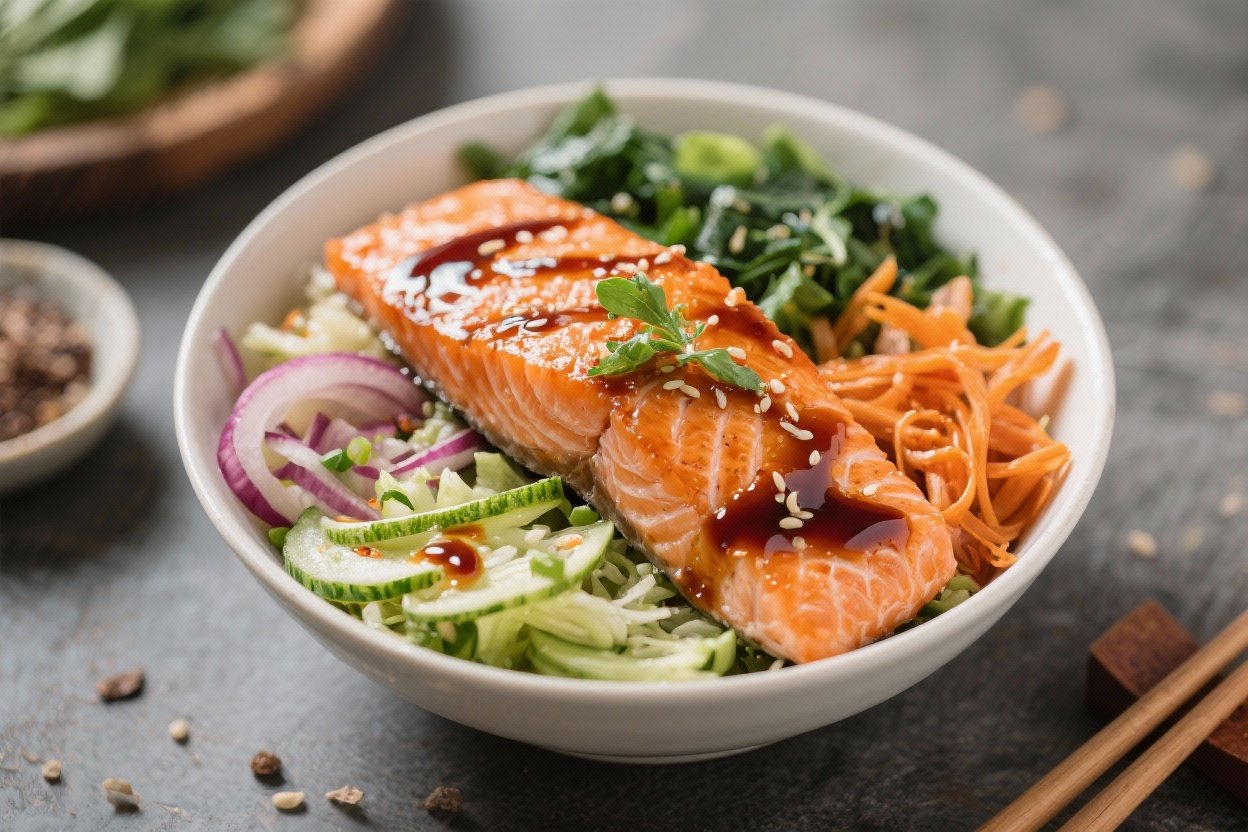
Teriyaki Salmon Bowls (Low Carb Style) – Bright, Savory, and Satisfying
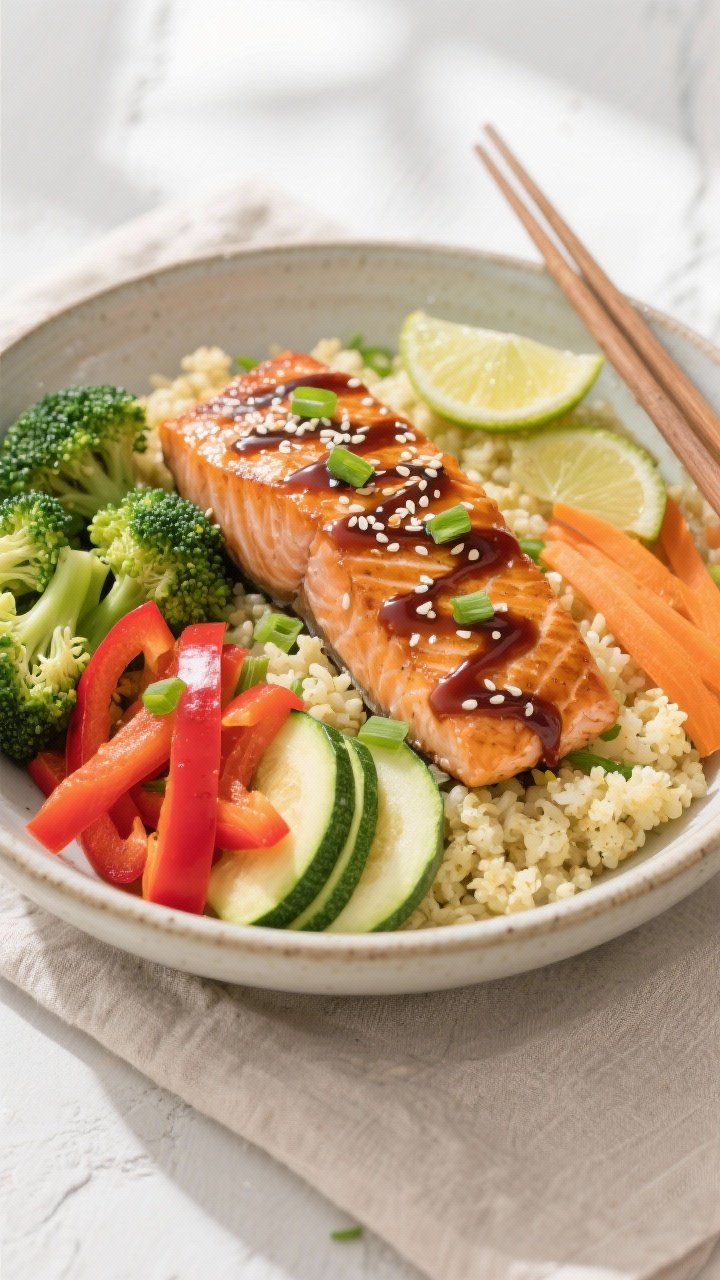
If you love the sweet-savory flavor of teriyaki but want to keep things light and low-carb, these Teriyaki Salmon Bowls are the perfect fit. They’re simple to make, packed with protein, and full of crisp, colorful veggies. The homemade teriyaki sauce is glossy and bold without a sugar overload.
Everything comes together in about 30 minutes, making it weeknight-friendly and meal-prep approved. You’ll get that takeout vibe with a fresher feel—and no food coma after.
Overeating is a pattern. This helps you fix that problem. A quick reset for cravings, snacking, and “I’ll start tomorrow” moments.
Built for busy home cooks who want real-life structure. Simple steps that fit meal prep, family dinners, and late-night snack attacks.
What Makes This Special
This bowl delivers all the teriyaki flavors you crave with a smarter ingredient lineup. Instead of a sugar-heavy sauce, we use low-carb sweetener and tamari (or coconut aminos) for depth without the bloat.
Cauliflower rice stands in for regular rice, keeping carbs low while still feeling hearty.
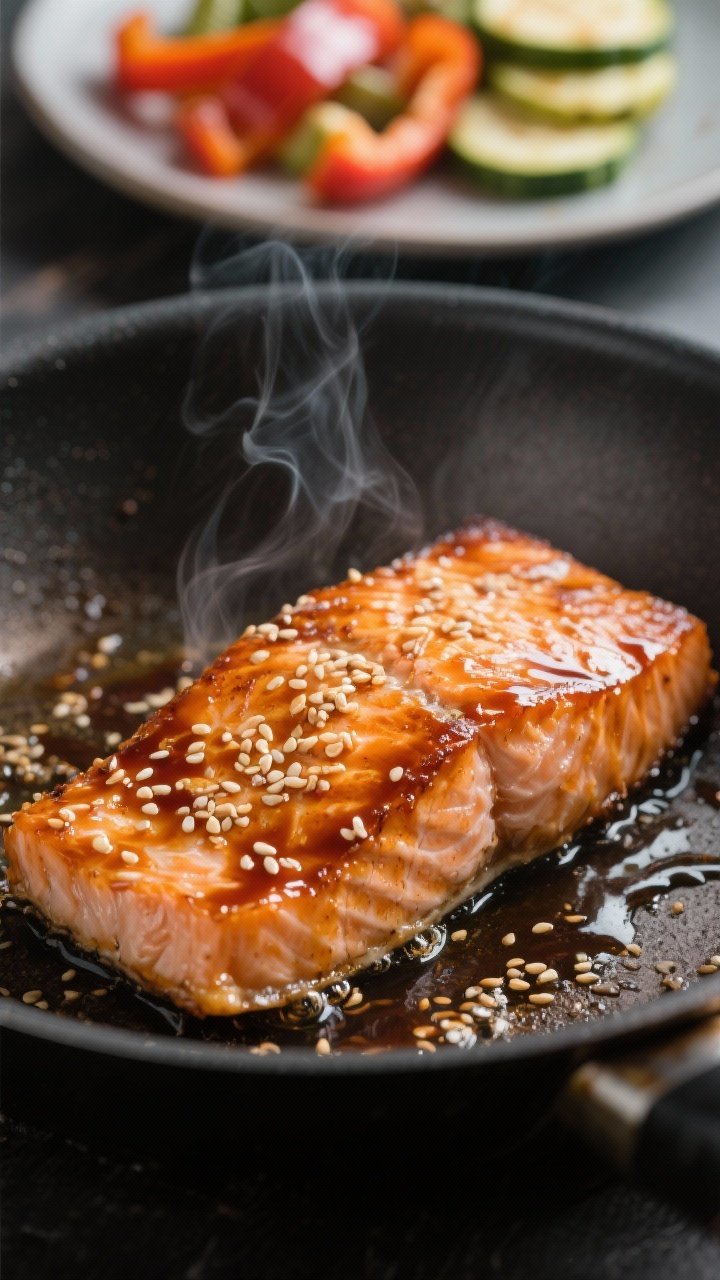
It’s also flexible. You can swap veggies, adjust the sweetness, and choose your favorite low-carb rice alternative. The salmon gets a quick pan-sear for a crisp edge and tender center, then it’s finished with a lacquer of teriyaki glaze that clings just right.
What You’ll Need
- Salmon: 4 fillets (about 5–6 oz each), skin-on or skinless
- Cauliflower rice: 4 cups (fresh or frozen)
- Veggies: 1 red bell pepper (sliced), 1 small zucchini (half-moons), 1 cup broccoli florets, 1 small carrot (ribbons or matchsticks), 2 green onions (sliced)
- Avocado oil or olive oil: For searing and sautéing
- Sesame seeds: For garnish
- Fresh lime or lemon wedges: Optional, for serving
For the low-carb teriyaki sauce:
- 1/3 cup tamari (gluten-free) or low-sodium soy sauce (use coconut aminos if preferred, but note slightly higher carbs)
- 2–3 tablespoons erythritol, allulose, or monk fruit sweetener (to taste)
- 1 tablespoon rice vinegar
- 1 tablespoon toasted sesame oil
- 2 cloves garlic, minced
- 1 teaspoon fresh ginger, grated
- 1/4 cup water
- 1/2–3/4 teaspoon xanthan gum or 1 teaspoon arrowroot mixed with 2 teaspoons water (as a slurry) for thickening
- Optional: 1 teaspoon sriracha or a pinch of red pepper flakes for heat
Seasoning for salmon and veggies:
- Salt and black pepper
- Optional: 1/2 teaspoon smoked paprika for the salmon
Instructions
- Make the teriyaki glaze. In a small saucepan, combine tamari, sweetener, rice vinegar, sesame oil, garlic, ginger, and water.
Bring to a gentle simmer over medium heat, stirring until the sweetener dissolves.
- Thicken the sauce. Sprinkle in xanthan gum very lightly while whisking (or stir in the arrowroot slurry). Simmer 1–2 minutes until glossy and slightly thickened. Adjust sweetness and salt.
Stir in sriracha if using. Remove from heat.
- Prep the salmon. Pat salmon dry and season with salt, pepper, and smoked paprika if using. Let it sit at room temperature for 10 minutes for even cooking.
- Sauté the veggies. Heat a large skillet over medium-high.
Add 1 tablespoon oil. Toss in broccoli and cook 2 minutes. Add bell pepper, zucchini, and carrot; season with a pinch of salt and sauté 3–4 minutes until crisp-tender.
Remove to a plate.
- Cook the cauliflower rice. In the same pan, add a bit more oil if needed. Add cauliflower rice and a pinch of salt and pepper. Cook 4–5 minutes, stirring, until hot and slightly golden.
Transfer to bowls as the base.
- Pan-sear the salmon. Heat a clean skillet (or wipe the same one) over medium-high with 1–2 teaspoons oil. Place salmon skin-side down if using skin-on. Cook 3–4 minutes until the bottom is crisp and the sides turn opaque.
Flip and cook 2–3 minutes more, depending on thickness. You’re aiming for medium, about 125–130°F in the thickest part.
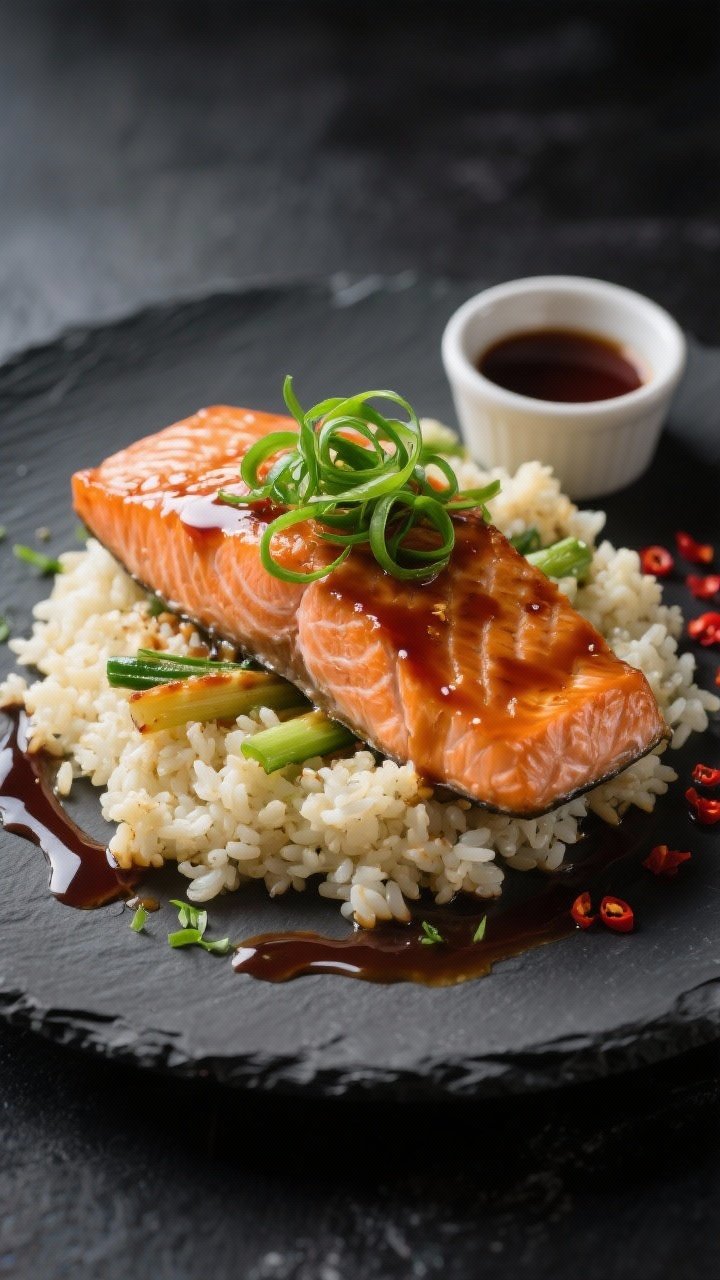
- Glaze the salmon. Reduce heat to low, spoon some teriyaki sauce over each fillet, and let it bubble for 30 seconds so it clings. Reserve extra sauce for drizzling.
- Assemble the bowls. Divide cauliflower rice among bowls.
Add the sautéed veggies. Top with salmon. Drizzle with more teriyaki sauce, then add green onions and sesame seeds.
Serve with lime or lemon wedges.
Keeping It Fresh
Storage: Store components separately if possible. The salmon and sauce keep well in airtight containers in the fridge for up to 3 days. Veggies and cauliflower rice keep 3–4 days.
Reheating: Warm salmon gently on low heat or in the microwave at 50% power to avoid drying.
Reheat cauliflower rice and veggies in a skillet with a splash of water for freshness.
Meal prep tip: Keep extra sauce on the side. A quick drizzle before serving brings back that just-cooked shine and flavor.
Health Benefits
- High in protein and omega-3s: Salmon is rich in EPA and DHA, supporting heart and brain health and helping to reduce inflammation.
- Lower in carbs, big on fiber: Cauliflower rice and non-starchy veggies keep blood sugar steadier while adding fiber for better digestion and fullness.
- Better fats: Using avocado or olive oil plus sesame oil provides heart-healthy fats and great flavor without heavy sauces.
- Sodium smart (with control): Making your own sauce lets you manage salt. Choose low-sodium tamari or dilute with a bit more water and vinegar if needed.
Pitfalls to Watch Out For
- Overcooking the salmon: It goes from perfect to dry fast.
Watch for the color to go opaque two-thirds up the side before flipping, and pull it off just shy of done.
- Gummy sauce: Xanthan gum thickens quickly. Use a tiny amount and whisk well. If it gets too thick, whisk in a splash of water.
- Watery cauliflower rice: If using frozen, cook off excess moisture.
A quick sauté on high heat helps keep the texture fluffy, not soggy.
- Too sweet or too salty sauce: Taste as you go. Adjust with a bit more vinegar for balance or water to mellow the salt.
Alternatives
- Protein swaps: Use shrimp, chicken thighs, or tofu. Shrimp cooks in 2–3 minutes per side; chicken needs a bit longer, about 5–6 minutes per side depending on thickness.
- Veggie swaps: Try snap peas, mushrooms, baby bok choy, or asparagus.
Keep them crisp-tender to maintain texture.
- Base options: Shirataki rice, riced broccoli, or a mix of cabbage and cauliflower add variety while staying low carb.
- Sauce variations: Add orange zest for a citrus twist or a spoon of miso for umami depth. Keep sweetener and salt in check as you tweak.
- Spice it up: Chili crisp, sliced fresh chiles, or extra sriracha if you like heat.
FAQ
Can I bake the salmon instead of pan-searing?
Yes. Bake at 400°F for 10–12 minutes, depending on thickness.
Brush with teriyaki sauce in the last 2–3 minutes to set the glaze without burning.
Is coconut aminos okay for low carb?
It works well and tastes great. It’s a bit sweeter and slightly higher in carbs than tamari, so reduce added sweetener and account for the small extra carbs if you’re tracking closely.
How do I make it completely soy-free?
Use coconut aminos in place of tamari and check the labels on your thickener and sauces. The rest of the ingredients are naturally soy-free.
What’s the best sweetener for the sauce?
Allulose or erythritol blends work well.
Allulose dissolves smoothly and won’t crystallize as it cools, making it excellent for glossy sauces.
Can I grill the salmon?
Absolutely. Oil the grates well and grill over medium-high heat, about 3–4 minutes per side. Brush with sauce during the last minute on the grill and add more after resting.
How do I know when the salmon is done?
It should flake easily with a fork but still be juicy.
An instant-read thermometer should read 125–130°F for medium. Pull it off a few degrees early; it will carryover cook.
Can I make the sauce ahead?
Yes, it keeps up to a week in the fridge. Thin with a splash of water if it thickens too much when cold, then warm gently before using.
What if I don’t like cauliflower rice?
Try shredded sautéed cabbage or shirataki rice.
Both are low carb and pair well with teriyaki flavors.
In Conclusion
These Teriyaki Salmon Bowls hit that sweet-savory note while keeping your meal light, fresh, and low in carbs. With simple ingredients and a quick cooking process, they fit any busy weeknight—and they taste like something you’d happily order out. Make the sauce once, and you’ll use it on everything from shrimp to veggies.
Keep it flexible, keep it colorful, and enjoy a bowl that feels both comforting and clean.
Printable Recipe Card
Want just the essential recipe details without scrolling through the article? Get our printable recipe card with just the ingredients and instructions.