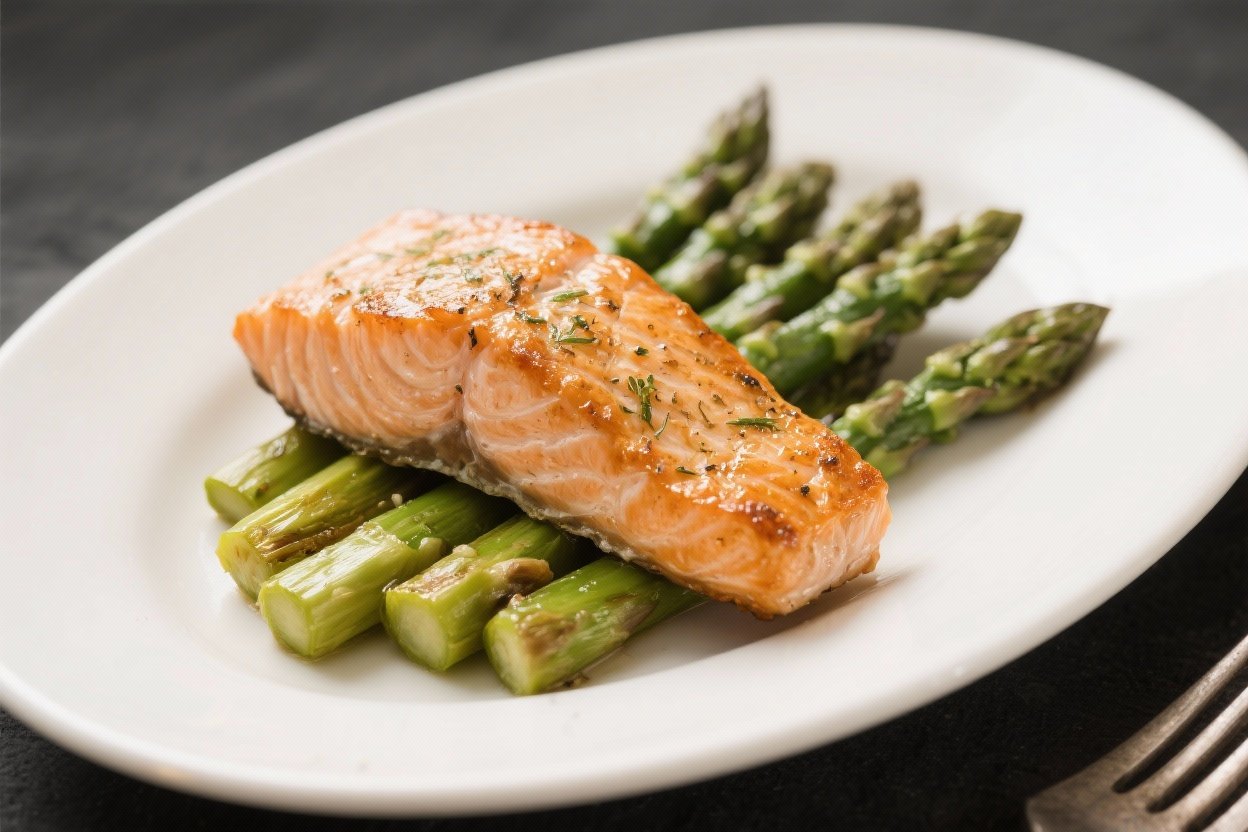
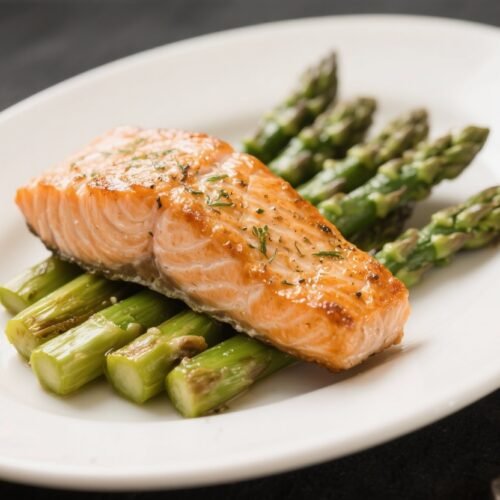
Baked Salmon & Asparagus – Simple, Fresh, and Flavorful
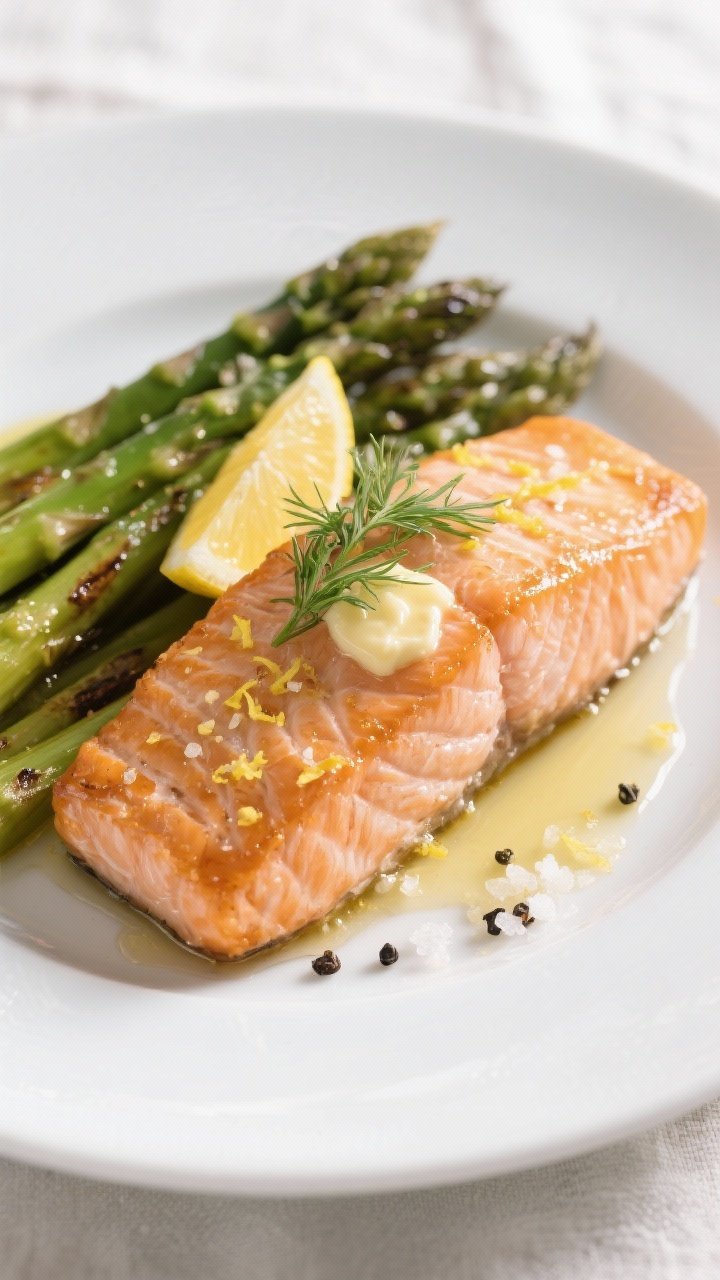
This baked salmon and asparagus dish is the kind of meal you make once and keep making all year. It’s simple, healthy, and full of bright flavor without a lot of fuss. The salmon comes out tender and flaky, while the asparagus roasts to a crisp-tender bite.
A lemon-garlic butter ties it all together with just the right amount of richness. It’s perfect for a weeknight dinner, yet nice enough to serve to guests.
Baked Salmon & Asparagus - Simple, Fresh, and Flavorful
Ingredients
- Salmon fillets: 4 fillets (about 6 ounces each), skin-on or skinless
- Asparagus: 1 large bunch, woody ends trimmed
- Olive oil: 2–3 tablespoons
- Unsalted butter: 2 tablespoons, melted (optional but tasty)
- Garlic: 2–3 cloves, minced
- Lemon: 1–2, zested and juiced (plus extra wedges for serving)
- Fresh herbs: Dill, parsley, or chives (about 2 tablespoons, chopped)
- Salt and black pepper: To taste
- Red pepper flakes: A pinch, optional
- Paprika or smoked paprika: 1/2 teaspoon, optional
- Honey or maple syrup: 1–2 teaspoons, optional for a hint of sweetness
- Extra: Lemon slices for topping, if you like
Instructions
- Heat the oven: Preheat to 400°F (200°C). Line a large sheet pan with parchment for easy cleanup.
- Prep the asparagus: Snap off the woody ends. Toss spears with 1 tablespoon olive oil, salt, and pepper. Spread them on one side of the sheet pan.
- Season the salmon: Pat the fillets dry. Rub with 1 tablespoon olive oil, then season with salt, pepper, and paprika if using. Place them skin-side down on the other side of the pan.
- Make the lemon-garlic mix: In a small bowl, combine melted butter, minced garlic, lemon zest, 1 tablespoon lemon juice, herbs, and a pinch of red pepper flakes. Add honey if you want a slight glaze.
- Brush and top: Spoon or brush the lemon-garlic mixture over the salmon. Drizzle any extra over the asparagus. Add a few lemon slices on top of the salmon if you like.
- Bake: Cook for 10–14 minutes, depending on thickness. Salmon is done when it flakes easily and reaches 125–130°F (52–54°C) for medium. Asparagus should be crisp-tender with lightly browned tips.
- Rest and finish: Let the salmon rest for 3 minutes. Squeeze more lemon over everything and sprinkle with fresh herbs.
- Serve: Plate the salmon with asparagus and spoon any pan juices over the top. Add extra lemon wedges.
Overeating is a pattern. This helps you fix that problem. A quick reset for cravings, snacking, and “I’ll start tomorrow” moments.
Built for busy home cooks who want real-life structure. Simple steps that fit meal prep, family dinners, and late-night snack attacks.
What Makes This Special
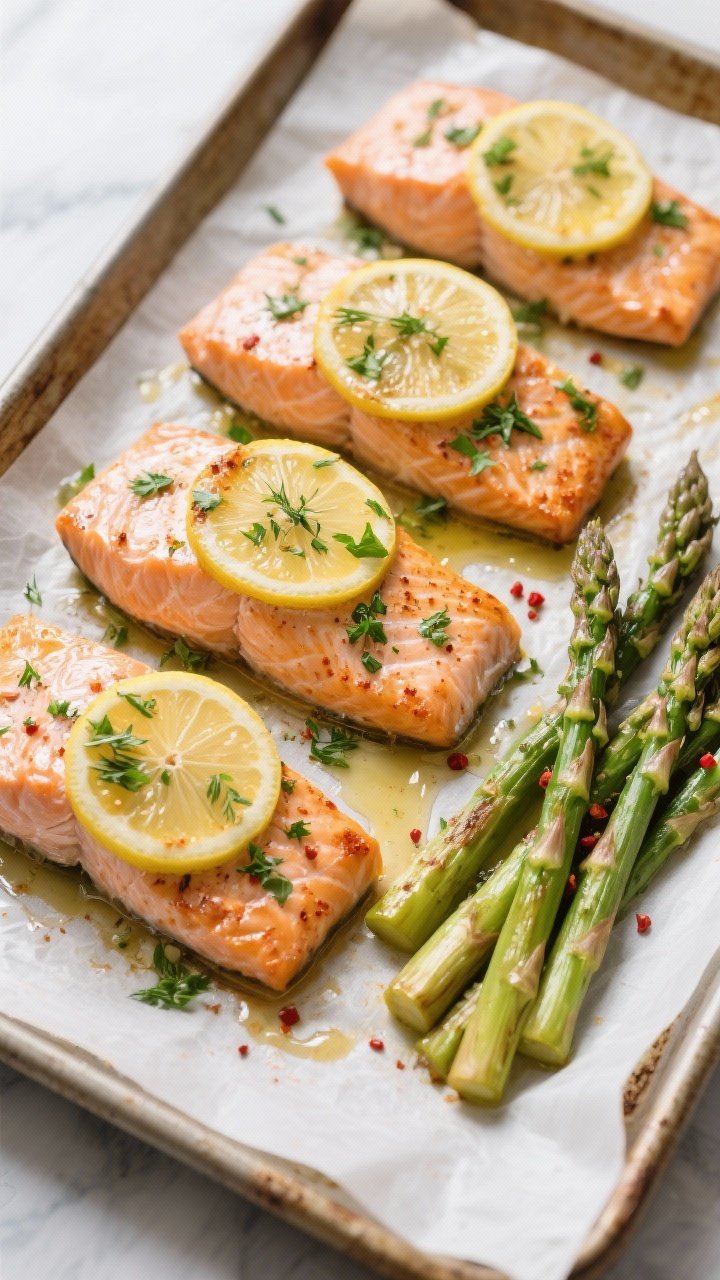
This recipe is all about ease and clean flavor. Everything cooks on one sheet pan, so cleanup is quick.
You get a balanced plate with protein, fiber, and healthy fats in under 30 minutes. The lemon, garlic, and herbs are classic and dependable, but they let the salmon shine. It’s a no-drama crowd-pleaser that doesn’t require specialty ingredients or complicated steps.
What You’ll Need
- Salmon fillets: 4 fillets (about 6 ounces each), skin-on or skinless
- Asparagus: 1 large bunch, woody ends trimmed
- Olive oil: 2–3 tablespoons
- Unsalted butter: 2 tablespoons, melted (optional but tasty)
- Garlic: 2–3 cloves, minced
- Lemon: 1–2, zested and juiced (plus extra wedges for serving)
- Fresh herbs: Dill, parsley, or chives (about 2 tablespoons, chopped)
- Salt and black pepper: To taste
- Red pepper flakes: A pinch, optional
- Paprika or smoked paprika: 1/2 teaspoon, optional
- Honey or maple syrup: 1–2 teaspoons, optional for a hint of sweetness
- Extra: Lemon slices for topping, if you like
How to Make It
- Heat the oven: Preheat to 400°F (200°C).
Line a large sheet pan with parchment for easy cleanup.
- Prep the asparagus: Snap off the woody ends. Toss spears with 1 tablespoon olive oil, salt, and pepper. Spread them on one side of the sheet pan.
- Season the salmon: Pat the fillets dry.
Rub with 1 tablespoon olive oil, then season with salt, pepper, and paprika if using. Place them skin-side down on the other side of the pan.
- Make the lemon-garlic mix: In a small bowl, combine melted butter, minced garlic, lemon zest, 1 tablespoon lemon juice, herbs, and a pinch of red pepper flakes. Add honey if you want a slight glaze.
- Brush and top: Spoon or brush the lemon-garlic mixture over the salmon.
Drizzle any extra over the asparagus. Add a few lemon slices on top of the salmon if you like.
- Bake: Cook for 10–14 minutes, depending on thickness. Salmon is done when it flakes easily and reaches 125–130°F (52–54°C) for medium.
Asparagus should be crisp-tender with lightly browned tips.
- Rest and finish: Let the salmon rest for 3 minutes. Squeeze more lemon over everything and sprinkle with fresh herbs.
- Serve: Plate the salmon with asparagus and spoon any pan juices over the top. Add extra lemon wedges.
Storage Instructions
- Refrigerate: Store leftovers in an airtight container for up to 3 days.
- Reheat gently: Warm in a 275°F (135°C) oven for 10–12 minutes or in short bursts in the microwave at low power to avoid drying out.
- Enjoy cold: Flaked cold salmon is excellent on salads or tucked into wraps with yogurt-dill sauce.
- Do not freeze asparagus: The texture suffers.
You can freeze cooked salmon up to 2 months, wrapped well.

Health Benefits
- High-quality protein: Salmon provides complete protein for muscle repair and steady energy.
- Omega-3 fats: Rich in EPA and DHA, which support heart, brain, and joint health.
- Vitamins and minerals: Salmon offers vitamin D, B12, and selenium. Asparagus brings folate, fiber, and vitamins A, C, and K.
- Balanced plate: Pairing lean protein with fiber-rich veggies helps with fullness and blood sugar control.
Pitfalls to Watch Out For
- Overcooking the salmon: It goes from perfect to dry quickly. Start checking at 10 minutes, especially for thinner fillets.
- Uneven asparagus thickness: Thick spears need more time than thin ones.
If mixed, start thicker spears 3–4 minutes early.
- Too much lemon juice before baking: Acid can “cook” the surface and firm it up. Use zest freely, and add more juice after baking.
- Skipping the pat-dry step: Wet salmon won’t brown well. Dry it before seasoning.
- Crowding the pan: Give space so the asparagus roasts instead of steaming.
Alternatives
- Different flavors: Try a soy-ginger glaze, Cajun seasoning with lime, or a Dijon-mustard and herb crust.
- Veggie swaps: Use green beans, broccolini, zucchini, or cherry tomatoes.
Adjust cook times as needed.
- Fat swaps: Replace butter with more olive oil or use ghee for a nuttier flavor.
- Citrus twist: Swap lemon for orange or grapefruit zest for a sweeter note.
- Protein options: Trout or Arctic char cook similarly. For chicken thighs, bake longer (25–30 minutes) and add asparagus halfway.
- Make it dairy-free: Skip the butter and rely on olive oil and herbs.
FAQ
How do I know when salmon is done without a thermometer?
Press the thickest part with a fork. It should flake easily but still look moist and slightly translucent in the center.
The white protein (albumin) may appear on the surface—that’s normal and a sign it’s nearly done.
Should I cook salmon with the skin on or off?
Either works. Skin-on protects the flesh and makes it easier to lift from the pan. After baking, the skin often releases cleanly from the salmon if you prefer not to eat it.
Can I use frozen salmon?
Yes.
Thaw it fully in the fridge overnight or under cold running water in its packaging. Pat dry very well before seasoning to avoid excess moisture.
What’s the best way to trim asparagus?
Bend one spear near the base and let it snap naturally. Use that length as a guide to cut the rest.
This removes the tough, woody ends.
Why is my asparagus soggy?
It likely steamed instead of roasted. Dry the spears, use enough oil to coat, avoid crowding, and roast at a hot temperature. Thin asparagus cooks fast, so keep an eye on it.
Can I meal prep this?
Yes.
Cook as directed, cool, and portion with a grain or salad. Reheat gently or enjoy cold. Keep lemon wedges separate and add just before eating.
What can I serve with it?
Good sides include roasted potatoes, quinoa, brown rice, couscous, or a simple mixed greens salad.
A yogurt-dill or mustard-lemon sauce is a nice touch.
How do I keep the salmon moist?
Don’t overcook it, and let it rest. Using a little butter or olive oil, plus a lemon-herb topping, helps lock in moisture and flavor.
Is farmed or wild salmon better here?
Both work. Wild salmon is leaner and cooks a bit faster, while farmed is richer and more forgiving.
Adjust timing slightly and rely on visual cues.
Can I make this in an air fryer?
Yes. Cook at 370–380°F (188–193°C) for 8–12 minutes, checking early. You may need to cook asparagus and salmon in batches to avoid crowding.
In Conclusion
Baked salmon and asparagus is a dependable, feel-good dinner that doesn’t ask much from you.
With a few pantry staples and fresh lemon, you get a bright, satisfying meal in minutes. Keep an eye on timing, finish with herbs, and serve with simple sides. It’s fresh, fast, and genuinely delicious—perfect for busy nights and relaxed weekends alike.
Printable Recipe Card
Want just the essential recipe details without scrolling through the article? Get our printable recipe card with just the ingredients and instructions.