Healthy Chicken Pad Thai (Light Version) That Still Slaps
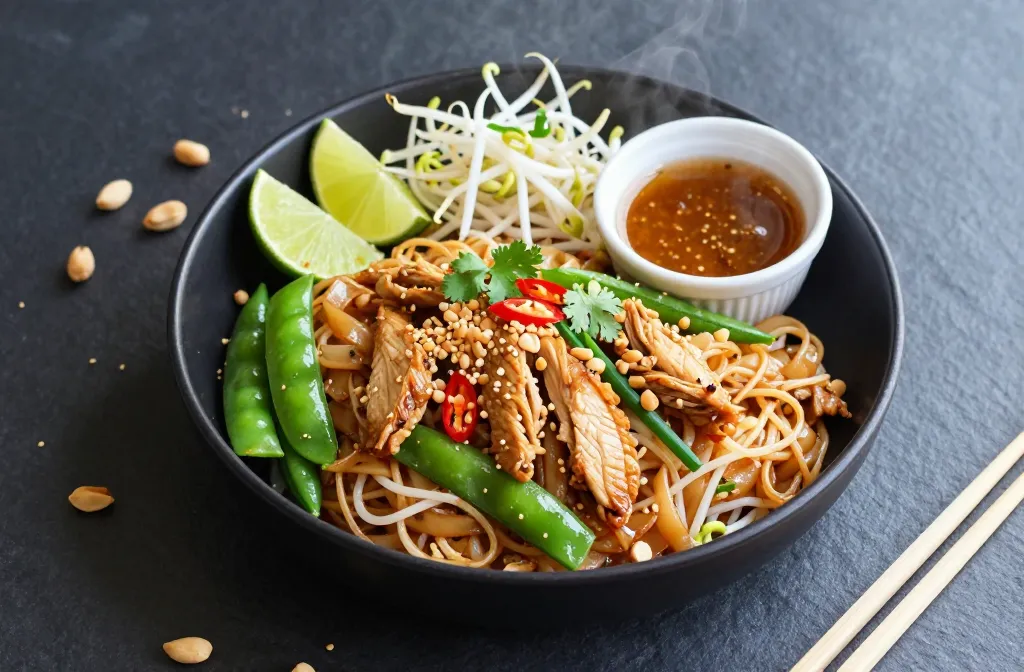
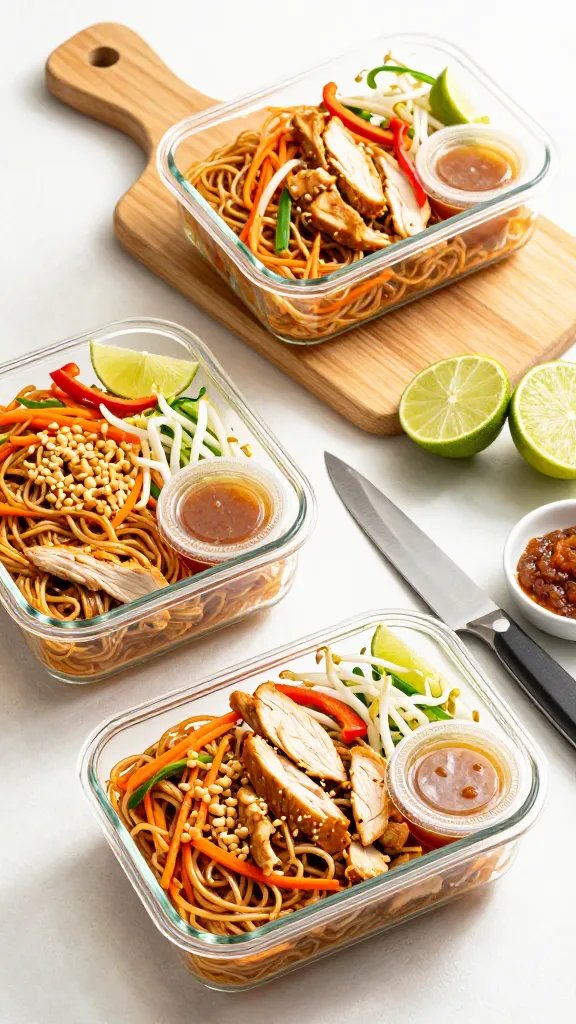
Picture glossy noodles, vibrant veggies, juicy chicken, and a tangy-sweet sauce that actually respects your goals. That’s this Healthy Chicken Pad Thai (Light Version) in a nutshell. We keep the soul of the dish, ditch the excess oil and sugar, and still deliver big flavor. Hungry? Let’s crush it.
Never wonder what's for dinner again.
Get 7 healthy, family-friendly dinners complete with recipes, grocery lists, and simple meal plans delivered straight to your inbox.
Why This Light Pad Thai Still Slaps
You want all the Pad Thai vibes without the food coma. Same. This version uses a few smart swaps—lean chicken breast, less oil, and a sauce that hits the classic sweet-sour-savory notes with fewer calories. We also pack in vegetables for extra crunch and fiber, so you leave the table satisfied, not stuffed.
TL;DR highlights:
- Balanced flavor: Tamarind, lime, and fish sauce keep it authentic.
- Lighter build: Less oil, more veg, and smart sweeteners.
- Meal-prep friendly: Reheats like a champ (just don’t overcook the noodles).
The Sauce: Where the Magic Happens
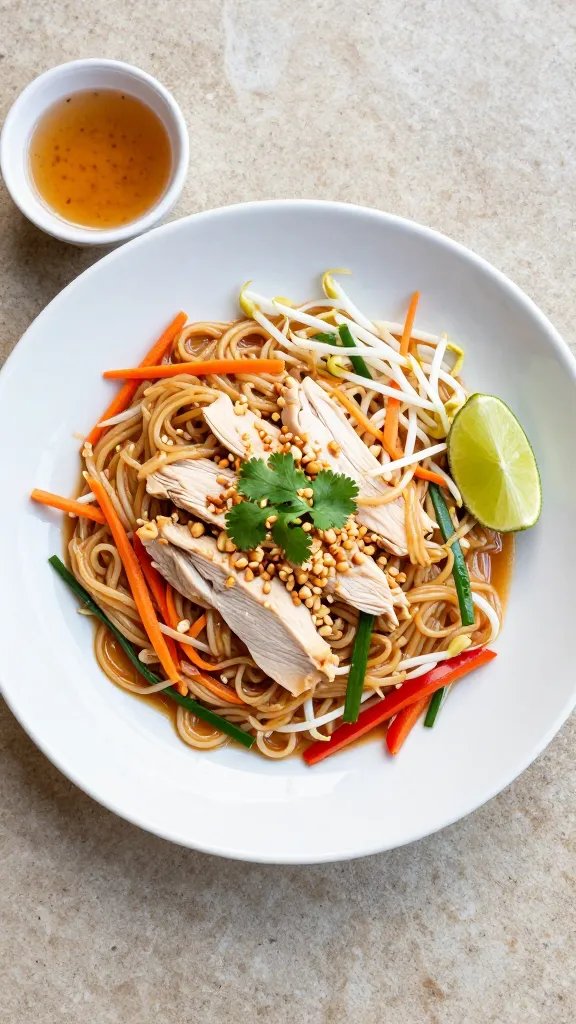
Pad Thai sauce sets the tone. We’re keeping it clean but punchy.
Light Pad Thai Sauce (Makes ~4 Servings)
- 3 tbsp fish sauce
- 2 tbsp tamarind concentrate (or 3 tbsp if you love tang)
- 1.5 tbsp low-sodium soy sauce (or tamari)
- 1.5–2 tbsp brown sugar or coconut sugar (start low; adjust to taste)
- 1 tbsp rice vinegar
- 1–2 tsp chili-garlic sauce or 1 tsp sriracha (optional heat)
- Juice of 1 lime (add at the end for brightness)
Pro tip: Taste it. You want a lively balance: tangy > savory > sweet. If it tastes flat, add a dash more tamarind or lime. If it’s too sharp, add a pinch more sugar.
Noodles & Smart Swaps (Without Losing Your Soul)
Traditional Pad Thai uses rice stick noodles. We keep them, but portion wisely.
Your Noodle Options
- Classic rice noodles (best texture): 8 oz dry for 4 servings. Soak, don’t boil, to avoid mush.
- Brown rice noodles: Slightly more fiber, similar feel.
- Zucchini “zoodles” or konjac noodles (ultra-light): Fun as a mix-in—IMO, go half-and-half with rice noodles for texture.
FYI: Don’t fear carbs here. We’re balancing them with protein, veggies, and portion control.
The Build: Chicken Pad Thai (Light Version) Recipe
Serves: 4 generous portions (about 2 cups each)
Ingredients
- 8 oz flat rice noodles
- 1 lb boneless, skinless chicken breast, thinly sliced
- 2 tsp neutral oil (avocado, canola), plus 1 tsp for eggs
- 2 large eggs, lightly beaten
- 3 cups bean sprouts (or 2 cups sprouts + 1 cup shredded cabbage)
- 1 red bell pepper, thinly sliced
- 4 green onions, sliced (whites for sauté, greens for garnish)
- 2 cloves garlic, minced
- 1 small carrot, julienned (optional but pretty)
- 1/4 cup roasted peanuts, roughly chopped
- Fresh cilantro and lime wedges for serving
- Sauce: from the section above
Instructions
- Soak noodles: Cover noodles in hot tap water 20–25 minutes until pliable but not soft. Drain well.
- Mix sauce: Whisk fish sauce, tamarind, soy, sugar, rice vinegar, and chili-garlic. Set lime juice aside for finishing.
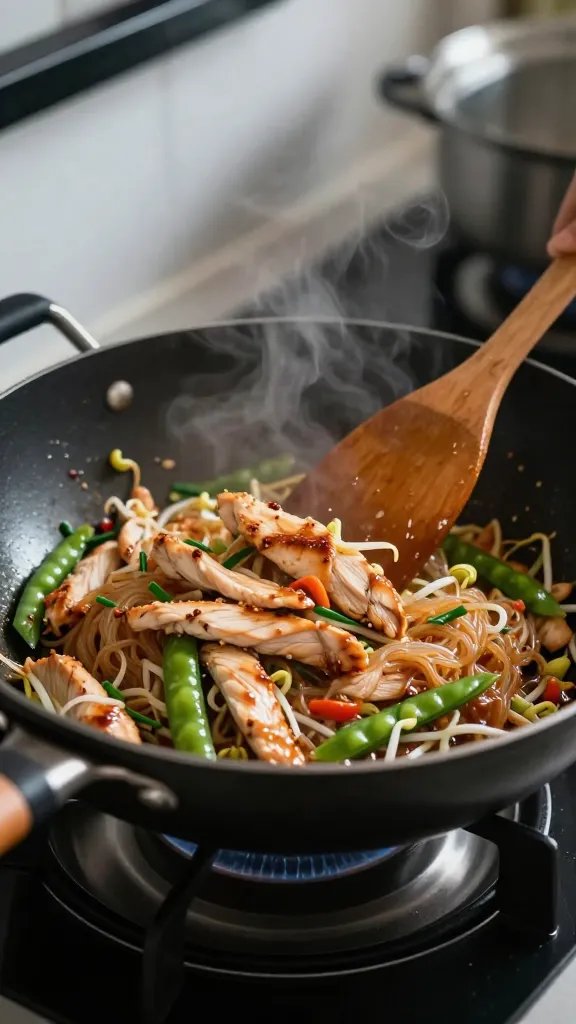
- Cook chicken: Heat 2 tsp oil in a large nonstick skillet or wok over medium-high. Add chicken, season with a pinch of salt and pepper, and cook 4–6 minutes until just cooked. Remove to a plate.
- Scramble eggs: Add 1 tsp oil. Pour in eggs, scramble quickly, then push to one side.
- Aromatics + veg: Add garlic and onion whites for 30 seconds. Toss in bell pepper and carrot; stir-fry 2 minutes.
- Noodles + sauce: Add drained noodles and sauce. Toss for 2–3 minutes until noodles are glossy and al dente. Add chicken back.
- Finishing: Fold in bean sprouts and half the peanuts for 30–60 seconds. Kill the heat. Stir in lime juice and top with green onion greens, cilantro, and remaining peanuts.
Don’t overcook: The noodles should keep a little bite. Soggy noodles = sad Pad Thai. IMO, under by 30 seconds rather than over by 30 seconds.
Flavor Boosts Without the Calorie Bomb
Want extra oomph? You don’t need more oil or sugar.
- Acid is your friend: Another splash of lime or a touch more tamarind solves 90% of “meh” flavor.
- Heat with restraint: Chili flakes or bird’s eye chili add zing without calories.
- Fresh herbs: Cilantro or Thai basil brightens everything instantly.
- Crunch factor: Toast peanuts in a dry pan to amplify nuttiness.
Make It Yours (Dietary Tweaks)
Gluten-Free
- Use tamari or coconut aminos instead of soy sauce.
- Double-check fish sauce for hidden wheat (rare, but look).
Dairy-Free
Need More Easy Dinner Ideas?
Get my FREE 7-Day Easy Dinner Reset and enjoy a full week of healthy dinners without the meal-planning stress.
- You’re good—Pad Thai doesn’t use dairy.
Lower Carb
- Use 4–6 oz rice noodles and supplement with 2–3 cups spiralized zucchini or shirataki noodles.
Higher Protein
- Add extra egg whites or bump chicken to 1.25 lb.
Estimated Nutrition Facts
Serving size used for calculations: 1 serving = approximately 2 cups cooked Pad Thai (recipe serves 4).
Ingredient basis: 8 oz dry rice noodles; 1 lb chicken breast; 2 large eggs; 2 tsp + 1 tsp oil; 3 tbsp fish sauce; 1.5 tbsp low-sodium soy; 2 tbsp brown sugar; 1 tbsp rice vinegar; juice of 1 lime; vegetables and peanuts as listed.
Per serving (estimated):
- Calories: 510
- Total Fat: 14 g
- Total Carbohydrates: 63 g
- Dietary Fiber: 5 g
- Net Carbs: 58 g
- Protein: 33 g
Notes on the estimate:
- Rice noodles (~2 oz dry per serving): ~200–210 kcal, ~45 g carbs, ~1 g fiber.
- Chicken breast (~4 oz cooked): ~180 kcal, ~34 g protein, ~4 g fat.
- Egg (1/2 per serving): ~36 kcal, ~3 g protein, ~2.5 g fat.
- Oil (~3/4 tsp per serving): ~30 kcal, ~3.5 g fat.
- Sauce (fish sauce/soy/sugar/vinegar/lime): ~40–60 kcal largely from sugar.
- Veg + peanuts (about 1 tbsp peanuts per serving): ~50–60 kcal, added fiber and crunch.
Disclaimer: Nutrition values are estimates based on standard USDA data and typical brands. Actual numbers may vary with specific products, substitutions, and portion sizes.
FAQ
Can I use rotisserie chicken to save time?
Absolutely. Shred about 16 ounces of breast meat and toss it in at the end to warm through. Skip extra salt in the pan since rotisserie seasoning can run salty.
What if I can’t find tamarind?
Use a mix of extra lime juice and a little more rice vinegar plus a touch more brown sugar. It won’t be identical, but it stays bright and balanced. FYI, many supermarkets stock tamarind concentrate near Asian sauces or in the international aisle.
How do I keep the noodles from clumping?
Soak just until flexible, then drain and toss with a teaspoon of sauce or a tiny splash of oil while the pan heats. Work quickly once noodles hit the wok and keep them moving.
Is fish sauce mandatory?
It brings that signature savory depth. If you can’t do fish sauce, use a combo of soy sauce and a little miso for umami. IMO, nothing replaces fish sauce perfectly, but this gets you close.
Can I make it vegetarian?
Yes—swap chicken for extra-firm tofu (pressed and pan-seared) and use vegetarian “fish” sauce or a mix of soy sauce and mushroom sauce. Add another egg for extra protein if you like.
How well does it reheat?
Pretty well for up to 2 days. Reheat in a nonstick skillet over medium with a splash of water to loosen the sauce. Microwave works in a pinch, but stir halfway for even heating.
Final Bite
You don’t need a takeout container to get that Pad Thai dopamine hit. This Healthy Chicken Pad Thai (Light Version) keeps the zingy sauce, satisfying noodles, and crunchy toppings—just lighter and brighter. Make it once, tweak it to your taste, and prepare to add it to your weeknight rotation, no apology tour required. IMO, you’ll wonder why you ever settled for soggy takeout.
Printable Recipe Card
Want just the essential recipe details without scrolling through the article? Get our printable recipe card with just the ingredients and instructions.
Loved This Recipe?
If you're looking for more simple, healthy dinners your family will actually eat, grab my FREE 7-Day Easy Dinner Reset. You'll get 7 easy dinner recipes, simple grocery lists, and a done-for-you plan that takes the stress out of mealtime.