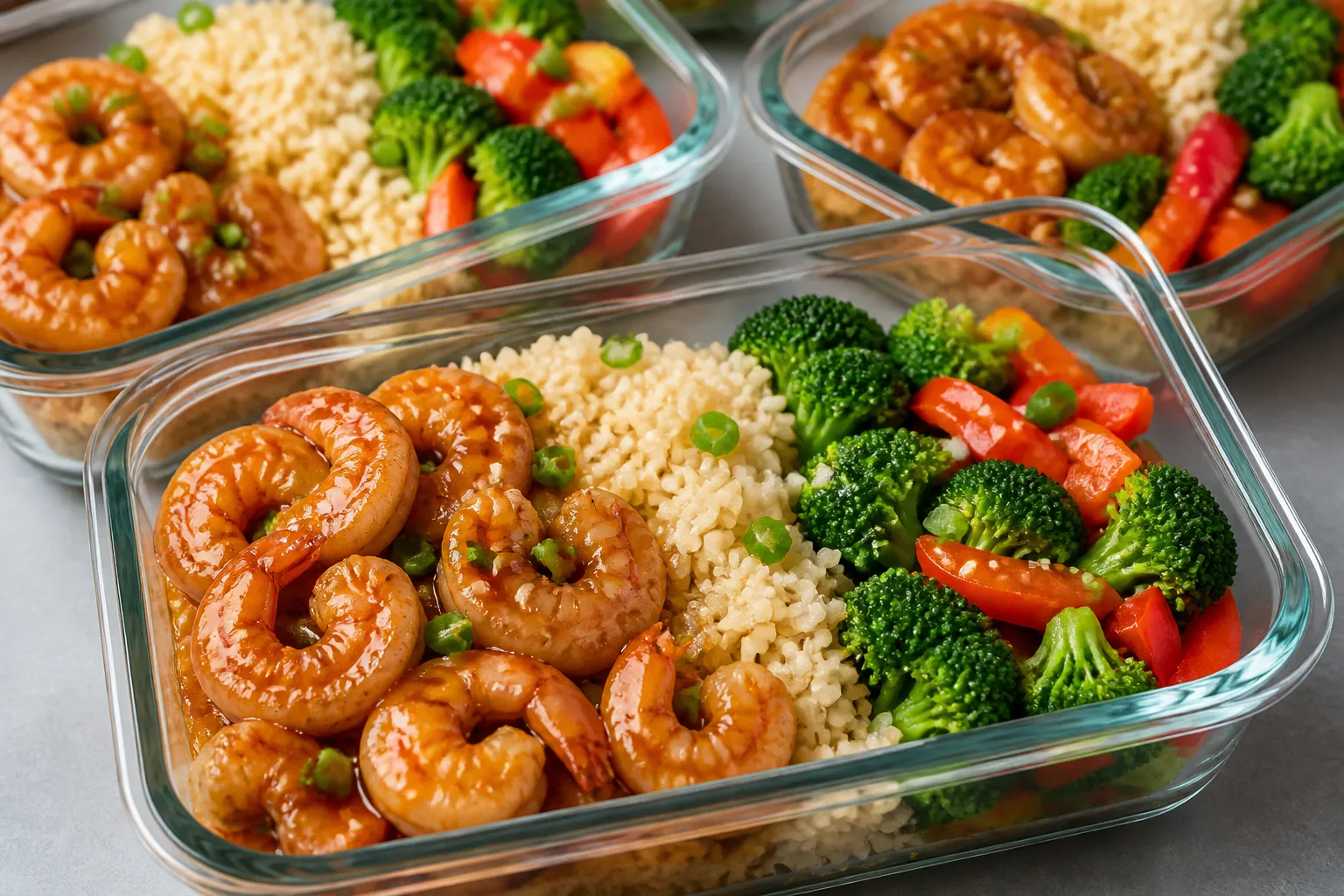
High Protein Teriyaki Shrimp Meal Prep – Easy, Flavor-Packed Bowls for Busy Weeks
This is the kind of meal prep that makes weekday eating feel exciting instead of repetitive. Juicy shrimp, glossy homemade teriyaki, and a bed of rice and veggies come together in under an hour. It’s high in protein, balanced, and big on flavor without being heavy.
Never wonder what's for dinner again.
Get 7 healthy, family-friendly dinners complete with recipes, grocery lists, and simple meal plans delivered straight to your inbox.
Make a batch on Sunday and you’ll have grab-and-go lunches that taste fresh and satisfying. If you’re new to cooking shrimp or meal prep, don’t worry—this guide keeps it simple and stress-free.
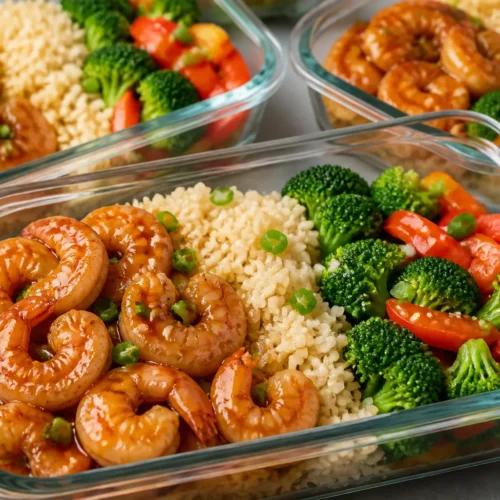
High Protein Teriyaki Shrimp Meal Prep - Easy, Flavor-Packed Bowls for Busy Weeks
Ingredients
- Shrimp: 2 pounds large shrimp (16–20 per pound), peeled and deveined, tails optional
- Rice: 4 cups cooked rice (white, jasmine, basmati, or brown), or cauliflower rice for low-carb
- Vegetables: 2 cups broccoli florets, 1 red bell pepper, 1 cup snap peas, 2 carrots
- Aromatics: 3 cloves garlic, 1-inch piece fresh ginger
- Teriyaki sauce base: Low-sodium soy sauce or tamari (gluten-free), honey or maple syrup, rice vinegar, mirin (optional), sesame oil
- Thickener: Cornstarch or arrowroot powder
- Cooking oil: Avocado oil or olive oil
- Garnishes: Green onions, sesame seeds, red pepper flakes (optional), lime (optional)
- Seasoning: Black pepper, a pinch of salt if needed
Instructions
- Prep the rice: Cook 2 cups dry rice according to package directions to yield about 4 cups cooked. Fluff and let it cool slightly so it doesn’t steam up your containers later.
- Chop the veggies: Cut broccoli into bite-size florets, slice bell pepper into strips, peel and slice carrots thin, and trim snap peas. Mince garlic and grate ginger.
- Make the teriyaki sauce: In a bowl, whisk 1/2 cup low-sodium soy sauce, 3 tablespoons honey, 2 tablespoons rice vinegar, 1 tablespoon mirin (optional), 1 teaspoon sesame oil, 2 cloves minced garlic, and 1 teaspoon grated ginger. In a separate small cup, mix 2 teaspoons cornstarch with 2 teaspoons cold water to make a slurry. Set both aside.
- Season the shrimp: Pat shrimp dry with paper towels. Toss with a pinch of black pepper and 1 clove minced garlic. No heavy salt—soy sauce will cover that.
- Sauté the veggies: Heat 1 tablespoon oil in a large skillet over medium-high. Add broccoli and carrots first; cook 3–4 minutes. Add bell pepper and snap peas; cook 2–3 minutes until crisp-tender. Remove veggies to a plate.
- Sear the shrimp: In the same pan, add another 1 tablespoon oil. Lay shrimp in a single layer. Cook 1–2 minutes per side until just pink and opaque. Do not overcook. Transfer shrimp to the plate with veggies.
- Thicken the sauce: Pour the teriyaki mixture into the pan. Bring to a gentle simmer over medium heat. Stir in the cornstarch slurry and cook 30–60 seconds until glossy and slightly thick.
- Combine: Return shrimp and veggies to the pan. Toss to coat in the sauce for 30–60 seconds. Taste and adjust—add a splash more vinegar for brightness or a drizzle of honey for sweetness.
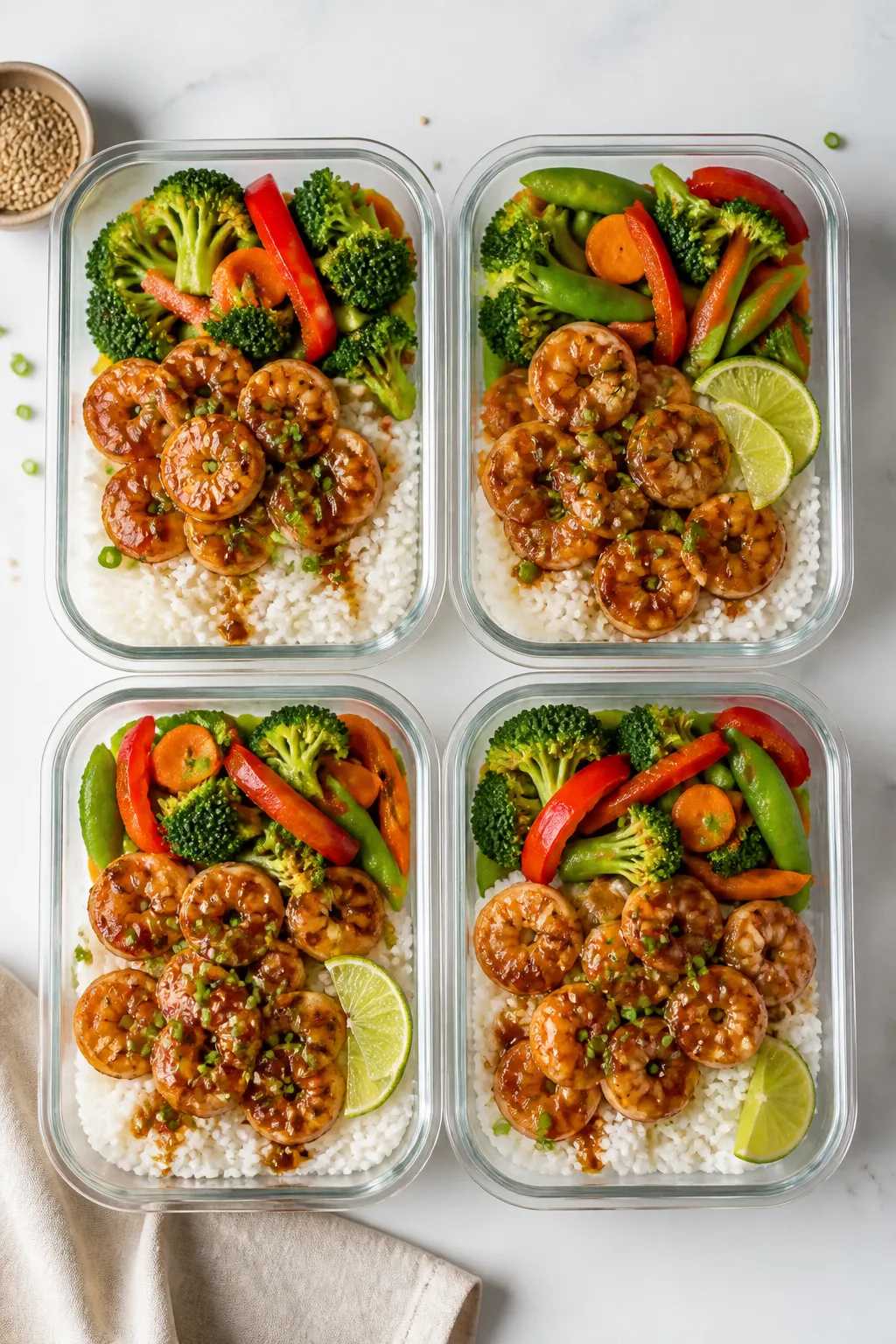
- Assemble bowls: Divide rice among 4–5 meal prep containers. Top with equal portions of teriyaki shrimp and veggies. Sprinkle with sesame seeds and chopped green onions. Add lime wedges if you like.
- Cool before sealing: Let containers sit uncovered 10–15 minutes. This helps prevent condensation and soggy rice.
Why This Recipe Works
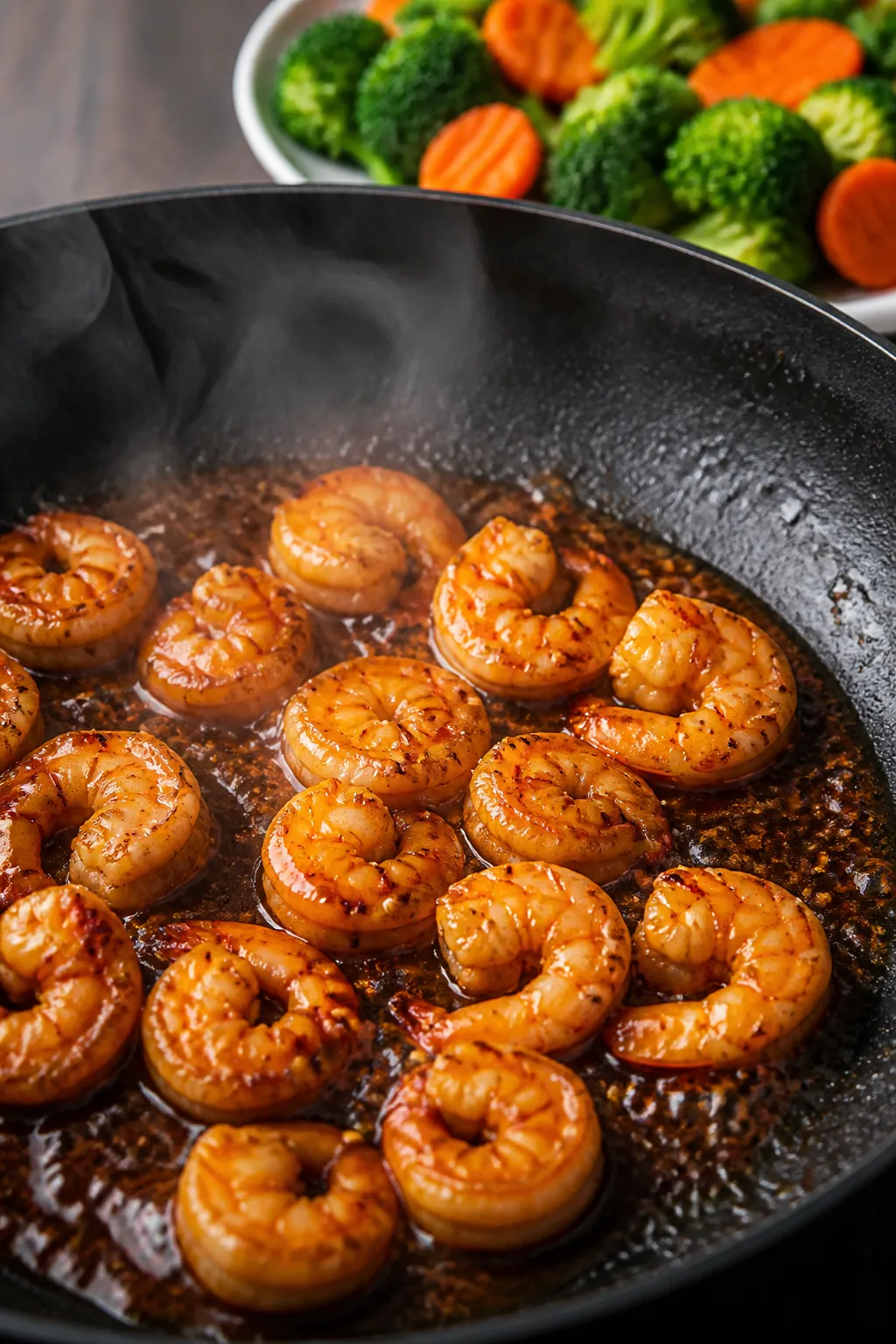
- Lean, fast protein: Shrimp cooks in minutes and packs over 20 grams of protein per 3.5-ounce serving.
- Homemade teriyaki, lighter feel: You control the sugar and sodium, so it tastes bold without being overly sweet or salty.
- Better texture all week: A quick marinade and a cornstarch-glossed sauce keep shrimp juicy, not rubbery.
- Flexible base: Use white rice, brown rice, or cauliflower rice. Add whatever veggies you have.
- Meal-prep friendly: The sauce reheats well, and shrimp portions stay flavorful for several days when stored right.
Shopping List
- Shrimp: 2 pounds large shrimp (16–20 per pound), peeled and deveined, tails optional
- Rice: 4 cups cooked rice (white, jasmine, basmati, or brown), or cauliflower rice for low-carb
- Vegetables: 2 cups broccoli florets, 1 red bell pepper, 1 cup snap peas, 2 carrots
- Aromatics: 3 cloves garlic, 1-inch piece fresh ginger
- Teriyaki sauce base: Low-sodium soy sauce or tamari (gluten-free), honey or maple syrup, rice vinegar, mirin (optional), sesame oil
- Thickener: Cornstarch or arrowroot powder
- Cooking oil: Avocado oil or olive oil
- Garnishes: Green onions, sesame seeds, red pepper flakes (optional), lime (optional)
- Seasoning: Black pepper, a pinch of salt if needed
Step-by-Step Instructions
- Prep the rice: Cook 2 cups dry rice according to package directions to yield about 4 cups cooked.
Fluff and let it cool slightly so it doesn’t steam up your containers later.
- Chop the veggies: Cut broccoli into bite-size florets, slice bell pepper into strips, peel and slice carrots thin, and trim snap peas. Mince garlic and grate ginger.
- Make the teriyaki sauce: In a bowl, whisk 1/2 cup low-sodium soy sauce, 3 tablespoons honey, 2 tablespoons rice vinegar, 1 tablespoon mirin (optional), 1 teaspoon sesame oil, 2 cloves minced garlic, and 1 teaspoon grated ginger. In a separate small cup, mix 2 teaspoons cornstarch with 2 teaspoons cold water to make a slurry.
Set both aside.
- Season the shrimp: Pat shrimp dry with paper towels. Toss with a pinch of black pepper and 1 clove minced garlic. No heavy salt—soy sauce will cover that.
- Sauté the veggies: Heat 1 tablespoon oil in a large skillet over medium-high.
Add broccoli and carrots first; cook 3–4 minutes. Add bell pepper and snap peas; cook 2–3 minutes until crisp-tender. Remove veggies to a plate.
- Sear the shrimp: In the same pan, add another 1 tablespoon oil.
Lay shrimp in a single layer. Cook 1–2 minutes per side until just pink and opaque. Do not overcook.
Transfer shrimp to the plate with veggies.
- Thicken the sauce: Pour the teriyaki mixture into the pan. Bring to a gentle simmer over medium heat. Stir in the cornstarch slurry and cook 30–60 seconds until glossy and slightly thick.
- Combine: Return shrimp and veggies to the pan.
Toss to coat in the sauce for 30–60 seconds. Taste and adjust—add a splash more vinegar for brightness or a drizzle of honey for sweetness.
- Assemble bowls: Divide rice among 4–5 meal prep containers. Top with equal portions of teriyaki shrimp and veggies.
Sprinkle with sesame seeds and chopped green onions. Add lime wedges if you like.
- Cool before sealing: Let containers sit uncovered 10–15 minutes. This helps prevent condensation and soggy rice.
How to Store
- Refrigerate: Store in airtight containers for up to 3–4 days.
- Reheat: Microwave 60–90 seconds, stirring halfway.
Add a splash of water to loosen the sauce if needed.
- Freeze: Shrimp can toughen slightly once frozen and reheated, but it’s still workable. Freeze up to 2 months. Thaw overnight in the fridge, then reheat gently.
- Keep garnishes separate: Add green onions and sesame seeds right before eating for better texture.
Benefits of This Recipe
- High protein, lean calories: Shrimp delivers a big protein hit with minimal fat, great for muscle recovery and satiety.
- Balanced macros: Rice for complex carbs, shrimp for protein, and veggies for fiber keep energy steady.
- Quick cook time: From start to finish, you’re looking at about 35–45 minutes for several meals.
- Packed with micronutrients: Broccoli, peppers, and carrots bring vitamins A, C, K, and antioxidants.
- Customizable sodium and sugar: Homemade teriyaki means you set the levels, not a bottle.
What Not to Do
- Don’t overcook the shrimp: Rubbery shrimp happen fast.
Pull them as soon as they turn pink and curl into loose “C” shapes.
- Don’t skip drying the shrimp: Moisture prevents a good sear and waters down the sauce.
- Don’t add cornstarch directly to hot sauce: It will clump. Always use a cold slurry.
- Don’t pack containers while steaming hot: Condensation makes rice soggy and shortens shelf life.
- Don’t drown the dish in sauce: Keep it glossy, not soupy, or textures will suffer after reheating.
Recipe Variations
- Low-carb swap: Use cauliflower rice and extra veggies. Add mushrooms or zucchini for volume.
- Gluten-free: Use tamari or coconut aminos instead of soy sauce.
Check labels on vinegar and mirin.
- High-fiber boost: Choose brown rice or quinoa and toss in edamame for extra plant protein.
- Spicy teriyaki: Add 1–2 teaspoons chili-garlic sauce or a pinch of red pepper flakes to the teriyaki.
- Citrus twist: Stir in 1–2 teaspoons orange zest or a squeeze of lime at the end for brightness.
- Sheet pan option: Roast veggies at 425°F (220°C) for 12–15 minutes. Pan-sear shrimp separately for best texture.
- Pineapple teriyaki: Add pineapple chunks during the final toss for sweet-savory contrast.
FAQ
How much protein is in each serving?
Each bowl typically lands around 30–40 grams of protein depending on your shrimp portion. A generous serving of shrimp (6–8 ounces cooked) pushes it higher.
Can I use frozen shrimp?
Need More Easy Dinner Ideas?
Get my FREE 7-Day Easy Dinner Reset and enjoy a full week of healthy dinners without the meal-planning stress.
Yes.
Thaw overnight in the fridge or quickly under cold running water. Pat very dry before cooking to avoid steaming.
What’s the best rice for meal prep?
Jasmine or basmati hold texture well, and brown rice adds fiber and a nutty taste. For lower carbs, use cauliflower rice, but keep it a bit al dente so it doesn’t turn mushy.
How do I keep shrimp tender when reheating?
Reheat gently and briefly.
Add a splash of water and cover loosely to create steam. Avoid nuking for 3–4 minutes straight—short bursts are better.
Can I use bottled teriyaki sauce?
You can, but check the label for sugar and sodium. Start with less than you think you need, then adjust.
The homemade version is quick and usually tastes fresher.
What vegetables work well besides the ones listed?
Bok choy, green beans, mushrooms, zucchini, or baby corn are all great. Aim for a mix of crisp and juicy textures.
Is this recipe good for weight loss or cutting?
It can be. Keep the sauce modest, choose brown rice or cauliflower rice, and load up on veggies.
Shrimp gives you lean protein without many calories.
Can I make it nut-free and allergy-conscious?
This recipe is naturally nut-free. For gluten-free, use tamari. For soy-free, try coconut aminos and adjust salt to taste.
What pan works best?
A large nonstick skillet or a well-seasoned wok.
You want room to spread the shrimp so they sear instead of steam.
Can I meal prep this for more than four days?
For peak quality, keep shrimp meals to 3–4 days in the fridge. If prepping further out, freeze portions and thaw as needed.
Wrapping Up
High Protein Teriyaki Shrimp Meal Prep is the kind of plan-ahead meal that doesn’t feel like a compromise. It’s quick, bright, and customizable, with lean protein and plenty of vegetables.
Make it once and you’ll have an easy system for flavorful, satisfying lunches all week. Keep the shrimp tender, the sauce balanced, and the containers cooled before sealing, and you’ll look forward to every bite.
Printable Recipe Card
Want just the essential recipe details without scrolling through the article? Get our printable recipe card with just the ingredients and instructions.
Loved This Recipe?
If you're looking for more simple, healthy dinners your family will actually eat, grab my FREE 7-Day Easy Dinner Reset. You'll get 7 easy dinner recipes, simple grocery lists, and a done-for-you plan that takes the stress out of mealtime.