Prep the chickpeas. Drain and rinse the chickpeas under cool water. For extra smooth hummus, rub them gently between your fingers under running water to loosen some skins.
Don’t stress about removing every skin—just a quick pass is enough.
Soften the flavors. In a small bowl, combine the tahini with the lemon juice and 2 tablespoons of ice-cold water. Stir until the mixture lightens in color and thickens. This step helps the tahini emulsify, which creates that silky texture.
Tame the garlic. Mince the garlic, then mash it with a pinch of salt using the side of a knife until it’s a smooth paste.
This brings the flavor without harsh bite.
Blend the base. Add the chickpeas, tahini mixture, garlic paste, cumin, and 2 tablespoons olive oil to a food processor or high-speed blender. Blend until the mixture starts to smooth out, scraping down the sides as needed.
Adjust consistency. With the machine running, slowly add more ice-cold water (or aquafaba) a tablespoon at a time. Aim for a soft, whipped texture that still holds gentle peaks.
You’ll likely need 3–6 tablespoons total.
Season to taste. Add salt and more lemon juice as needed. The flavor should feel bright, nutty, and well-rounded. If it tastes flat, try a pinch more salt; if it feels heavy, a squeeze more lemon helps.
Warm it up (optional, but great). For an ultra-smooth finish, blend for another 30–60 seconds.
Slight friction warms the hummus, making it extra creamy.
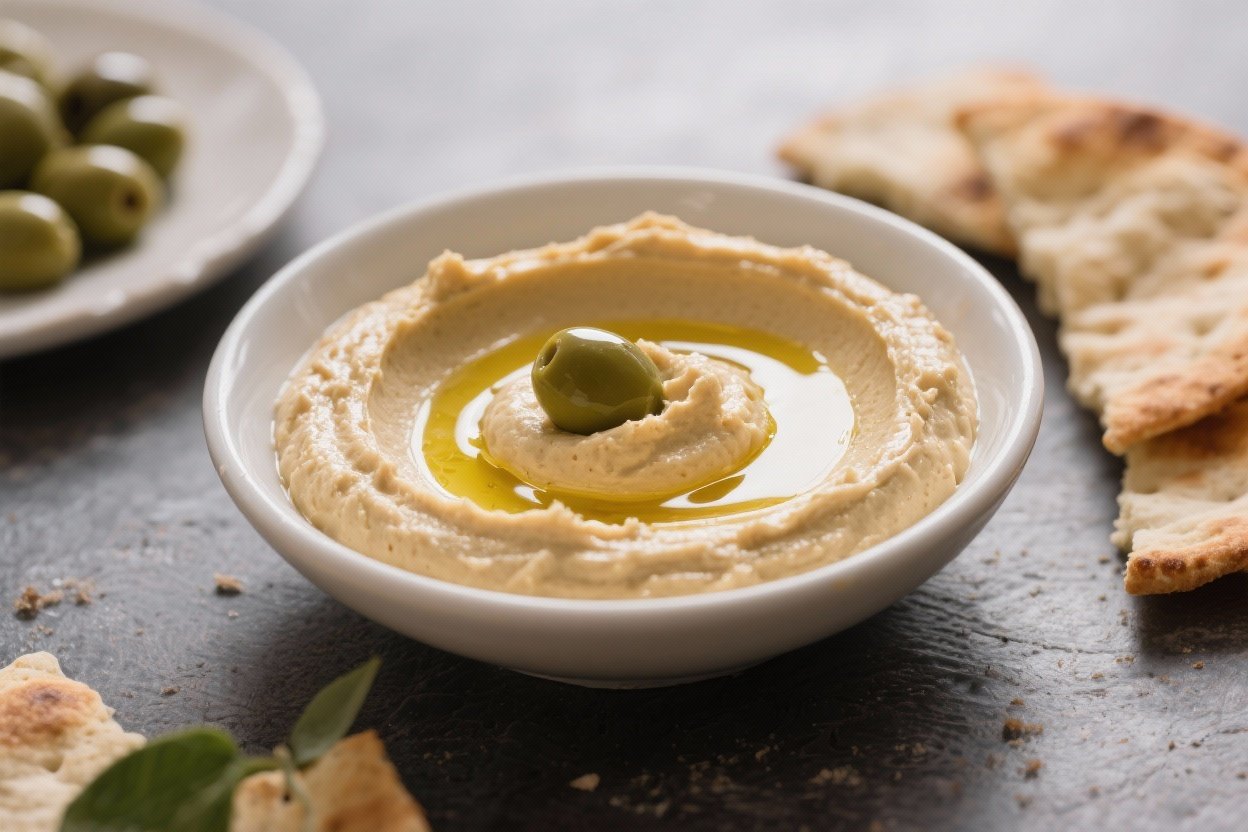
Plate and garnish. Spoon the hummus into a shallow bowl. Use the back of a spoon to create swoops across the surface. Drizzle generously with extra-virgin olive oil, then sprinkle with paprika or Aleppo pepper and a bit of chopped parsley.
Serve. Pair with warm pita, crisp cucumbers, carrot sticks, or cherry tomatoes.
It also makes a great spread for wraps and toast.